

Did ancient people shape their heads to resemble their gods?
It is the most repeated explanation for head binding and it is almost never sourced. Run it as a test instead: what would count as evidence, and how many of the societies that shaped heads actually meet the standard?

Mesoamerica is where the case for shaping heads to resemble the gods is argued most seriously — and where the direction of the copying is hardest to establish.
Ask why ancient people bound their children’s skulls and you will be told, more often than not, that they were copying their gods — or copying visitors who looked like their gods.
The claim is repeated so consistently that it has taken on the texture of a finding. It is not one. It is a hypothesis, and it can be tested, because head shaping was practised by dozens of societies and a handful of them left a record of what they thought they were doing.
This piece is that test. It is not a retelling and it does not have a tidy answer.
What would count as evidence
Four grades, from strongest to weakest.
One: the people who did it say so, in their own words, to somebody who wrote it down. This is the gold standard and it is very rare.
Two: a text or colonial record states the reason, even at second hand. Weaker, because the observer may have misunderstood, but checkable.
Three: the society depicted its gods with the shape, and the depiction can be shown to be older than the practice. Circumstantial, and it collapses without that last clause.
Four: the gods and the people simply look alike. This is not evidence of anything, and it is where almost all of the popular version sits.
Grade one: Malakula, Vanuatu
The hypothesis clears the highest bar exactly once, as far as we can establish.
On Malakula in Vanuatu, head elongation is associated with the culture hero Ambat, who is described as having a long head and a fine long nose. A finely elongated head is understood to indicate intelligence, higher status and closeness to the world of the spirits. Asked directly, community members have explained the custom as their tradition, originating in the spiritual beliefs of their people. The expression "longfala hed" still means clever in Bislama.
That is a living community, speaking for itself, describing infants shaped towards a revered figure. It is the real thing.
It is also Melanesian. It is not Peruvian, it is not Egyptian, and it is not evidence about anywhere else.
Grade two: the two societies that stated a different reason
Where the reason was actually written down elsewhere, it is not gods.
Hippocrates, in the fifth century BC, described the Macrocephali of the Black Sea coast: "immediately after the child is born, and while its head is still tender, they fashion it with their hands, and constrain it to assume a lengthened shape by applying bandages and other suitable contrivances." The stated reason is social rank, not divinity — "they think those the most noble who have the longest heads." He adds, tellingly, that by his time "the custom no longer prevails owing to their intercourse with other men."
On the lower Columbia, Meriwether Lewis recorded on 19 March 1806 that Clatsop infants had their heads compressed between boards. Later ethnographers described the shape as a badge of free birth: enslaved people’s children were not permitted it. The head did not mark you as godlike. It marked you as unenslaveable.
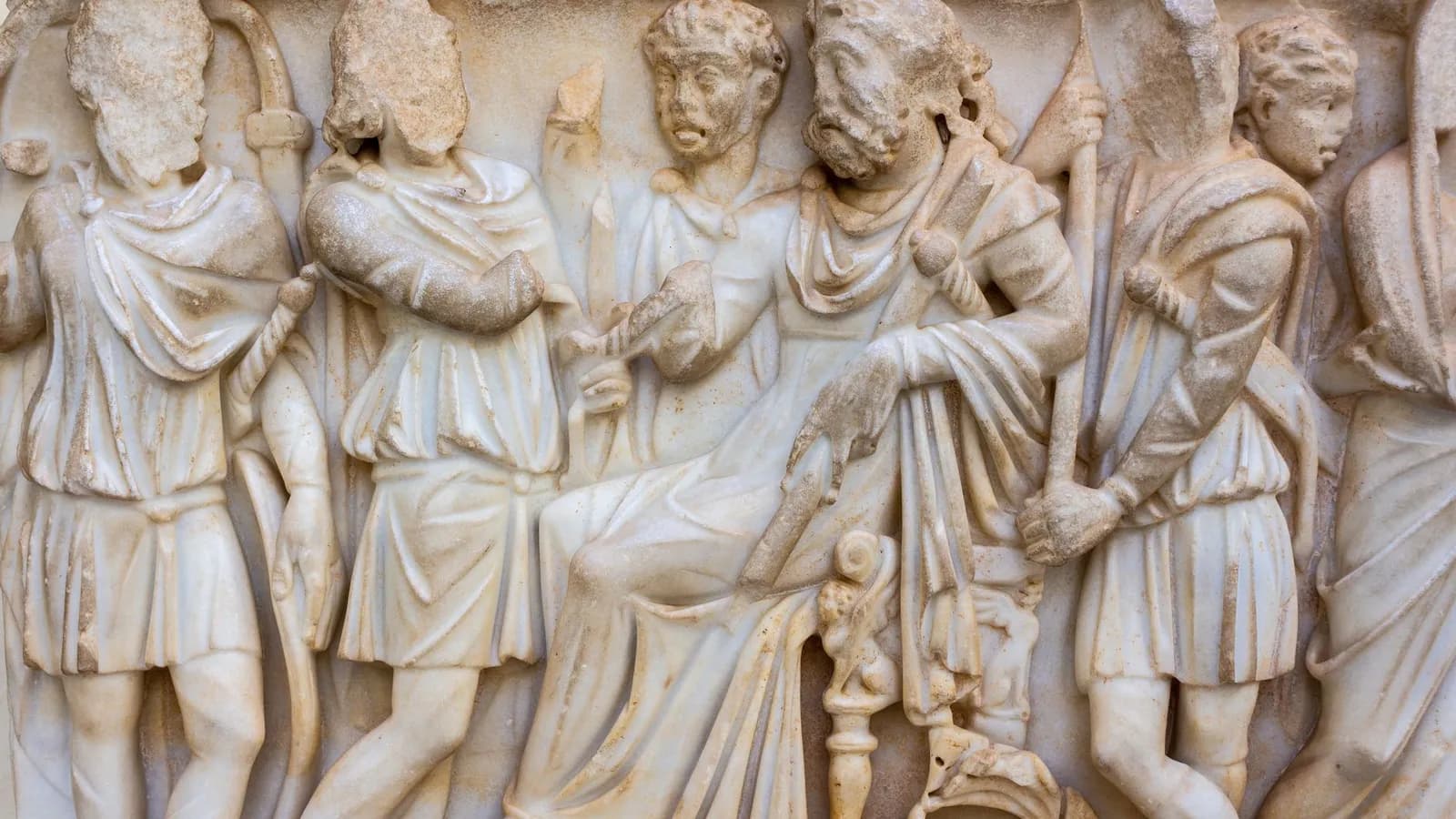
Grade three: Mesoamerica, where the argument is serious
The strongest scholarly version of the gods hypothesis is Mesoamerican, and it belongs to Vera Tiesler.
Tiesler has argued that the pear-shaped "Olmecoid" head forms found among Preclassic Maya populations were produced in emulation of the sacred beings of Olman, and that the shapes correspond to early renderings of the Maya Maize God — an elongated head evoking a tasselled ear of maize. In Maya creation narrative, humans are made from maize by gods who shape them. On this reading, shaping an infant’s head repeats the act of creation.
This is not a fringe position. It is argued from iconography, from skeletal series across the Maya region, and from the survival of the head forms for centuries after Olmec society itself ended.
But it is grade three, and grade three has a problem.
The direction problem
Here is the difficulty at the centre of every argument from iconography, and it is rarely stated.
In a society where every child’s head is shaped, every artist has a shaped head, every artist’s family has shaped heads, and the shape is what a fine head is understood to look like. When that artist carves a god, the god gets that head.
So a deity depicted with an elongated skull is equally consistent with two opposite histories: people shaped their heads to look like the god, or the god was drawn to look like the people. The image alone cannot distinguish them. Only a dated sequence can — the depiction demonstrably preceding the practice in the same region.
Grade four: everywhere else
For most of the societies that shaped heads, there is no statement of purpose at all, and the reason has to be inferred from patterning in cemeteries. Where that has been done, the answers are consistently social.
In the Tiwanaku world, head shape mapped onto which valley a person came from. In the Atacama, it correlated with sex and not with diet. In Early Medieval Bavaria, it identified women who had grown up hundreds of kilometres to the south-east. In nineteenth-century Toulouse, it was the by-product of a customary head wrap.
None of those is a claim about gods. They are claims about groups, origins, status and habit.
The competing Maya reading
Even in Mesoamerica the divine-emulation argument is not the only one on the table.
Duncan and Hofling argued in 2011 that Maya modification was protective. Colonial documents and ethnographic midwifery both place animating essences in the head and hold newborns particularly liable to lose them; a new infant, on this reading, resembles a newly built house, unfinished and exposed, and binding closes and ensouls it.
That is a religious explanation without being an imitative one. The practice is about the child’s soul, not the god’s appearance. Both readings can be argued from the same body of material, which is a fair indication of how much weight the material will bear.
So what is the answer?
A mixed one, which is the honest one.
The hypothesis is clearly attested in one place, Malakula, in the words of the people who practise it. It is seriously and respectably argued in one region, Mesoamerica, on iconographic grounds that carry a direction-of-causation problem nobody has solved. It is contradicted by the two societies that wrote down a reason of their own. And for the great majority of cases it is simply unsupported — not disproved, unsupported, which is a different and more boring thing.
What it is not is the universal explanation. Repeating it as one flattens a genuinely varied set of human answers into a single sentence, and the single sentence chosen happens to be the least evidenced of the options.
What we know
That at least one society explicitly shaped infant heads towards a revered ancestral figure, and says so itself. That at least two societies explicitly gave other reasons — nobility, and free birth. That a substantial scholarly case links Mesoamerican head forms to depictions of maize deities and Olmec supernaturals. That an alternative Maya reading treats the practice as protective rather than imitative. That where the evidence is cemetery patterning rather than testimony, the answers have consistently been social.
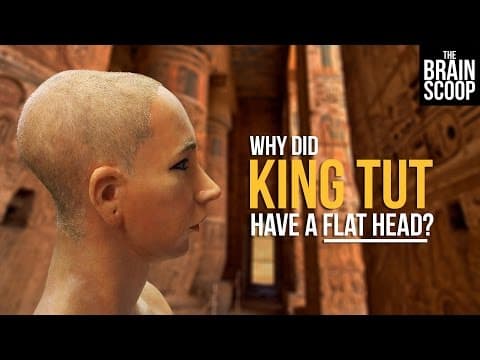
What we do not know
Whether any Mesoamerican deity was depicted with an elongated head before the local population began producing them, which is the single test that would move the argument from grade three to something better. What the Paracas or Tiwanaku dead would have said if asked. Whether "we do it because the ancestors looked like this" and "we do it because it marks us out" were ever felt as different answers by the people giving them.
And whether a practice this old ever had one reason at all. Twelve thousand years is long enough for a custom to be started for one purpose, continued for another, and explained by a third.
Buried Evidence
Continue the investigation
- 01Yonaguni: a submerged monument, or a very tidy rock?Off the coast of a Japanese island lies a formation with terraces, right angles and what look like steps. Two credentialled scientists have looked at the same rock and reached opposite conclusions. Here is what each of them is actually arguing.
- 02Bimini Road: the prophecy that found what it went looking forA line of squared blocks under shallow Bahamian water, found in 1968 — exactly when a famous psychic had predicted Atlantis would begin to reappear. The geology is settled. The story of how it was found is the interesting part.
- 03Stonehenge: what has actually been establishedThe most examined prehistoric monument in the world, and the popular account is still mostly wrong. Here is what excavation and geochemistry have actually settled — including a finding from 2024 that changed the map.
What we could not settle
Loose ends we are still working on.
- 01
Did people copy the gods, or did the gods get drawn to look like people?
If everyone around you has a shaped head, that is what a good head looks like — so that is how you carve a god. The picture on its own cannot tell you which way round it went, and almost every version of this story assumes one answer without checking.
- 02
Why did nobody in Peru write down why they did it?
Whole communities shaped every baby’s head for centuries. The Spanish arrived, wrote about a great many things, and this is barely explained anywhere. Somebody must have asked. Somebody must have answered.
- 03
Can a custom outlive its own reason?
Around Toulouse, a head wrap kept going long after anyone could say what it was for. If that happens in living memory in France, how many ancient explanations are just the reason people had come up with by then?
Got something to add?
A question, a source we missed, a correction, or something you saw yourself — all of it is welcome here. You do not need to be an expert, and you are allowed to disagree with us.
Nobody has yet — go on.
See also
Everything this piece touches
Topic
artificial cranial modification
Reshaping an infant skull by binding or boards. Documented on five continents over 12,000 years.
Topic
Paracas skulls
Peruvian coastal culture, c. 800–100 BC, whose elongated crania carry a stack of untested claims.
Topic
Macrocephali
The long-heads of Hippocrates, whose head binding he described in the fifth century BC.
Topic
Tiwanaku
Andean polity, AD 500–1100, where head shape mapped onto the valley a person came from.
Sources
Open them and check for yourself. Where a record is public, it is linked.
Australian Museum
On Airs, Waters, and Places, part 14
Hippocrates, trans. Francis Adams — MIT Internet Classics Archive
The Journals of the Lewis and Clark Expedition
University of Nebraska–Lincoln
Emulating Olmec gods through head form: origins and the Preclassic period
Tiesler, in The Bioarchaeology of Artificial Cranial Modifications, Springer, 2014
“Olmec” head shapes among the Preclassic period Maya and cultural meanings
Tiesler, Latin American Antiquity, 2010
Head shaping and dental decoration among the ancient Maya
Tiesler, Mesoweb
Why the head? Cranial modification as protection and ensoulment among the Maya
Duncan and Hofling, Ancient Mesoamerica 22(1), 2011
Veeramah et al., PNAS, 2018
Related
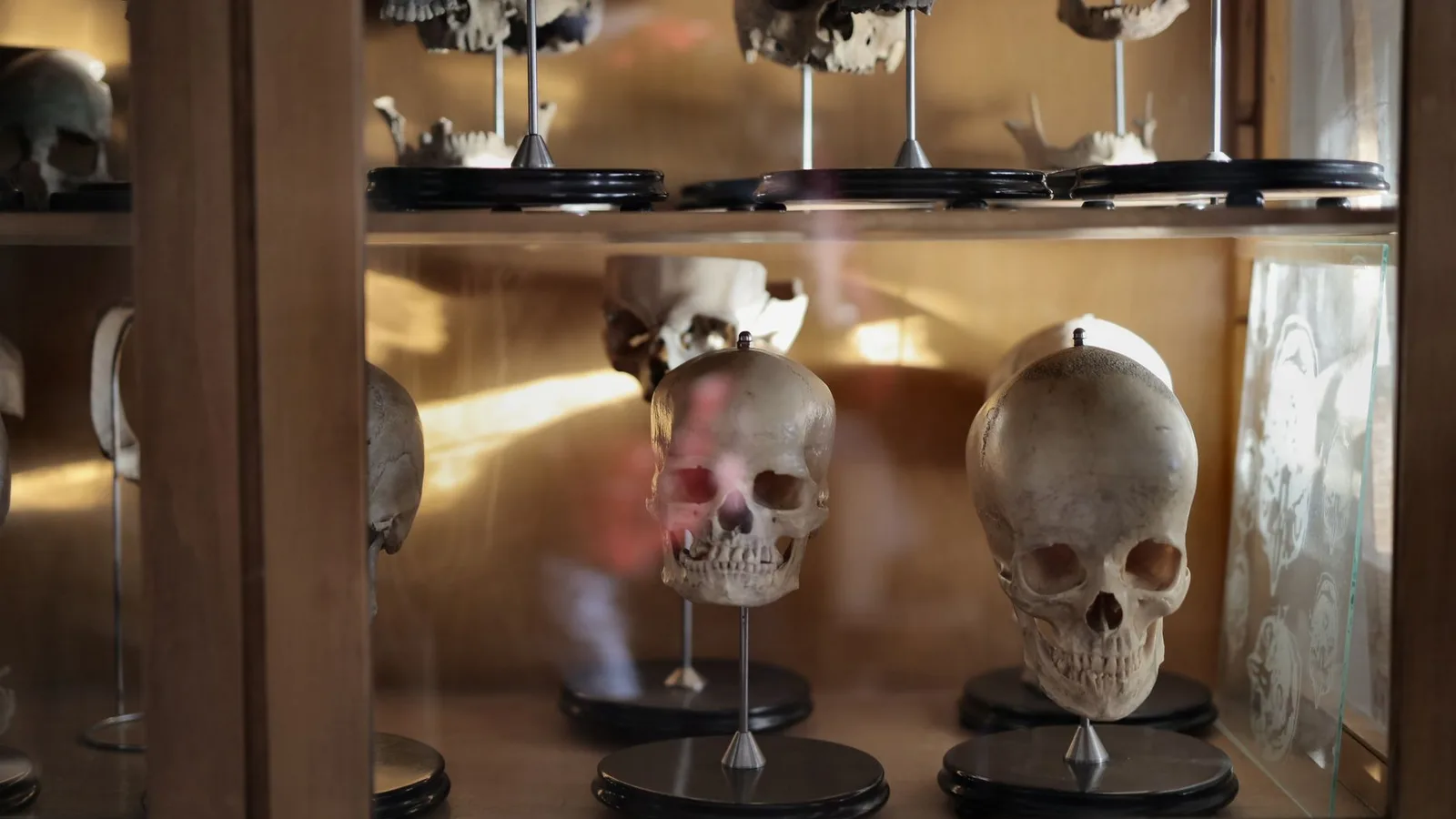
Archaeological Mysteries
Elongated skulls: why did ancient humans change the shape of their heads?
Thousands of them, across five continents and twelve thousand years. Nobody serious disputes that people did this to their own children, or how. The argument is about why — and the answer everyone repeats turns out to be the least documented one.
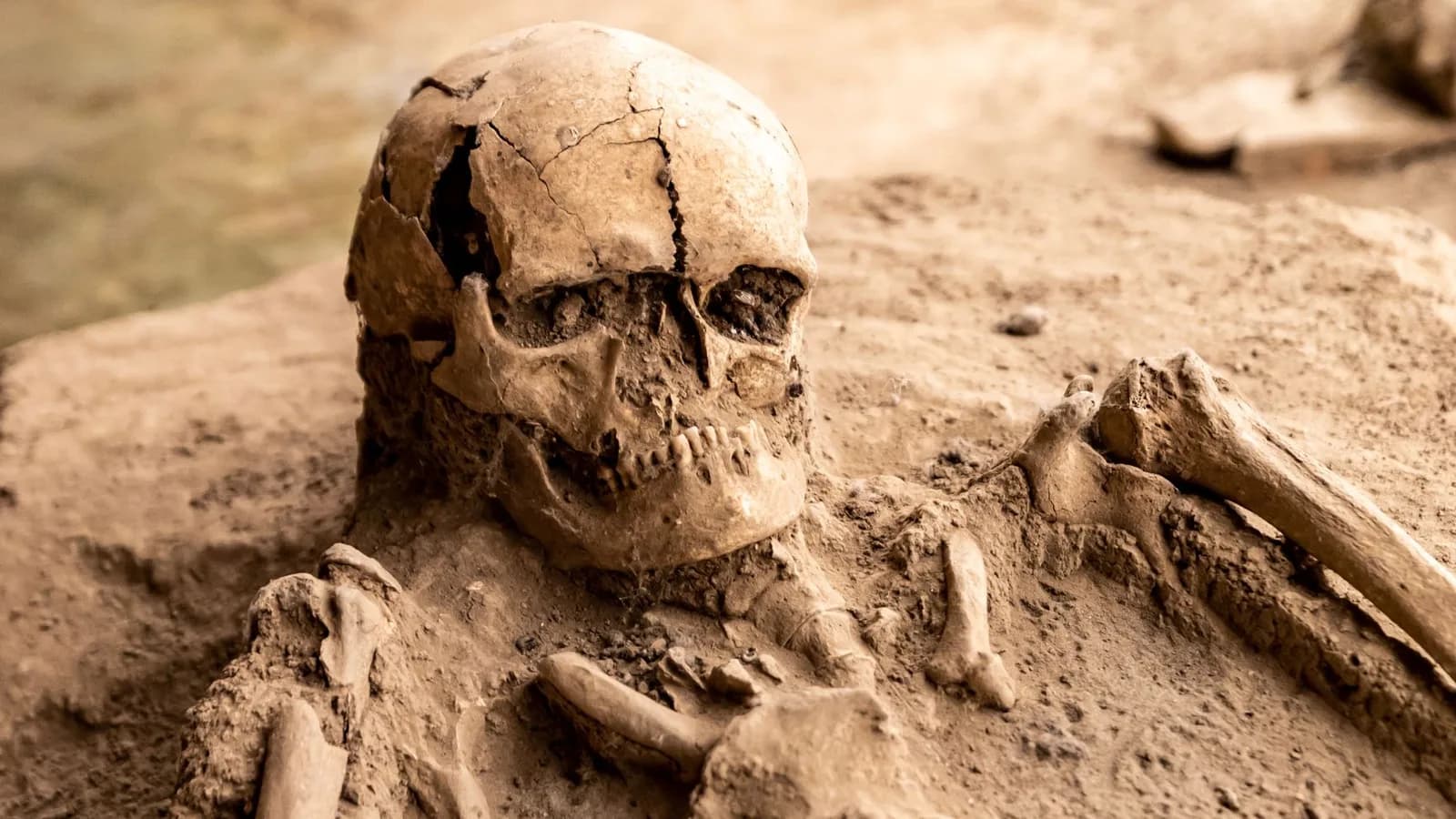
Archaeological Mysteries
Why did cultures across the world bind their children's skulls?
Palaeolithic Italy, Iron Age Scythia, the Andes, the Maya lowlands, the Congo, Vanuatu, the Columbia River and rural France. Laid side by side, the cases answer a sharper question than "why" — did anybody teach anybody else?
Archaeological Mysteries
Derinkuyu: an underground city for twenty thousand people
Eighteen storeys carved into soft volcanic rock in Cappadocia, with ventilation shafts, wells, stables, chapels and doors that seal from the inside. It is real, it is enormous, and its purpose is not mysterious.
Archaeological Mysteries
The cemeteries of the long-headed: what a whole burial ground shows
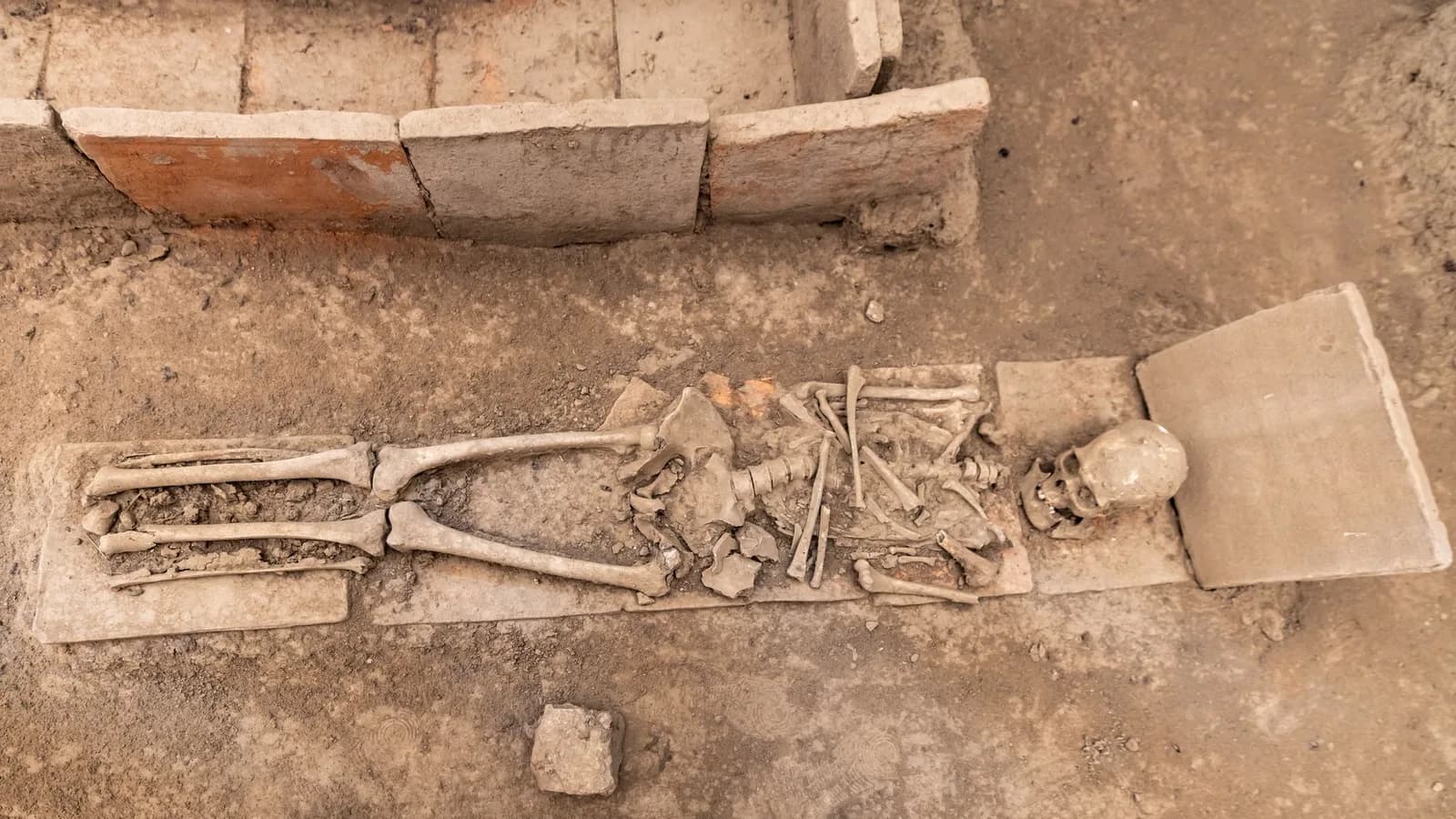
A single elongated skull in a private collection tells you nothing about the people who made it. Five excavated cemeteries, from coastal Peru to post-Roman Hungary, tell you who was shaped, who was not, and where they came from.
0 comments