

Why did cultures across the world bind their children's skulls?
Palaeolithic Italy, Iron Age Scythia, the Andes, the Maya lowlands, the Congo, Vanuatu, the Columbia River and rural France. Laid side by side, the cases answer a sharper question than "why" — did anybody teach anybody else?

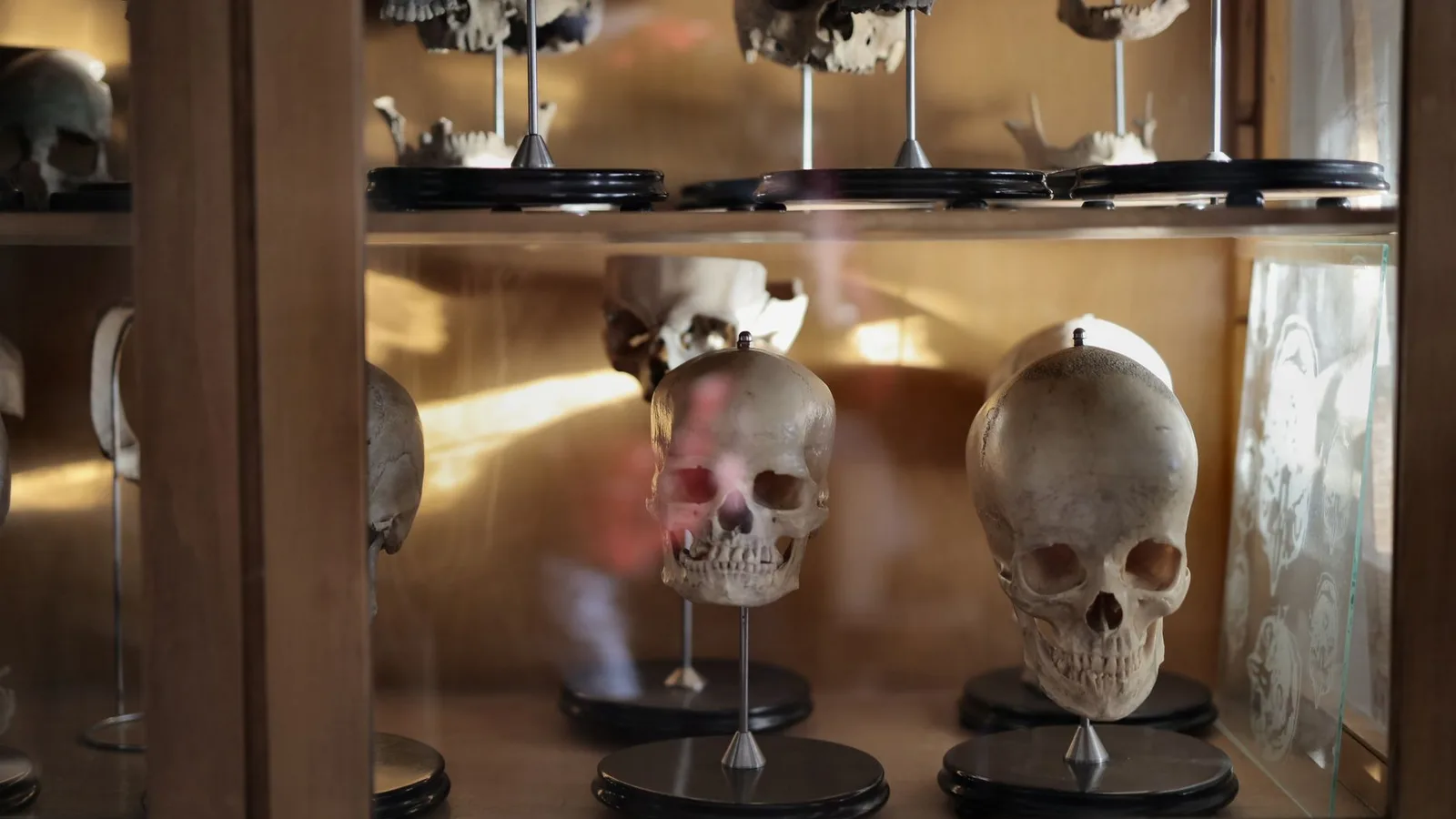
Photo by Boris Hamer on Pexels
Set the cases next to each other and the first thing that goes is the idea of a single origin. Head binding turns up in societies separated by oceans, by tens of thousands of years, and by every conceivable difference in technology and belief.
What follows is the comparison — when, where, how, what shape, and what the people involved said it was for — and then the two questions that comparison makes answerable: whether it spread, and whether it meant the same thing twice.
Liguria, Italy — roughly 12,600 years ago
The individual catalogued as AC12 from Arene Candide Cave, dated to about 12,620–12,190 calibrated years before present, was published in 2025 as the earliest known case of artificial cranial modification in Europe. The identification is statistical: three-dimensional shape analysis places AC12 firmly with a global sample of modified crania and as an outlier from every unmodified Palaeolithic, Mesolithic and Neolithic comparison, and from pathologically deformed skulls. The cranium had been placed on top of another burial in a stone niche. Technique unknown. Purpose unknown. Hunter-gatherers.
The Peruvian coast — 550 to 200 BC
At Paracas Cavernas, 98 per cent of 159 individuals examined in a 2022 study had modified heads. Tabular erect forms dominated; the bilobate style was significantly more common among women. This is a whole community, not an elite.
The Titicaca basin and Moquegua — AD 500 to 1100
Deborah Blom's study of 412 individuals from Tiwanaku and its affiliated sites, published in the Journal of Anthropological Archaeology in 2005, found head shape mapping onto geography with unusual precision. In the Moquegua valley, fronto-occipital modification only. In the Katari valley, annular. In the capital itself, both — because people from both regions were there. Blom read it as symbolic boundary maintenance: the head as a statement of where you were from, worn into a city where that mattered.
The Cuzco region — 900 BC to AD 1532
Valerie Andrushko assessed 419 individuals from ten sites spanning more than 2,300 years, and the shifts track political history. Tabular modification dominates the early sample. Unmodified crania flood in during the Middle Horizon, at least partly with the Wari expansion. The annular type appears later, pointing to movement from the Titicaca region. Under the Inca, modification rates were higher in the countryside than in Cuzco city, where Inca individuals appear to have refrained from it as a marker of their own identity.

The Maya lowlands — from at least 1000 BC
Head shaping was ordinary across the Maya area for millennia and across social strata. Duncan and Hofling argued in 2011 that the point was protection: colonial and ethnographic sources place animating essences in the head and treat newborns as vulnerable to losing them, and binding a new head parallels the ritual dedication of a newly built house. On that reading it is closer to a christening than to a costume.
Scythia, as reported — fifth century BC
Hippocrates describes the Macrocephali binding infants' soft heads with bandages and contrivances because length was noble. He also states the custom had lapsed by his own time. It is the earliest written account of the practice anywhere, and it is a secondhand ethnography by a Greek physician, so it should be read as one.
The Carpathian Basin and Bavaria — fourth to sixth centuries AD
Conical modification is strongly associated with the Hunnic-period populations of the middle Danube and spreads west with them. The best-resolved case is Bavarian. Veeramah and colleagues sequenced 36 adults from six cemeteries dating mostly to the late fifth and early sixth centuries. Nine had clearly deformed skulls, five were intermediate, twenty-two were unmodified — and the deformation was almost entirely confined to adult women. Those women were genetically distinct from everyone around them: southern and south-eastern European ancestry, one individual with around twenty per cent East Asian ancestry, and predominantly brown eyes in a population predicted to be largely blue-eyed and fair-haired.
The authors' reading is that these women moved into Bavarian communities from the south-east, plausibly through marriage alliances. The heads were shaped where they grew up, and travelled with them.
North-east Congo — nineteenth to mid-twentieth century
Among the Mangbetu, head elongation — lipombo — was achieved by binding infants' heads with cloth, and was accentuated in adults by hairstyles built out over the elongated crown. European accounts begin with Georg Schweinfurth's expedition of 1870, and the Mangbetu court became one of the most photographed subjects in central Africa in the first half of the twentieth century. The practice had largely ended by the middle of that century. Accounts of exactly why differ and are secondhand; we have not found a primary administrative record, and we are not going to assert one.
Malakula, Vanuatu — into living memory
The best-documented technique anywhere, because it was recorded from practitioners: candle-nut paste, banana-bark bandage, a woven pandanus basket and fibre rope, begun about a month after birth and repeated daily for roughly six months. The stated reason is explicit and indigenous — the culture hero Ambat had a long head, and a long head marks intelligence, status and closeness to the spirit world.

Toulouse, France — into the early twentieth century
The odd one out, and the most instructive. Around Toulouse, infants' heads were tightly wrapped and padded as a protective measure, and a characteristic head and face shape resulted. A 2022 study quantified the facial signature from nineteenth-century photographic archives and measured the forces the traditional device exerts. Moderate pressure, applied for long enough, in the course of doing something else entirely.
So: did it spread, or was it invented repeatedly?
Both, and the evidence separates the two cleanly.
Diffusion is demonstrable where you can trace people. The Bavarian women carried their skull shape from the south-east and the genetics prove the journey. The arrival of annular modification in the Cuzco region during the Late Intermediate Period tracks movement from Titicaca. The Tiwanaku valleys show styles holding their borders. These are real transmissions of a specific technique with a specific meaning.
Independent invention is equally clear at the largest scale. There is no route from Late Upper Palaeolithic Liguria to the Peruvian coast, and no continuity in between. The Andes, Melanesia, central Africa and the Pacific Northwest developed the practice without contact with one another.
And there is a reason it is easy to invent. Every human society carries, swaddles and beds infants. Cradleboards, head wraps and binding cloths are among the most widespread objects in the ethnographic record. The raw material of cranial modification is already present in normal childcare everywhere; what varies is whether anyone decides the resulting shape is worth aiming at.
Did it mean the same thing twice?
No — and that is the finding, not a failure to find one.
Free birth on the Columbia. Regional origin at Tiwanaku. Sex and social identity at Paracas. Ethnic distinction, by abstention, under the Inca. Protection of an infant soul among the Maya. Descent from a long-headed culture hero on Malakula. Rank and beauty among the Mangbetu. An accident of protective wrapping around Toulouse. Nobility, according to a Greek doctor writing about people he had not met.
The one thread running through almost all of it is membership. A shaped head is a permanent, public, unforgeable statement about which people you belong to, applied before you could possibly consent, by the people who had already decided.
What we know
That the practice is genuinely global and at least twelve thousand years old. That in several cases the same style can be traced moving with identifiable populations. That in other cases it plainly arose independently. That the documented meanings differ by society, and that a single explanation for all of them is not supported by anything.
What we do not know
Whether the earliest cases were intentional in our sense. What happened between Palaeolithic Europe and the later traditions, and whether the gap is real or an artefact of how few crania survive. Why the practice ended nearly everywhere within the last two centuries. And for the great majority of societies that did it, what they would have said if anyone had asked while there was still somebody to ask.
Buried Evidence
Continue the investigation
- 01The cemeteries of the long-headed: what a whole burial ground showsA single elongated skull in a private collection tells you nothing about the people who made it. Five excavated cemeteries, from coastal Peru to post-Roman Hungary, tell you who was shaped, who was not, and where they came from.
- 02Akhenaten’s elongated head: anatomy, art or symbolism?The pharaoh is shown with a long skull, a long face and a heavy body, and so are his wife and daughters. Three explanations compete — real anatomy, artistic convention, religious symbolism — and one skull that can actually be measured decides more than any of the arguments.
- 03Did ancient people shape their heads to resemble their gods?It is the most repeated explanation for head binding and it is almost never sourced. Run it as a test instead: what would count as evidence, and how many of the societies that shaped heads actually meet the standard?
What we could not settle
Loose ends we are still working on.
- 01
If everyone in the village has it, who is it signalling to?
At Paracas nearly every skull in the cemetery was shaped. A mark that everybody carries cannot be telling your neighbours anything they do not know — so it may be aimed at outsiders, at the ancestors, or at nobody at all.
- 02
Why did it stop almost everywhere at once?
Vanuatu, the Congo, France, the Columbia River — all within roughly a century. Colonial pressure is the obvious answer, but plenty of other traditions survived that pressure. Something else may have been going on.
- 03
Would you spot one in an old photograph?
Thousands of nineteenth-century portraits exist of people with bound heads, in France alone. Most were never labelled as such. There is a real piece of research sitting in those archives for anyone patient enough.
Got something to add?
A question, a source we missed, a correction, or something you saw yourself — all of it is welcome here. You do not need to be an expert, and you are allowed to disagree with us.
Nobody has yet — go on.
See also
Everything this piece touches
Topic
artificial cranial modification
Reshaping an infant skull by binding or boards. Documented on five continents over 12,000 years.
Topic
Paracas Cavernas
Peruvian south-coast burials, 550–200 BC, where 98 per cent of the excavated dead had shaped heads.
Topic
Paracas skulls
Peruvian coastal culture, c. 800–100 BC, whose elongated crania carry a stack of untested claims.
Topic
Arene Candide
Ligurian cave whose burial AC12, c. 12,600 years old, is the earliest modified cranium in Europe.
Person
Deborah Blom
Bioarchaeologist whose 2005 study of 412 Tiwanaku individuals tied head shape to region of origin.
Topic
Ambat
Malakulan culture hero with a long head, and the clearest attested case of shaping a child towards a revered figure.
Sources
Open them and check for yourself. Where a record is public, it is linked.
Mori et al., Scientific Reports, 2025
Andrushko, American Journal of Physical Anthropology, 2021
Veeramah et al., PNAS, 2018
Galiay et al., Journal of Stomatology, Oral and Maxillofacial Surgery, 2022
Australian Museum
On Airs, Waters, and Places, part 14
Hippocrates, trans. Francis Adams — MIT Internet Classics Archive
Why the head? Cranial modification as protection and ensoulment among the Maya
Duncan and Hofling, Ancient Mesoamerica 22(1), 2011
The Journals of the Lewis and Clark Expedition
University of Nebraska–Lincoln
Shape and volume of craniofacial cavities in intentional skull deformations
Khonsari et al., American Journal of Physical Anthropology, 2013
Related

Archaeological Mysteries
The Paracas skulls: what do we actually know?
Hundreds of elongated crania from a real excavation, and a set of extraordinary claims attached to a handful of them decades later. Taken one at a time: who said it first, was anything published, and can it be checked.
Archaeological Mysteries
Elongated skulls: why did ancient humans change the shape of their heads?
Thousands of them, across five continents and twelve thousand years. Nobody serious disputes that people did this to their own children, or how. The argument is about why — and the answer everyone repeats turns out to be the least documented one.

Archaeological Mysteries
Did ancient people shape their heads to resemble their gods?
It is the most repeated explanation for head binding and it is almost never sourced. Run it as a test instead: what would count as evidence, and how many of the societies that shaped heads actually meet the standard?
Archaeological Mysteries
The cemeteries of the long-headed: what a whole burial ground shows
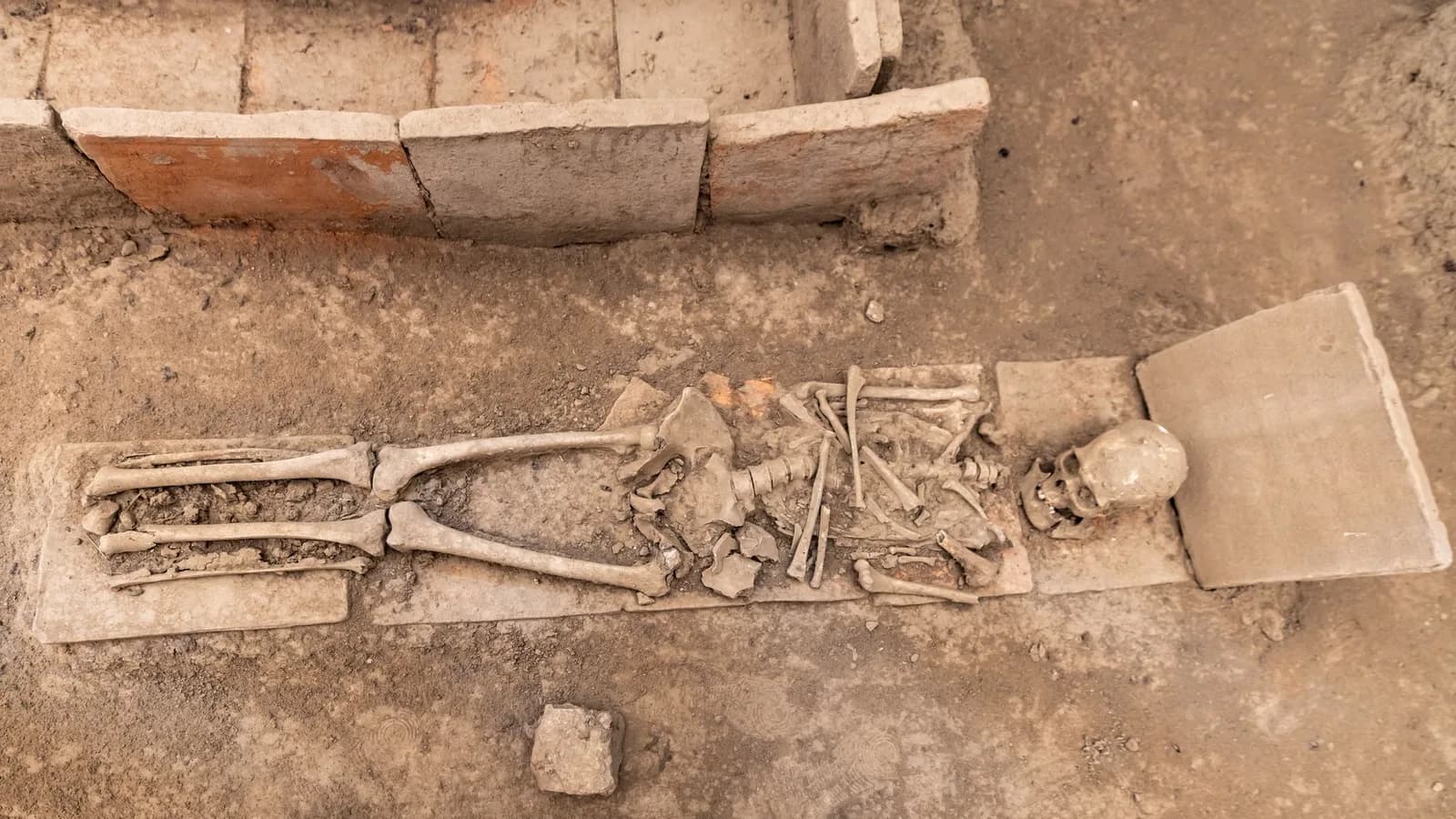
A single elongated skull in a private collection tells you nothing about the people who made it. Five excavated cemeteries, from coastal Peru to post-Roman Hungary, tell you who was shaped, who was not, and where they came from.
0 comments