

Yonaguni: a submerged monument, or a very tidy rock?
Off the coast of a Japanese island lies a formation with terraces, right angles and what look like steps. Two credentialled scientists have looked at the same rock and reached opposite conclusions. Here is what each of them is actually arguing.
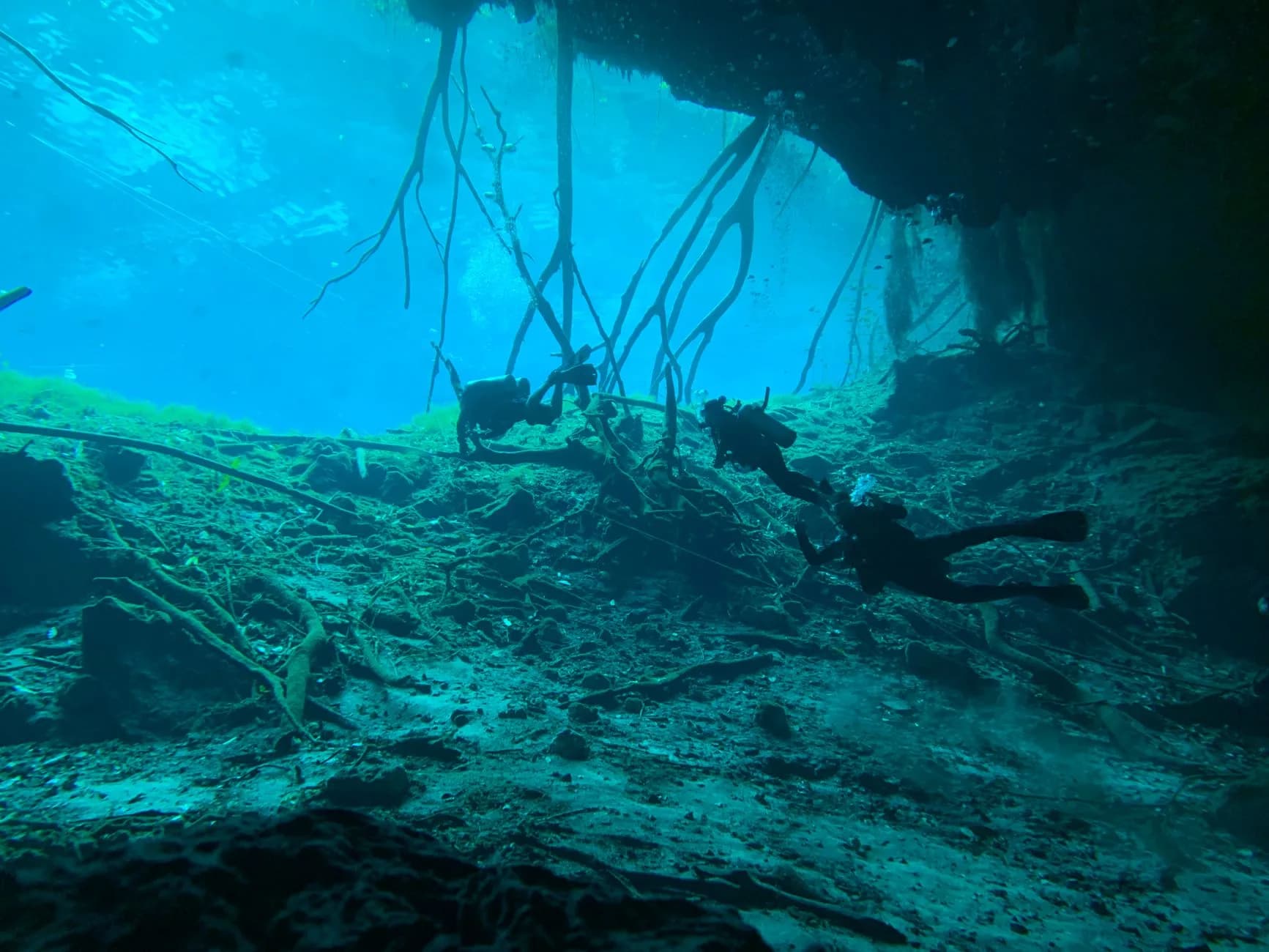
Photo by Francisco Davids on Pexels
In 1986 a local dive operator, Kihachiro Aratake, was looking for a place to watch hammerhead sharks off Yonaguni, the westernmost of the Japanese islands, when he found a formation in shallow water that did not look like the seabed around it. Terraces. Flat faces. Angles closer to ninety degrees than rock usually manages. Something that reads, immediately and powerfully, as built.
Nearly forty years later there is still no agreement on what it is, and the disagreement is between qualified people rather than between scientists and enthusiasts. That makes Yonaguni unusually worth taking seriously.
What is documented
The formation exists, is easily dived, and has been surveyed and photographed extensively. It is sandstone, part of a formation that runs through the region. It sits in water shallow enough that the area would have been dry land during the last glacial period, when sea levels were substantially lower — which places any human construction at least ten thousand years ago.
That date is what gives the case its force. If Yonaguni is artificial, it is older than almost anything else built.
The case for artificial
Masaaki Kimura, a marine geologist at the University of the Ryukyus, has argued for decades that the formation is worked. His case rests on features he considers difficult to produce naturally: what he reads as steps, a possible carved face, drilled holes, and an arrangement of blocks that he argues shows intent rather than fracture.
The case for natural
Robert Schoch, a geologist at Boston University, dived the site and concluded it is natural. His argument is that the sandstone there fractures along bedding planes and joint sets that intersect at close to right angles, and that wave action and current will then quarry those planes into terraces and steps.
This is not a hand-wave. Sandstone in tectonically stressed regions genuinely does this, and comparable formations exist above water elsewhere on the same islands, where nobody proposes they were built.
What was added later
Almost everything you will read connecting Yonaguni to Mu, Lemuria or Atlantis. Those are nineteenth and twentieth-century inventions attached to a twentieth-century discovery. Kimura himself argues for a lost regional culture, not a lost continent, and the distinction is routinely erased.
What remains unexplained

Whether it is built. Genuinely. This is one of the few cases on this site where the honest answer is that two competent specialists disagree and the evidence does not currently decide between them.
Our reading is that the natural explanation is stronger, because it requires nothing new — the rock type, the fracture pattern and the erosion regime are all documented and all sufficient. But "stronger" is not "settled", and anyone who tells you Yonaguni is definitely one thing or the other has stopped looking at it.
Join the discussion
Still open on this one:
- 01
Has any portable artefact ever been recovered from the site?
Four decades of diving and no reported artefact is itself evidence, and it points towards the natural reading.
- 02
Do comparable dry-land formations exist on Yonaguni itself?
Schoch says yes and that they settle the question. A systematic published comparison would be the most useful thing anyone could do here.
Be the first to comment
Sources
Open them and check for yourself. Where a record is public, it is linked.
Voyages of the Pyramid Builders
Robert M. Schoch, Tarcher/Penguin · 1 Jan 2003 · no public copy located
Yonaguni: submerged topography and the post-glacial sea level record
Japan Oceanographic Data Center
Related

Consciousness
Terminal lucidity: when a destroyed brain briefly works again
People with advanced dementia sometimes become clear, coherent and recognisably themselves shortly before death. It is documented in the medical literature, it happens, and nobody can currently explain it.
Consciousness
Ian Stevenson: forty years collecting children who remember other lives
A university psychiatrist spent his career documenting cases of young children who described a previous life, and checking whether the person they described had existed. He assembled over two thousand. The methodology is the argument.
Near Death Experiences
Pam Reynolds: the most-cited near-death case, and what it turns on
In 1991 a woman undergoing brain surgery under extraordinary conditions reported observing the operation. The surgical circumstances were unusually well documented. Whether she was unconscious at the time she perceived what she described is the whole argument.

Near Death Experiences
Near-death experiences: what the clinical research has established
Millions of people report a consistent set of experiences during cardiac arrest. That consistency is a real finding. What it means is where the argument starts, and hospital studies have been running for thirty years.
0 comments