

Elongated skulls: why did ancient humans change the shape of their heads?
Thousands of them, across five continents and twelve thousand years. Nobody serious disputes that people did this to their own children, or how. The argument is about why — and the answer everyone repeats turns out to be the least documented one.
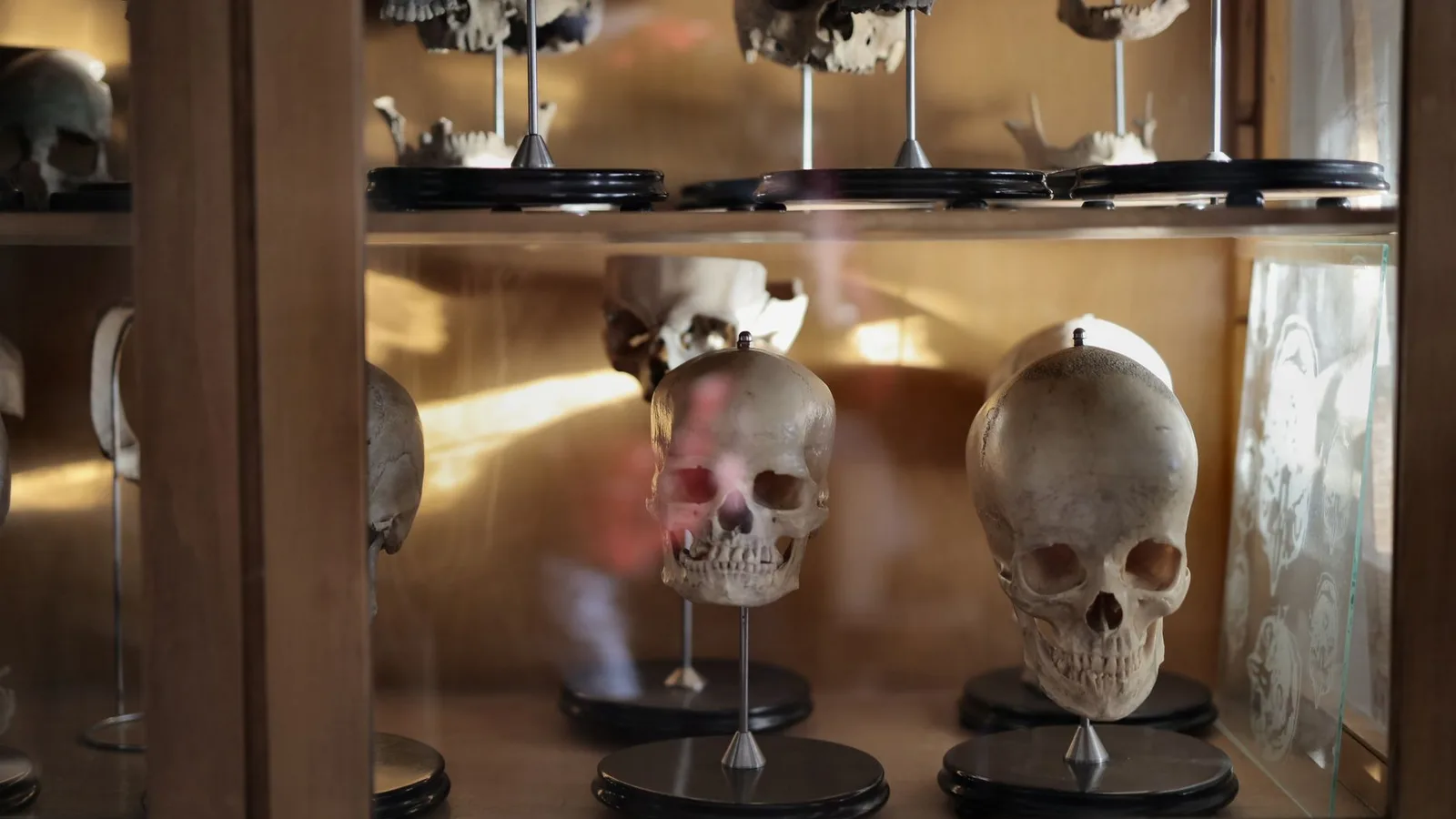
Photo by Andrea Piacquadio on Pexels
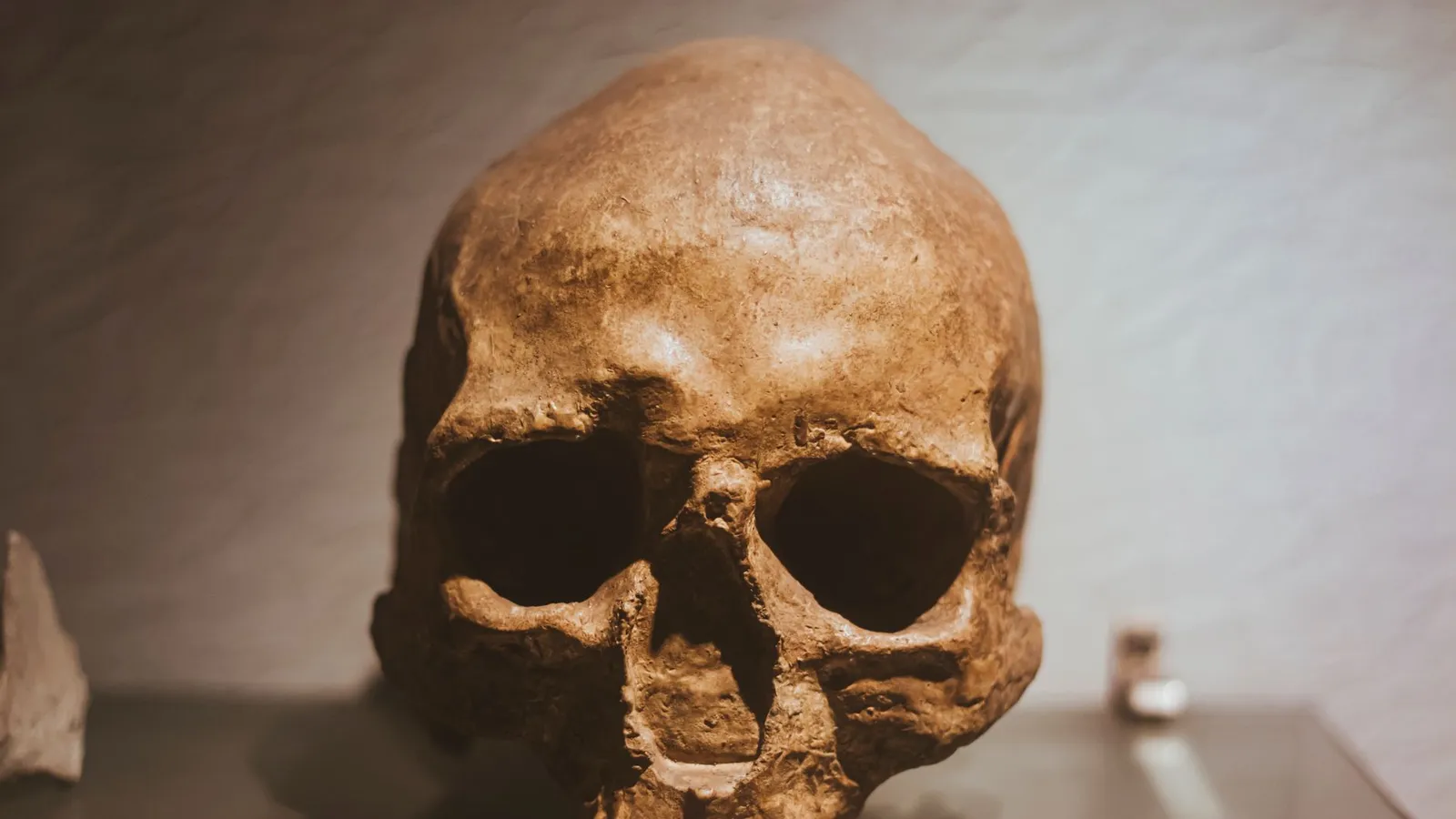
Walk through the anthropology store of a large museum and you will meet them. Long swept-back crania from the coast of Peru. Broad flattened foreheads from Yucatán. Cones from fifth-century Hungary. A high, smoothed skull from a French peasant family who were alive when the Eiffel Tower went up.
All human. All deliberate. All done to infants by adults who thought they were doing something worth doing.
The mechanics are understood in detail, the geography is mapped, and the chronology now runs back into the Palaeolithic. What is genuinely unresolved is the reason — and the reason usually given in popular accounts is the one with the thinnest evidence behind it.
What was actually done
A newborn skull is not a box. It is a set of separate plates connected by soft fibrous joints, with open gaps at the front and back, riding on a brain that will roughly double in volume in the first year. For a window of a few months to a couple of years, sustained gentle pressure will redirect where that growth goes. After the window closes, nothing will move it.
There are two broad families of technique, and they produce different heads. Wrapping — cords, cloth strips or bandages passed circumferentially around the vault — produces the annular or conical form: a long head that rises and sweeps backwards. Boards — a pad or plank against the forehead, another at the back, often built into a cradle — produce the tabular forms: erect if the compression runs vertically, oblique if the head is pushed backwards along its length. The typology used to sort them in the literature descends from José Imbelloni's classification of the 1930s, refined since but not replaced.
The best description of the actual procedure comes not from an excavation but from people who still remember doing it. On Tomman Island and the facing coast of south-west Malakula in Vanuatu, the Australian Museum records the sequence: about a month after birth, a burnt paste of candle-nut is applied daily to the child's head, a soft bandage of banana inner bark is wrapped over it, a specially woven pandanus basket goes over that, and the whole is secured with fibre rope. It is repeated daily for roughly six months.
What it does to a head — and what it does not
This is where most of the popular writing goes wrong, and where the published anatomy is unusually clear.
In 2013 a team led by Roman Khonsari CT-scanned 39 artificially deformed crania against 19 undeformed controls and measured three cavities — the intracranial cavity, the orbits and the maxillary sinuses — along with vault thickness. The bone redistributes: it thins where the device presses and thickens elsewhere. The shape of the orbits and sinuses changes in circumferential deformation. The volumes of the cranial cavities are conserved.
The sutures are the other thing routinely misread. In 1996 Christine White examined Maya crania from Lamanai in Belize and found fronto-occipital modification significantly associated with premature closure of the sagittal suture, and with extra wormian bones along the lambdoid. Sustained tension across the vault during the parietals' fastest growth phase can shut a suture early.
So a modified skull with an obliterated sagittal suture is not an anomaly that binding fails to explain. It is a documented consequence of binding.
On the harder question — whether it harmed anyone — the honest answer is that cognition cannot be tested in the dead, and we have not found a controlled study that settles it in either direction. What can be said is that the volume finding removes the most obvious mechanism for harm, and that the societies which practised it most intensively ran states, farmed at altitude and built cities. Physical risks from pressure sores, infection and asymmetry are real and were presumably sometimes paid. Nobody kept the figures.
How old, and how widespread
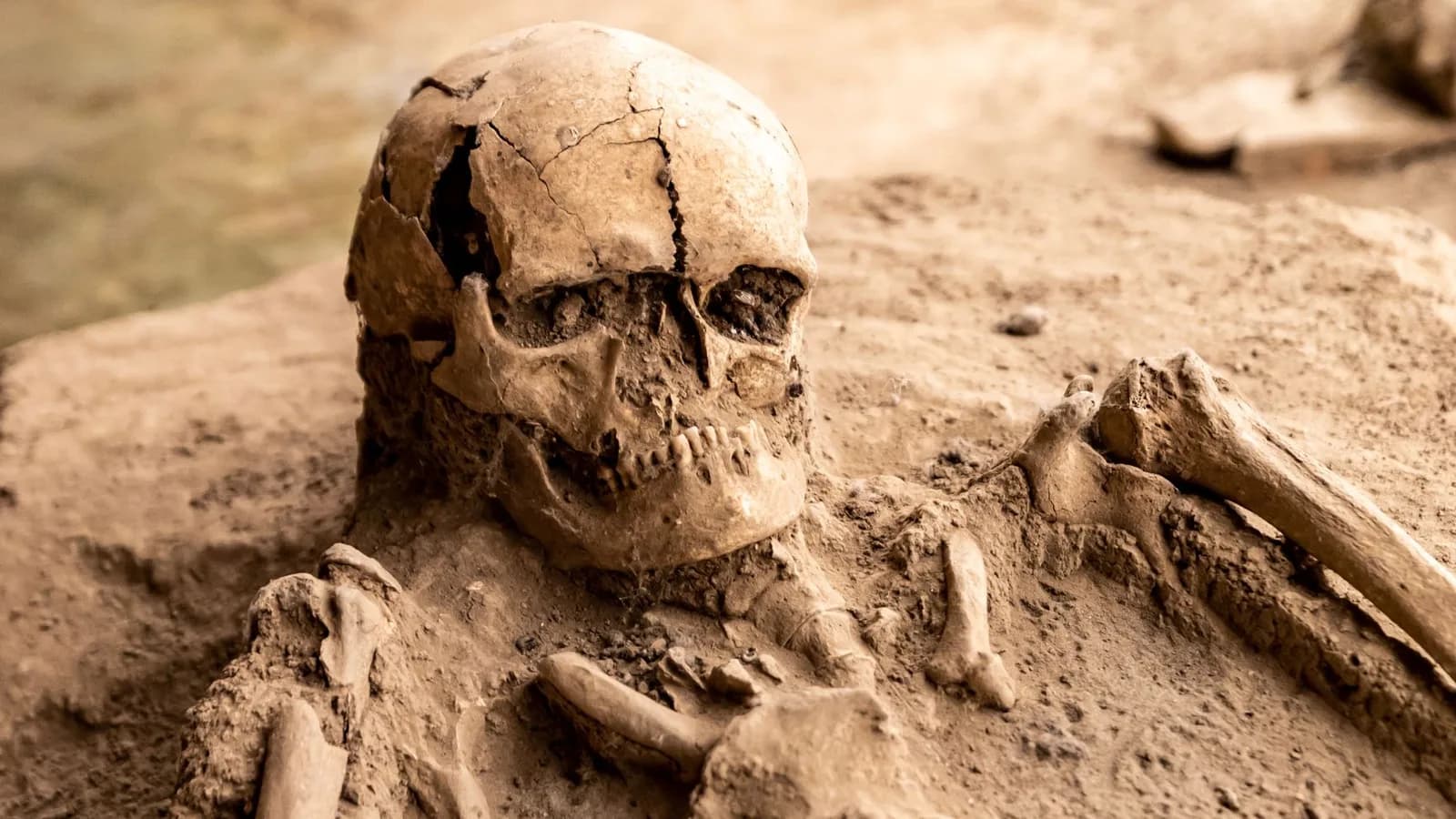
In 2025 a team working on the Late Upper Palaeolithic burials from Arene Candide Cave in Liguria published a geometric morphometric analysis of one individual, AC12, dated to roughly 12,620–12,190 calibrated years before present. Compared against Palaeolithic, Mesolithic and Neolithic Italian crania, against pathologically deformed skulls, and against a global reference sample of modified ones, AC12 sits with the modified group and as a clear outlier from everything else.
That is the earliest case in Europe, and it pushes the practice into the hunter-gatherer world — before farming, before pottery, before any of the state societies usually credited with inventing it. From there the distribution is enormous: the Andes and the Peruvian coast, Mesoamerica from at least the second millennium BC, Central Asia and the Caucasus, the Carpathian Basin and Migration-Period Germany, north-east Africa, island Melanesia, the Pacific Northwest — and rural France.
The written record begins about twenty-five centuries ago. In On Airs, Waters, and Places, Hippocrates describes a people he calls the Macrocephali who, while a newborn's head is still soft, shape it by hand and hold it long with bandages and other contrivances, because they consider the longest-headed the most noble. He then argues, wrongly, that the trait had become hereditary — and adds, almost in passing, that the custom had by his day fallen out of use through contact with other peoples.
At the other end of the chronology, the practice was still going on in living memory. In the region of Toulouse a customary head wrap persisted into the early twentieth century. A 2022 study analysed 31 frontal and 70 lateral photographs of affected individuals from two nineteenth-century French archives, and measured the forces the traditional Toulouse device actually exerts using a 3D-printed skull and pressure sensors. The forces were moderate. The facial signature was distinctive and measurable.
So why did they do it?
The stock answer — that people were imitating gods, or imitating visitors from somewhere else — is repeated so often that it has acquired the texture of a finding. It is worth testing properly, because the evidence is not uniform and the answer is not the same everywhere.
Where it holds up best is Vanuatu, and it holds up because the people who did it explain it themselves. The culture hero Ambat had a long head and a fine long nose; a finely elongated head is understood to mark intelligence, higher status and closeness to the world of the spirits. "Longfala hed" still means clever across Vanuatu today. Asked why, community members told the Australian Museum that it is their tradition and that it originates in the spiritual beliefs of their people.
That is a genuine instance of shaping a child towards a revered figure, stated in the first person by the culture that practised it. It is also the clearest such case there is, and it is Melanesian, not Andean.
Elsewhere the documented reasons are different, and mostly social.
Among the Maya, Duncan and Hofling argued in 2011 that modification was protective: colonial documents and ethnographic midwifery both place animating essences in the head, and hold newborns particularly vulnerable to losing them. Binding a new head, on their reading, works like the dedication of a newly built house — something unfinished and exposed being closed and ensouled. That is not imitation of a deity. It is infant care in a cosmology.
On the lower Columbia, Meriwether Lewis recorded on 19 March 1806 that Clatsop infants had their heads compressed between two boards. Half a century later the ethnographer James Swan described the same practice as a badge of free birth: enslaved people's children were not permitted it. The shape did not mark you as divine. It marked you as unenslaveable.
In early medieval Bavaria the marker was origin. Sequencing 36 adults from six cemeteries, Veeramah and colleagues found the nine clearly deformed skulls belonged almost entirely to adult women whose ancestry was southern and south-eastern European, in communities where everyone else was northern and central European. The shape recorded where a woman had grown up.

Why the head at all?
If the purpose is largely social — this child is ours, this child is free, this child belongs to that valley — then the choice of the head is not arbitrary.
It is the one part of a person that is always visible and never removable. Clothing changes, ornament is taken off, tattoos can be covered. A shaped skull is legible across a plaza, permanent from infancy, and impossible to acquire as an adult. It cannot be faked by an outsider and it cannot be renounced by an insider.
It is also, in most of the cosmologies where the reasons were written down, where the person is understood to live.
What we know
That artificial cranial modification is a real, ordinary, globally distributed human practice with at least twelve thousand years of depth. That it works by redirecting infant skull growth within a narrow developmental window. That it conserves cranial volume, alters vault thickness and facial architecture, and can close the sagittal suture early. That where cultures explained it, they gave a range of reasons — status, ethnicity, free birth, gender, beauty, spiritual protection, resemblance to a revered ancestor — and that these reasons differ by place.
What we do not know
Why it appears in Palaeolithic Liguria and then, apparently, not again in Europe for thousands of years. Whether the earliest cases were deliberate in the sense we mean, or the recognised and then valued by-product of how infants were carried. What was said about it in the great majority of societies that practised it and left no text. Whether it cost the children anything measurable, because that question cannot now be asked of them.
And the largest gap: for most sites the reason is inferred from patterning in a cemetery, not stated by anyone. The inference is often good. It is not the same as being told.
Buried Evidence
Continue the investigation
- 01The Paracas skulls: what do we actually know?Hundreds of elongated crania from a real excavation, and a set of extraordinary claims attached to a handful of them decades later. Taken one at a time: who said it first, was anything published, and can it be checked.
- 02Why did cultures across the world bind their children's skulls?Palaeolithic Italy, Iron Age Scythia, the Andes, the Maya lowlands, the Congo, Vanuatu, the Columbia River and rural France. Laid side by side, the cases answer a sharper question than "why" — did anybody teach anybody else?
- 03The cemeteries of the long-headed: what a whole burial ground showsA single elongated skull in a private collection tells you nothing about the people who made it. Five excavated cemeteries, from coastal Peru to post-Roman Hungary, tell you who was shaped, who was not, and where they came from.
What we could not settle
Loose ends we are still working on.
- 01
Why the head, when there are easier things to change?
Tattoos, teeth, ears, hair — all quicker, all reversible, all visible. Shaping a skull takes months of daily work on a baby and can never be undone. Something about that trade must have been worth it, and different people may have had completely different reasons.
- 02
Did anyone ever grow up and object?
It was done to infants, by adults, permanently. In thousands of years somebody must have wished it had not been. We have found no record of anyone saying so — which may mean nobody minded, or may mean nobody was asked.
- 03
Could a practice like this start by accident?
Around Toulouse, families wrapped babies' heads to protect them and a distinctive skull shape came out of it. If a habit can produce the shape before anyone intends it, how many of the ancient cases began as something else entirely?
Got something to add?
A question, a source we missed, a correction, or something you saw yourself — all of it is welcome here. You do not need to be an expert, and you are allowed to disagree with us.
Nobody has yet — go on.
Sources
Open them and check for yourself. Where a record is public, it is linked.
Mori et al., Scientific Reports, 2025
Shape and volume of craniofacial cavities in intentional skull deformations
Khonsari et al., American Journal of Physical Anthropology, 2013
Sutural effects of fronto-occipital cranial modification
White, American Journal of Physical Anthropology, 1996
Why the head? Cranial modification as protection and ensoulment among the Maya
Duncan and Hofling, Ancient Mesoamerica 22(1), 2011
Australian Museum
On Airs, Waters, and Places, part 14
Hippocrates, trans. Francis Adams — MIT Internet Classics Archive
Veeramah et al., PNAS, 2018
Galiay et al., Journal of Stomatology, Oral and Maxillofacial Surgery, 2022
The Journals of the Lewis and Clark Expedition
University of Nebraska–Lincoln
Related

Ancient Aliens
Where ancient astronaut theory actually came from
The idea that visitors built the ancient world is usually presented as a question raised by the evidence. It is better understood as a literary tradition with a traceable line of descent — and knowing the line explains the claims.

Archaeological Mysteries
Did ancient people shape their heads to resemble their gods?
It is the most repeated explanation for head binding and it is almost never sourced. Run it as a test instead: what would count as evidence, and how many of the societies that shaped heads actually meet the standard?
Archaeological Mysteries
Why did cultures across the world bind their children's skulls?
Palaeolithic Italy, Iron Age Scythia, the Andes, the Maya lowlands, the Congo, Vanuatu, the Columbia River and rural France. Laid side by side, the cases answer a sharper question than "why" — did anybody teach anybody else?

Archaeological Mysteries
The Paracas skulls: what do we actually know?
Hundreds of elongated crania from a real excavation, and a set of extraordinary claims attached to a handful of them decades later. Taken one at a time: who said it first, was anything published, and can it be checked.
0 comments