

The Paracas skulls: what do we actually know?
Hundreds of elongated crania from a real excavation, and a set of extraordinary claims attached to a handful of them decades later. Taken one at a time: who said it first, was anything published, and can it be checked.
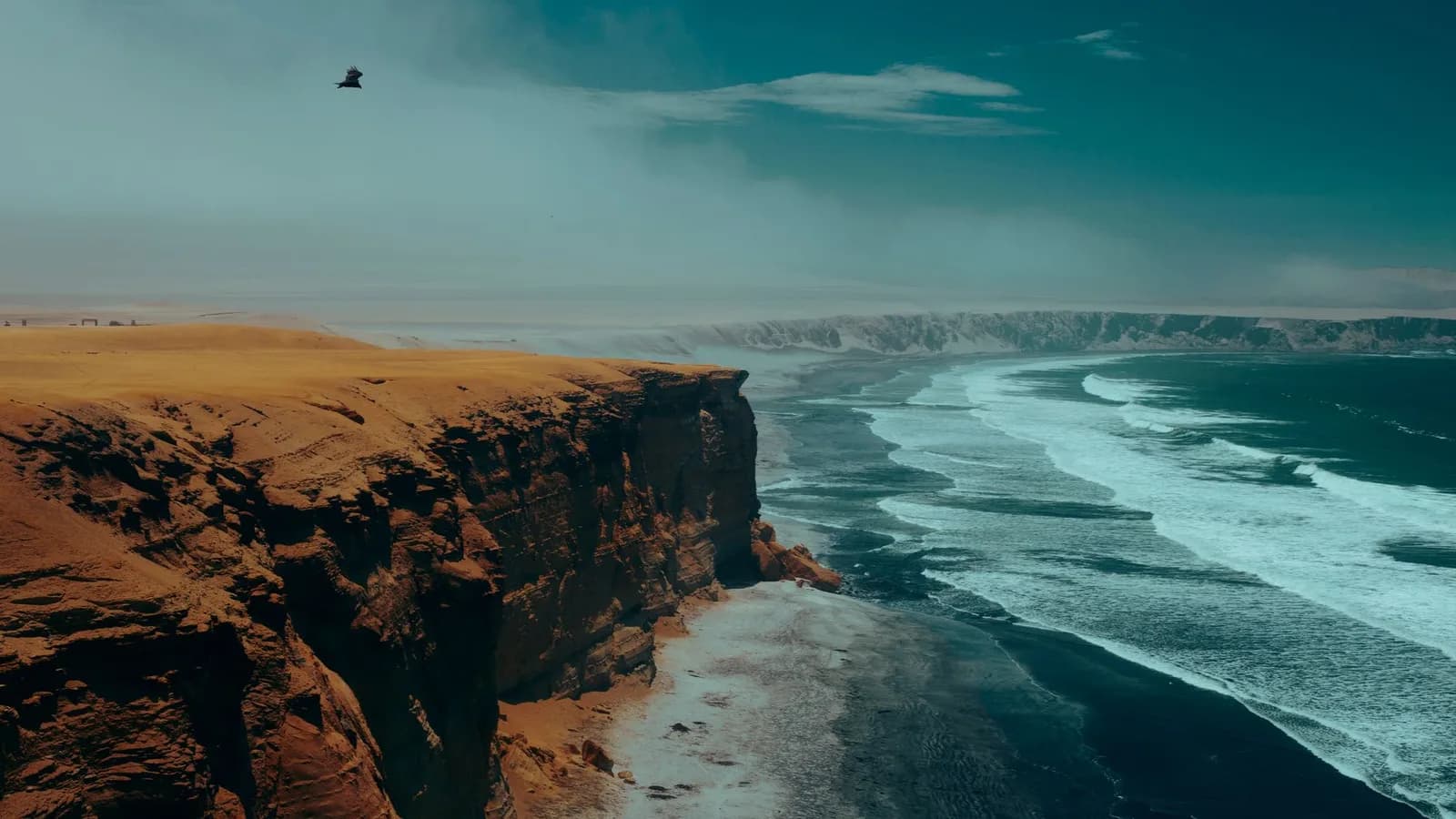
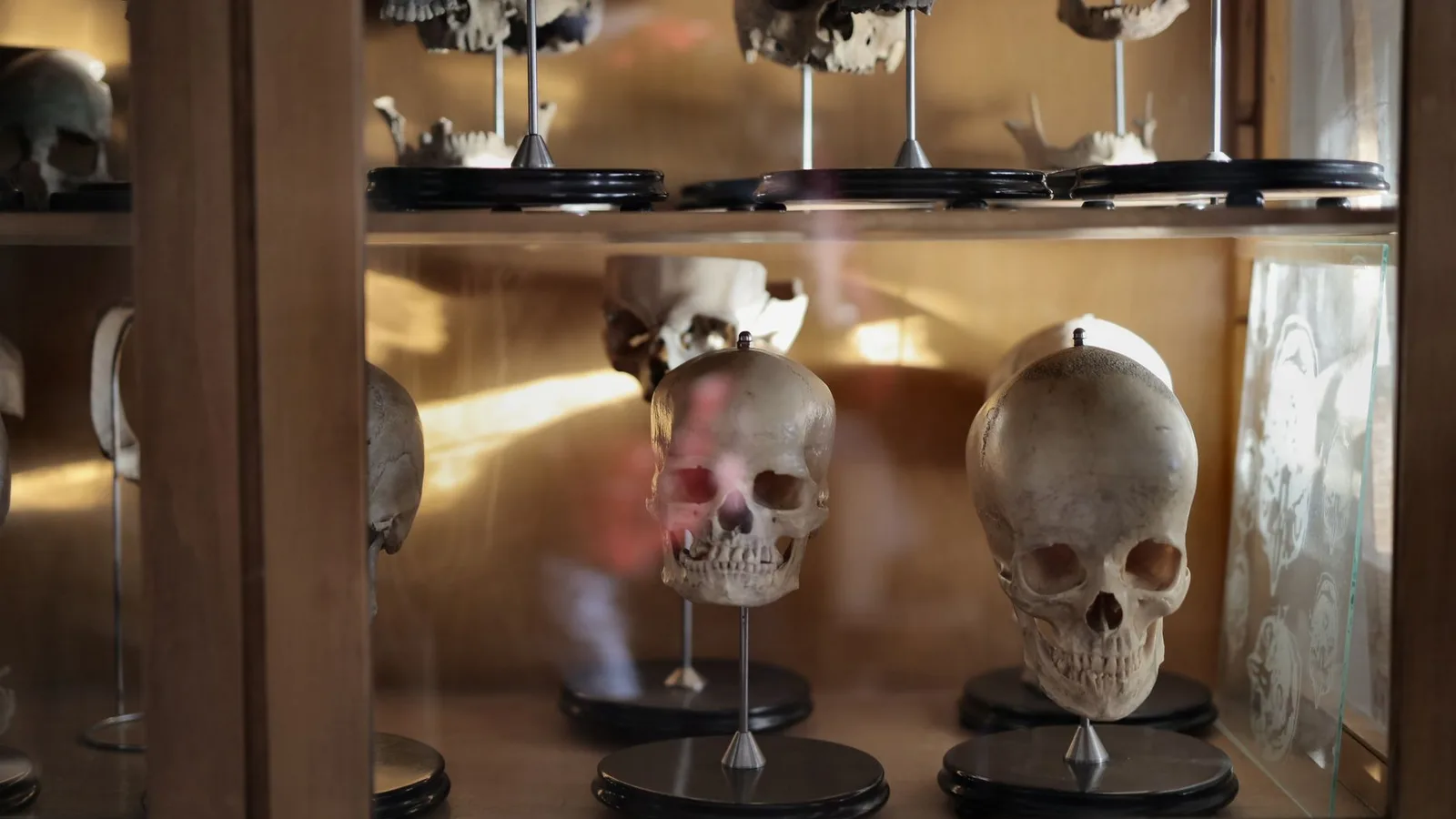
Photo by Lua Morales on Pexels
The Paracas skulls are the most famous elongated crania in the world, and the reason is not the archaeology. It is a sequence of announcements made between 2014 and 2018 claiming that some of them are not human.
The underlying find is real, well documented and considerably more interesting than the claims. So the useful thing to do is separate the two completely: first what was excavated, then each claim on its own, with its origin and its status.
What was found, and by whom
On 25 October 1927 the Peruvian archaeologist Julio C. Tello uncovered the first of a dense field of mummy bundles on the north side of Cerro Colorado, on the Paracas peninsula of southern Peru. The site is the necropolis of Wari Kayan. Over the 1927–28 seasons the team lifted 429 funerary bundles, buried between roughly one and five metres down, each a body wrapped in layer upon layer of embroidered textile.
The bulk of that collection went to the Museo Nacional de Arqueología, Antropología e Historia del Perú in Lima, where it remains. It is one of the great textile assemblages of the ancient world, and the ongoing work of reconstructing which bundle came from where — Tello's contextual records were partly separated from the objects — has been a research project in its own right for decades.
The earlier phase of the same culture, Paracas Cavernas, is where the head shaping is best quantified. A 2022 study in the Journal of Archaeological Science: Reports examined 159 individuals from Cerro Colorado dating to roughly 550–200 cal BC. Ninety-eight per cent showed intentional cranial modification. The tabular erect type dominated at about 60 per cent overall, and the bilobate form was significantly more common in women, at about 34 per cent against 19 per cent in men.
The skulls that feature in the alien claims are largely not from that museum collection. They come from a smaller private museum in the town of Paracas founded by Juan Navarro, and from material of the kind that circulates on Peru's heavily looted south coast. Reported collection sizes vary between accounts; the number of skulls sampled for the DNA work was three.
Claim: the skulls have far greater cranial volume
Stated as 25 per cent larger, sometimes as 25 to 60 per cent, and frequently paired with a weight figure. It circulated from about 2014 through the researcher and tour operator Brien Foerster and the website Ancient Origins.
What exists to test it: the only controlled measurement study of the question found the opposite. Khonsari and colleagues CT-scanned 39 deformed and 19 undeformed crania in 2013 and reported that intentional deformation changes the shape of the cranial cavities and the thickness of the vault while conserving their volumes.
What does not exist: any published endocranial volume measurement of any specific Paracas skull, by anyone, in any journal. The figures in circulation are not attributed to a scan, a method or a laboratory.
Claim: some skulls have no sagittal suture
Presented as an anatomical impossibility for a human being — the joint between the two parietal bones simply absent.
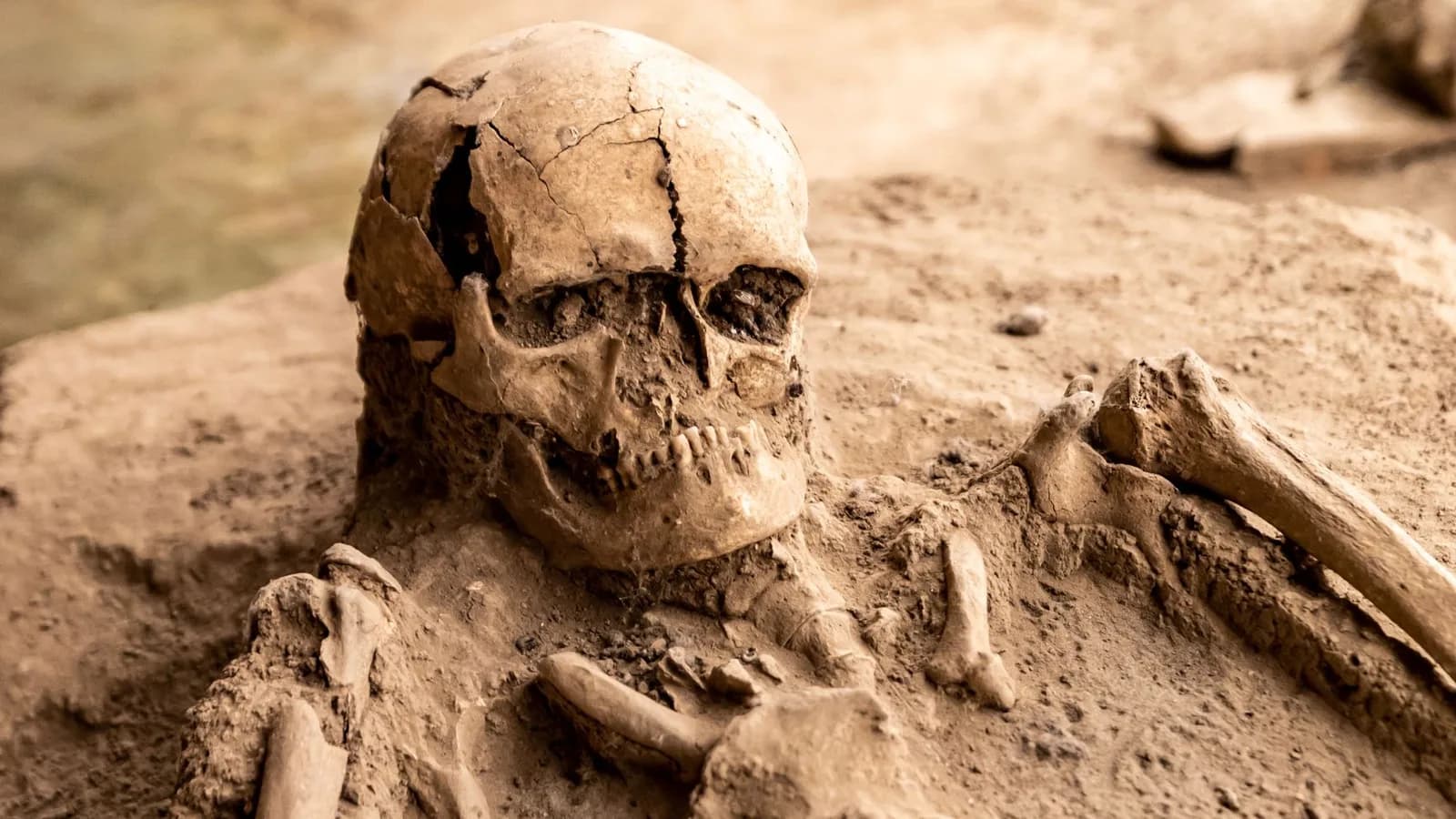
It is a real observation and it has an ordinary explanation. Christine White's 1996 study of modified Maya crania from Lamanai found fronto-occipital deformation significantly associated with premature closure of the sagittal suture. The tension a deforming device applies across the vault during the parietals' fastest growth can shut the suture early, after which it obliterates.
There is also a well-known clinical condition, sagittal craniosynostosis, in which that suture fuses prematurely on its own and the head grows long and narrow in compensation. Distinguishing a bound skull from a scaphocephalic one is a real problem in bioarchaeology, and it is a problem about which of two human explanations applies.
Claim: the foramina are wrong
Variously that there are holes where there should not be, or that the foramen magnum sits too far back.
Parietal foramina are ordinary anatomical variants — present in most people, absent in some, single, paired or multiple, and varying widely in size. Their position relates directly to the sagittal suture, which is exactly the structure binding is known to disturb. And the effects of deformation are not confined to the vault: Khonsari's CT study found the shape of the orbits and the maxillary sinuses altered in circumferential types, so a reshaped opening in a reshaped skull is not on its face surprising.
What is missing is specimen-level publication: which skull, which foramen, measured how, compared against what reference range. Without that there is nothing to evaluate.
Claim: the skulls have red hair, unknown in native South America
Reddish hair on desert mummies is genuinely striking, and it is also expected.
Human hair colour comes from two pigment families: the brown-black eumelanins and the red-yellow pheomelanins. They do not degrade at the same rate. Wilson and colleagues documented the sequence of biodegradation in archaeological, forensic and experimentally buried hair in 2007, working through the cuticle and cortex to the pigment granules themselves. The practical consequence, seen in mummies from Egypt to the Andes, is that dark hair loses its eumelanin first and drifts towards red-blond over centuries. Iron oxide deposition from burial can add to the effect.
Peruvian coastal burials sit in about the driest oxidising conditions on earth, which is exactly the setting where hair survives long enough for this to happen.
Claim: the DNA is not human, or not Native American
This is the claim that carried the story worldwide, and it came in two waves.
The first, in February 2014, was promoted by Brien Foerster and reported that mitochondrial DNA from a Paracas skull carried mutations unknown in any human, primate or animal known to science. The geneticist was not named. No sequence data was released. Nothing was submitted to a journal; the results were announced online.
The second wave, in 2016, came through the author L. A. Marzulli, who sent samples to a commercial ancient-DNA service. The reported result was two mitochondrial haplogroups: T2b and B4. T2b was presented as evidence of European or Near Eastern origin. B4 was not emphasised in the publicity — it is common in South America.
The most substantial technical criticism came from Jennifer Raff, an anthropological geneticist who works on ancient DNA from the Americas. Writing in September 2016, she went through the sampling as filmed: bare skin, uncovered hair and beards over the remains, distilled water squirted onto them, a rotary tool used with compressed air blown into the cranial cavity, no bleach or ultraviolet decontamination of tools or samples, and no sequencing of the people doing the handling to identify their own DNA if it turned up. The laboratory itself noted that the skull had been heavily handled over the years.
What a real answer would require
The frustrating part is that none of this is hard. A skull with documented excavation provenance. A CT scan, so the volume question stops being an argument. Sampling in a clean facility by people who have sequenced themselves, from bone that has not passed through a museum shop. An accredited ancient-DNA laboratory, named. Publication with the raw reads deposited so that anyone can re-run the analysis.
Peruvian and international teams do this routinely for Andean remains. It has not been done for the specimens at the centre of this story, and the reason is largely that those specimens have no documented provenance to begin with — which is the deeper problem on this coast, and the one worth being angry about.
What we know
That Tello excavated 429 bundles at Wari Kayan in 1927–28 and that the collection is in Lima. That intentional cranial modification at Paracas Cavernas was near-universal, well characterised, and patterned by sex. That artificial deformation conserves cranial volume, can close the sagittal suture early, and alters the cranial base. That reddish hair in desert burials is a predictable product of pigment degradation. That no peer-reviewed genetic sequence from any Paracas skull has been published in support of the non-human claims.
What we do not know
The endocranial volume of the specific skulls that are claimed to be outsized, because nobody has published a measurement. The provenance of most of the skulls in private hands. Whether any individual in the Paracas population carried unusual ancestry, because the aDNA work that would show it has not been done on these remains under conditions that would make the result mean anything.
One thing worth saying plainly: a failed test is not a passed test in reverse. The claims here have not been demonstrated. They have also not been rigorously refuted specimen by specimen, because the specimens have never been properly examined. Both halves of that sentence are true.
Buried Evidence
Continue the investigation
- 01Why did cultures across the world bind their children's skulls?Palaeolithic Italy, Iron Age Scythia, the Andes, the Maya lowlands, the Congo, Vanuatu, the Columbia River and rural France. Laid side by side, the cases answer a sharper question than "why" — did anybody teach anybody else?
- 02The cemeteries of the long-headed: what a whole burial ground showsA single elongated skull in a private collection tells you nothing about the people who made it. Five excavated cemeteries, from coastal Peru to post-Roman Hungary, tell you who was shaped, who was not, and where they came from.
- 03Akhenaten’s elongated head: anatomy, art or symbolism?The pharaoh is shown with a long skull, a long face and a heavy body, and so are his wife and daughters. Three explanations compete — real anatomy, artistic convention, religious symbolism — and one skull that can actually be measured decides more than any of the arguments.
What we could not settle
Loose ends we are still working on.
- 01
Has anyone ever just measured one properly?
The whole "bigger brain" argument would end with one CT scan and a published number. As far as we can find, that scan has never been done on the famous skulls. If you know of one, we would genuinely like to see it.
- 02
Why does nobody ever name the laboratory?
The 2014 result came from a geneticist who was never identified. That is unusual for a discovery said to rewrite human origins, and it is the first thing to ask about any claim like it.
- 03
Where did each of these skulls actually come from?
Most of the ones in private collections were dug out of the sand by looters, not archaeologists. Once you lose the grave, you lose the date, the goods and the neighbours — and a strange skull with no context can never be more than a curiosity.
Got something to add?
A question, a source we missed, a correction, or something you saw yourself — all of it is welcome here. You do not need to be an expert, and you are allowed to disagree with us.
Nobody has yet — go on.
Sources
Open them and check for yourself. Where a record is public, it is linked.
About the Necropolis of Wari Kayan
Arqueología Paracas — Wari Kayan, Ann H. Peters
Museo Nacional de Arqueología, Antropología e Historia del Perú
Ministerio de Cultura del Perú
Shape and volume of craniofacial cavities in intentional skull deformations
Khonsari et al., American Journal of Physical Anthropology, 2013
Sutural effects of fronto-occipital cranial modification
White, American Journal of Physical Anthropology, 1996
Wilson et al., British Journal of Dermatology, 2007
Genetic mythologies: "Nephilim DNA" from the Paracas skulls
Jennifer Raff, anthropological geneticist, 2016
Elongated skulls found in Peru could be aliens?
Snopes
Related
Archaeological Mysteries
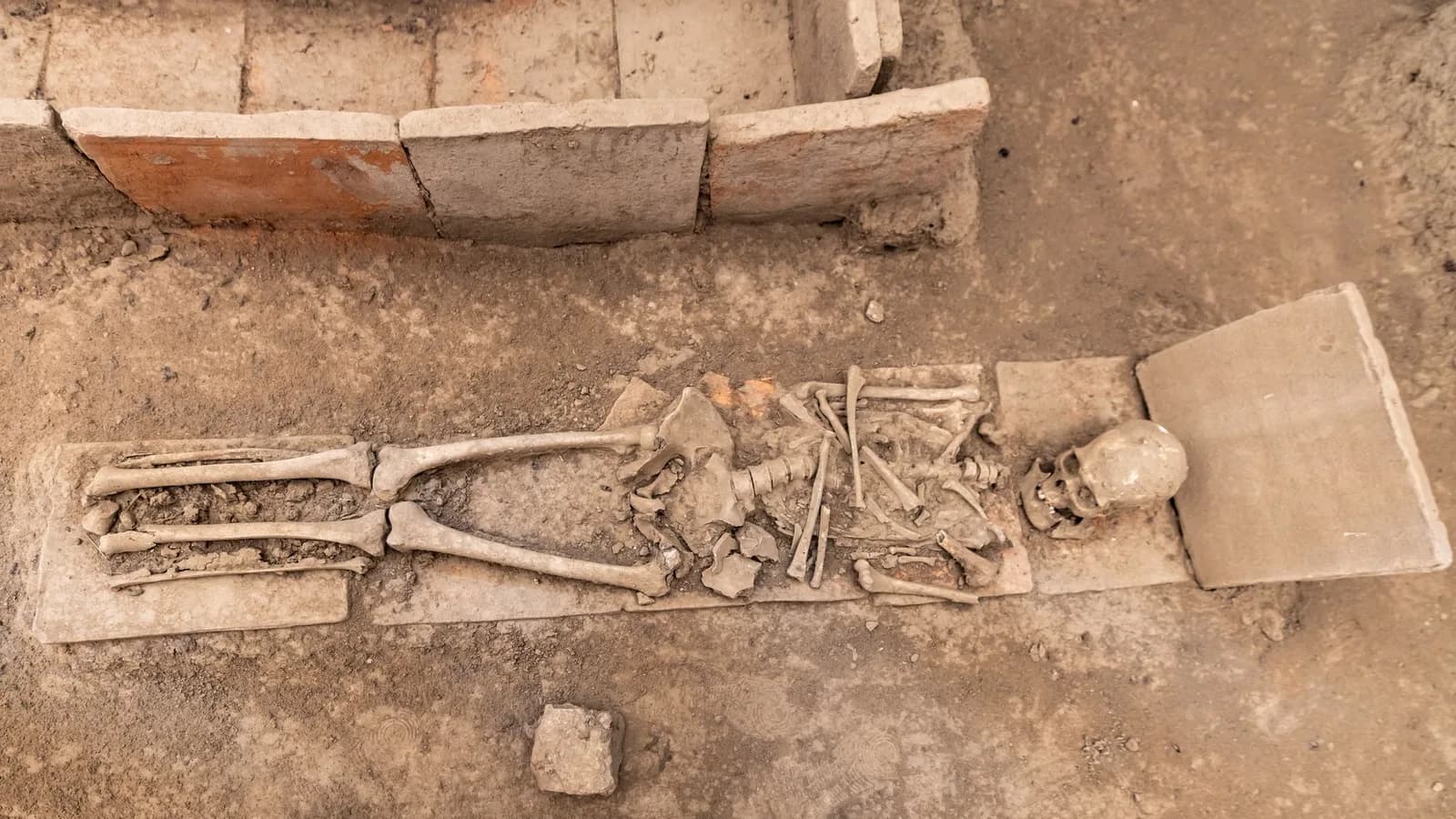
Why did cultures across the world bind their children's skulls?
Palaeolithic Italy, Iron Age Scythia, the Andes, the Maya lowlands, the Congo, Vanuatu, the Columbia River and rural France. Laid side by side, the cases answer a sharper question than "why" — did anybody teach anybody else?
Archaeological Mysteries
Elongated skulls: why did ancient humans change the shape of their heads?
Thousands of them, across five continents and twelve thousand years. Nobody serious disputes that people did this to their own children, or how. The argument is about why — and the answer everyone repeats turns out to be the least documented one.
Archaeological Mysteries
The cemeteries of the long-headed: what a whole burial ground shows
A single elongated skull in a private collection tells you nothing about the people who made it. Five excavated cemeteries, from coastal Peru to post-Roman Hungary, tell you who was shaped, who was not, and where they came from.
Archaeological Mysteries
Roman dodecahedra: a genuine open question
Hollow bronze twelve-sided objects with holes of differing sizes and knobs at the corners. Around 130 are known. No Roman text mentions them, and nobody knows what they were for.
0 comments