

The cemeteries of the long-headed: what a whole burial ground shows
A single elongated skull in a private collection tells you nothing about the people who made it. Five excavated cemeteries, from coastal Peru to post-Roman Hungary, tell you who was shaped, who was not, and where they came from.
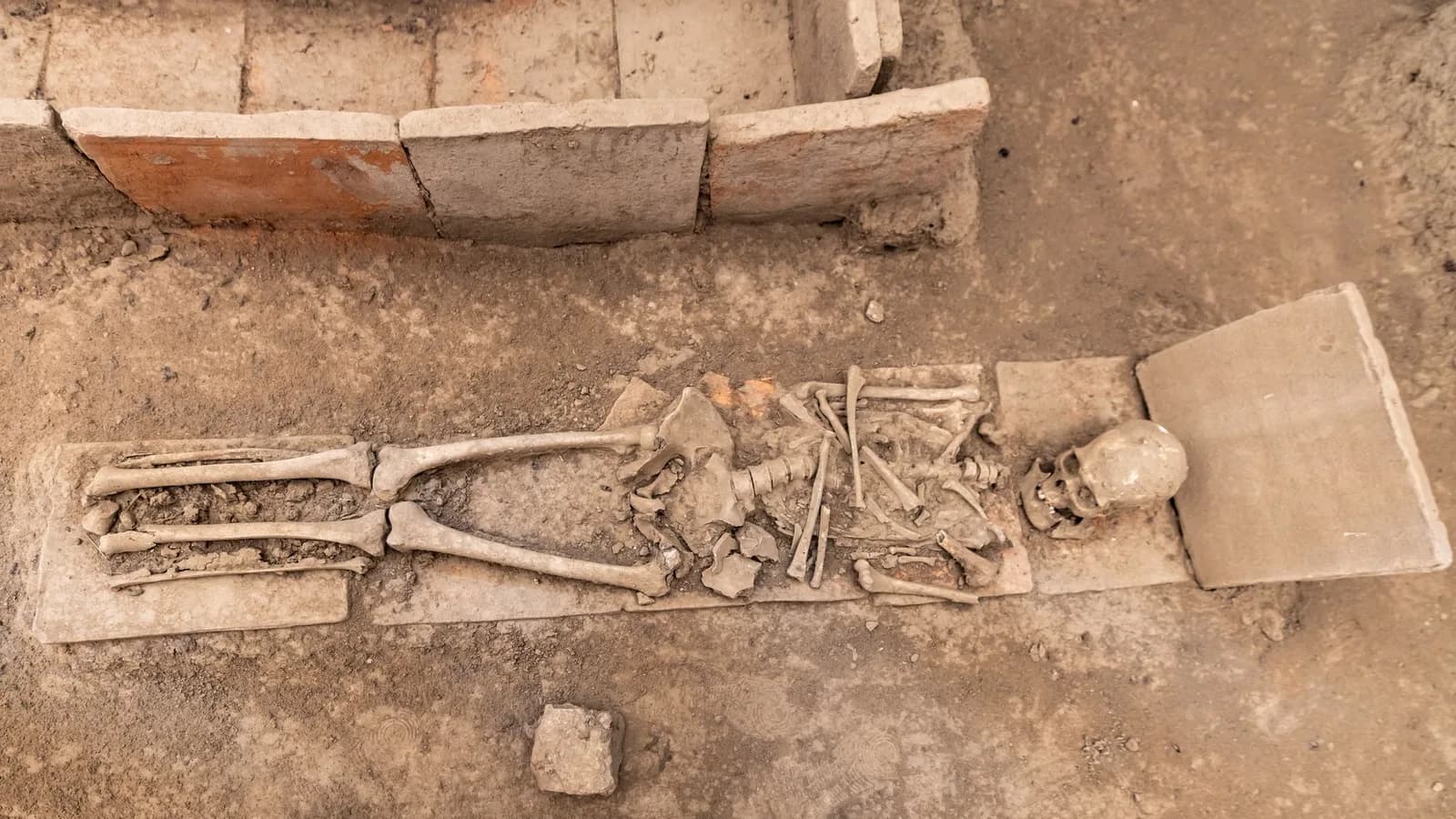
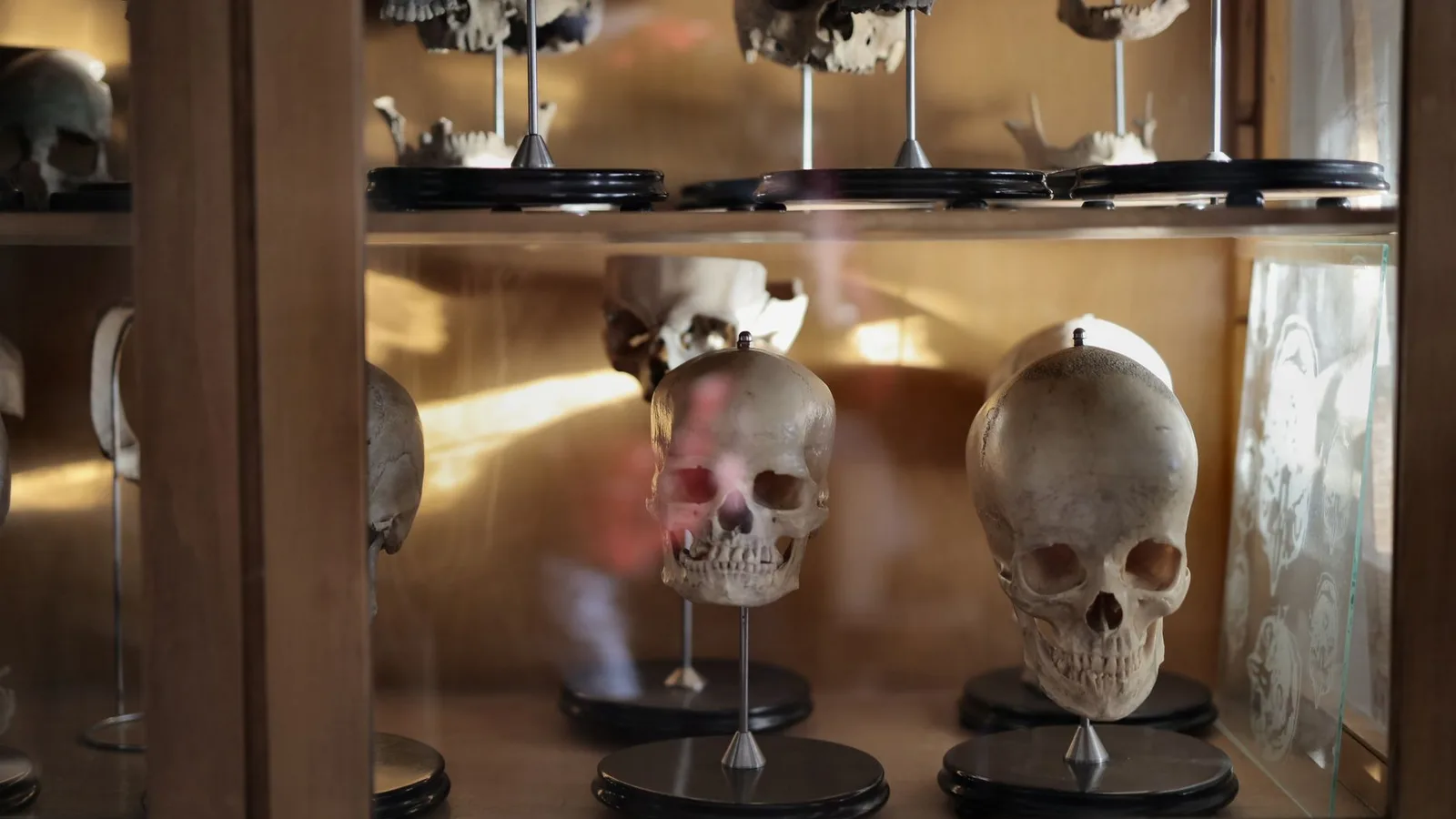
Photo by Boris Hamer on Pexels
Almost every famous elongated skull is famous on its own. It sits in a case, or a photograph, or a collector’s cabinet, detached from the ground it came out of and from everyone it was buried alongside.
That is the worst possible way to look at one. The information in cranial modification is almost never in the individual skull. It is in the distribution: how many people in a community had it, which people, whether the children have it, and whether the modified and the unmodified came from the same place.
Those questions can only be asked of a fully excavated cemetery. Here are five where they have been.
What a cemetery lets you ask
Four questions, in ascending order of how much they tell you.
What proportion of the buried population was modified? Near-universal means it was simply what was done to infants. Around half means somebody was choosing.
Which people? If the modified are mostly women, or mostly the richly furnished graves, the practice was marking something within the community rather than the community itself.
Are the children modified? This is the decisive one. Head shaping is done to infants. If the modified skulls in a cemetery all belong to adults and none to children, the community was not doing it — it was receiving people who arrived already shaped.
And where did they grow up? Strontium in tooth enamel records the geology a person ate from as a child; ancient DNA records ancestry. Together they separate a local custom from an imported one.
Cerro Colorado, Peru — 550 to 200 BC
At the Paracas Cavernas burials on the Peruvian south coast, a 2022 study described and classified the cranial shape of 159 individuals: 137 adults and 22 non-adults.
Ninety-eight per cent of them had intentional cranial modification.
That is as close to universal as an archaeological sample gets, and it settles one thing immediately. At Paracas the shaped head did not distinguish anybody from anybody. It was not a badge of rank or a mark of an incoming group. It was what happened to babies.
The variation was in the style. Tabular erect was the commonest form across the whole sample at 60 per cent, but the bilobate form was significantly more frequent in women, at 34 per cent against 19 per cent in men. So the community shaped every head, and then used the sub-type to say something further.
The Titicaca basin and Moquegua — AD 500 to 1100
Deborah Blom’s study of Tiwanaku head shape, published in 2005, examined 412 individuals from the capital itself, from surrounding sites in the Tiwanaku and Katari valleys, and from Tiwanaku-affiliated settlements in the Moquegua valley, several hundred kilometres away and thousands of metres lower.
The pattern was clean. In Moquegua, fronto-occipital modification only. In the Katari valley, a distinctly different annular form. At Tiwanaku itself, both.
The Moquegua pattern had already been described at the Omo site in 1995, where Hoshower and colleagues examined deformation across the Huaracane, Chen Chen and Tumilaca phases and reported "homogeneity within individual cemeteries and heterogeneity across cemeteries" — each burial ground internally consistent, and different from its neighbours. Blom’s contribution was to show that the pattern held across the whole polity.
San Pedro de Atacama, Chile — AD 400 to 1450
The largest sample in this article, and the one that behaves least like the others.
A 2022 study of 1,190 individuals from 17 sites in the Atacama oasis found cranial modification in 520 of them — 43.7 per cent. Of those, 346 were tabular and 174 annular.
So in the Atacama, unlike Paracas, more than half the buried population had ordinary unmodified heads. Somebody was deciding, family by family.
Women were modified more often than men: 237 of 487 women, or 48.7 per cent, against 175 of 440 men, or 39.7 per cent. The gap widened for the most pronounced modifications, 58 women against 23 men.
The same study tested whether modification tracked diet, using stable isotopes as a proxy for what people ate and therefore roughly for how they lived. It did not line up. The authors concluded that head shape and diet "do not seem to act in tandem, but rather seem to reflect different elements of the social identities" of the people buried there.
Mözs-Icsei dűlő, Hungary — about AD 430 to 480
A fully excavated fifth-century cemetery in what had been the Roman province of Pannonia Valeria, published in 2020 with strontium, carbon and nitrogen isotope data from 96 graves.
Fifty-one individuals had artificially deformed skulls — adult men, adult women and children. It is one of the largest concentrations of the practice known from the Carpathian Basin.
The cemetery was used for roughly forty years and contains three successive burial groups. The proportion of modified skulls climbs through them: 31.6 per cent in the earliest group, 64.6 per cent in the second, 70 per cent in the third.
Nearly a third of the people tested — 24 of 75 — had strontium ratios outside the local range, and a cohesive group of twelve shared both a non-local signature and a similar diet, suggesting they arrived together from somewhere else.
The authors describe a community assembling itself out of incomers in the decades after Roman authority in the region collapsed, mixing late-antique burial customs with new ones.
The children are the point. A community that modifies its children’s heads is a community that has adopted the practice as its own.
Bavaria — about AD 500
Fifty years later and some five hundred kilometres west, the same practice looks completely different.
Veeramah and colleagues sequenced 41 individuals, 36 of them Early Medieval Bavarian adults, from six cemeteries including Altenerding and Straubing. Nine women had clearly modified skulls; five more individuals showed intermediate modification, four of them women and one a man.
The genetics separated cleanly. The men were a largely homogeneous group with northern and central European ancestry. The women with modified skulls carried a wide range of southern and south-eastern European ancestry, and one carried roughly 20 per cent East Asian ancestry.
Even the predicted appearance differed. Around 80 per cent of the unmodified group had high probabilities for blue eyes and blond hair; around 80 per cent of the modified women were likely brown-eyed. The frequency of the lactase persistence allele was 0.278 in the modified group against 0.571 in the unmodified.
And no modified children. The authors concluded that local Bavarians were probably not doing this to their own infants; the women with elongated skulls had arrived as adults, from the south-east, already shaped.
A note on what these sites are not
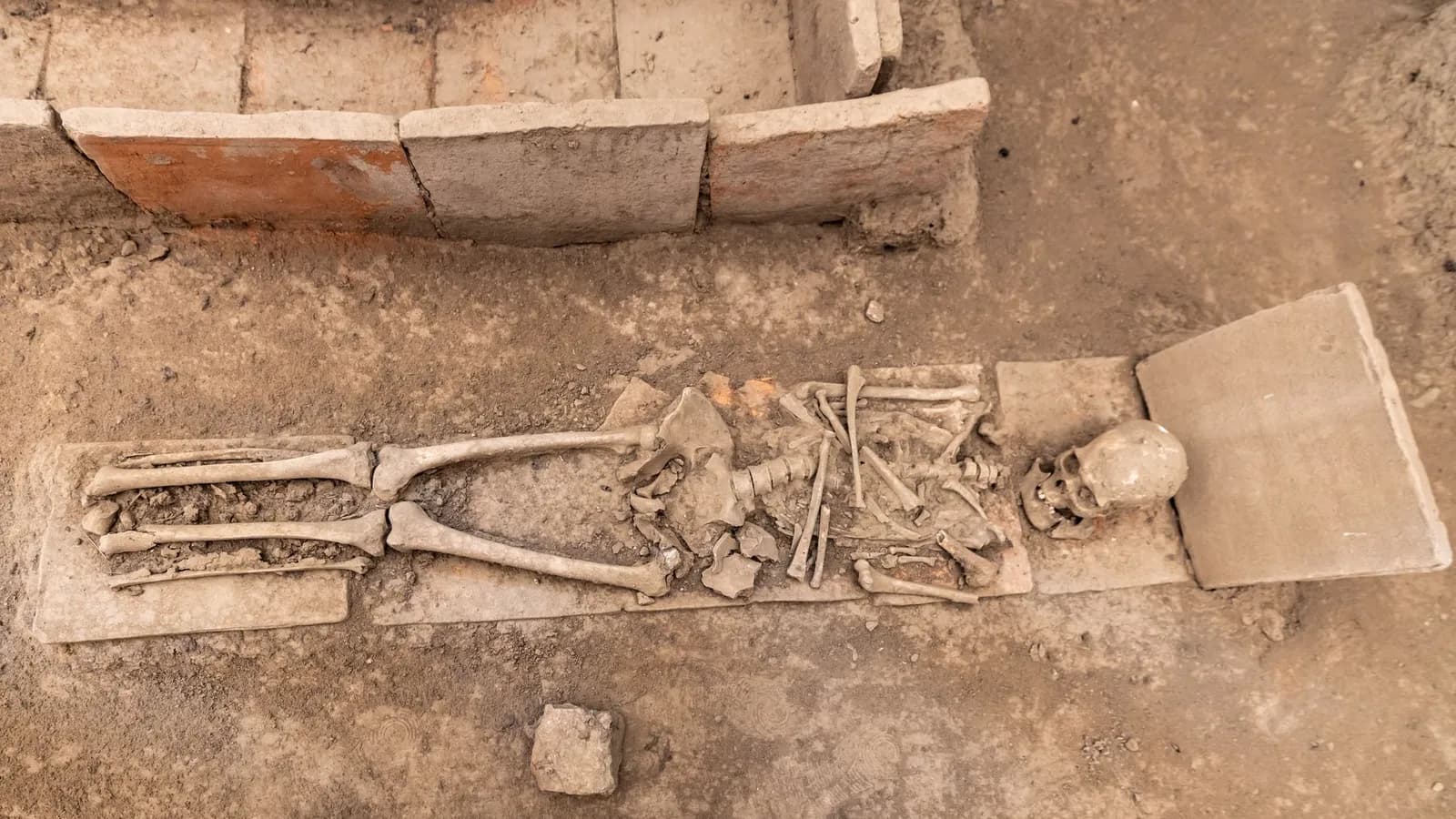
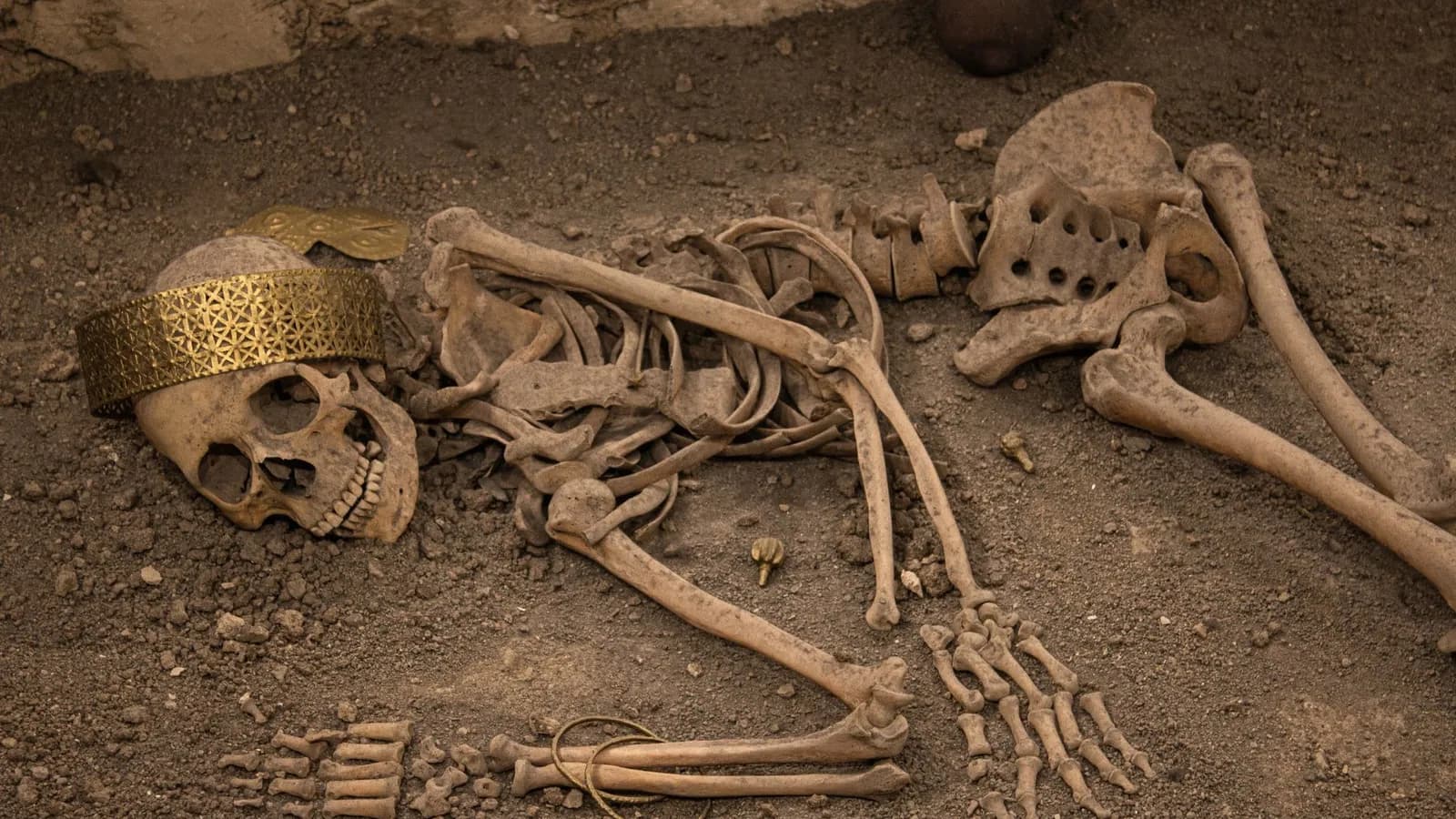
None of the five is a mass grave, and none is described as one in the literature. They are ordinary burial grounds, used over generations, with graves laid out in the normal way and grave goods where the community had them — 40 of 89 burials at Mözs contained objects, some in graves built from reused Roman roof tiles.
The Cuzco region has been studied on the same lines by Andrushko, tracing head shape from the Early Horizon through to the Inca imperial period. The picture there, too, is of an ordinary living population, changing what it did with infant heads as its political situation changed.
What we know
That cranial modification is legible at population scale in a way it is not in any single specimen. That its frequency ranges from near-universal at Paracas Cavernas to well under half in the Atacama, and that the difference is itself information. That head shape mapped onto region of origin in the Tiwanaku world, onto sex to a measurable degree in the Atacama, and onto foreign birth in Early Medieval Bavaria. That in Bavaria the practice was carried in by adults, and in fifth-century Hungary it was taken up locally and applied to children.
What we do not know
Why the Atacama families who did not modify their children declined. What the twelve non-local people at Mözs would have called themselves. Whether the Bavarian women chose their marriages or were moved as part of somebody else’s arrangement — the genetics can show a direction of travel and cannot show consent.
And, for the specimens that matter most to the popular story, nothing at all: a skull sold out of a looted grave has no cemetery, no neighbours, no children and no isotopes. Everything in this article is information that a looter destroys before the skull ever reaches a buyer.
Buried Evidence
Continue the investigation
- 01Akhenaten’s elongated head: anatomy, art or symbolism?The pharaoh is shown with a long skull, a long face and a heavy body, and so are his wife and daughters. Three explanations compete — real anatomy, artistic convention, religious symbolism — and one skull that can actually be measured decides more than any of the arguments.
- 02Did ancient people shape their heads to resemble their gods?It is the most repeated explanation for head binding and it is almost never sourced. Run it as a test instead: what would count as evidence, and how many of the societies that shaped heads actually meet the standard?
- 03Yonaguni: a submerged monument, or a very tidy rock?Off the coast of a Japanese island lies a formation with terraces, right angles and what look like steps. Two credentialled scientists have looked at the same rock and reached opposite conclusions. Here is what each of them is actually arguing.
What we could not settle
Loose ends we are still working on.
- 01
Why did some families in the Atacama say no?
In one oasis, roughly half the buried people had shaped heads and half did not. Somebody in every generation was deciding. Nobody knows what the decision was about — money, family, belief, or simply not fancying it.
- 02
Did the women who moved to Bavaria want to go?
Nine women, buried far from where they grew up, in villages where nobody else looked like them. The science can prove they travelled. It cannot say whether anyone asked them first.
- 03
How much is lost when a skull is dug up by a looter?
Everything in this article came from knowing who was buried next to whom. Take one skull out of the ground and sell it, and none of those questions can ever be asked of it again.
Got something to add?
A question, a source we missed, a correction, or something you saw yourself — all of it is welcome here. You do not need to be an expert, and you are allowed to disagree with us.
Nobody has yet — go on.
See also
Everything this piece touches
Topic
artificial cranial modification
Reshaping an infant skull by binding or boards. Documented on five continents over 12,000 years.
Topic
Paracas skulls
Peruvian coastal culture, c. 800–100 BC, whose elongated crania carry a stack of untested claims.
Topic
Tiwanaku
Andean polity, AD 500–1100, where head shape mapped onto the valley a person came from.
Sources
Open them and check for yourself. Where a record is public, it is linked.
Gómez-Mejía, Aponte, Pezo-Lanfranco and Eggers, Journal of Archaeological Science: Reports, 2022
Torres, Knudson and Pestle, American Journal of Biological Anthropology, 2022
Knipper et al., PLOS ONE, 2020
Veeramah et al., PNAS, 2018
Hoshower, Buikstra, Goldstein and Webster, Latin American Antiquity, 1995
Andrushko, American Journal of Physical Anthropology, 2021
Related
Archaeological Mysteries
Why did cultures across the world bind their children's skulls?
Palaeolithic Italy, Iron Age Scythia, the Andes, the Maya lowlands, the Congo, Vanuatu, the Columbia River and rural France. Laid side by side, the cases answer a sharper question than "why" — did anybody teach anybody else?

Archaeological Mysteries
The Paracas skulls: what do we actually know?
Hundreds of elongated crania from a real excavation, and a set of extraordinary claims attached to a handful of them decades later. Taken one at a time: who said it first, was anything published, and can it be checked.
Archaeological Mysteries
Elongated skulls: why did ancient humans change the shape of their heads?
Thousands of them, across five continents and twelve thousand years. Nobody serious disputes that people did this to their own children, or how. The argument is about why — and the answer everyone repeats turns out to be the least documented one.
Archaeological Mysteries
Roman dodecahedra: a genuine open question
Hollow bronze twelve-sided objects with holes of differing sizes and knobs at the corners. Around 130 are known. No Roman text mentions them, and nobody knows what they were for.
0 comments