

Bimini Road: the prophecy that found what it went looking for
A line of squared blocks under shallow Bahamian water, found in 1968 — exactly when a famous psychic had predicted Atlantis would begin to reappear. The geology is settled. The story of how it was found is the interesting part.
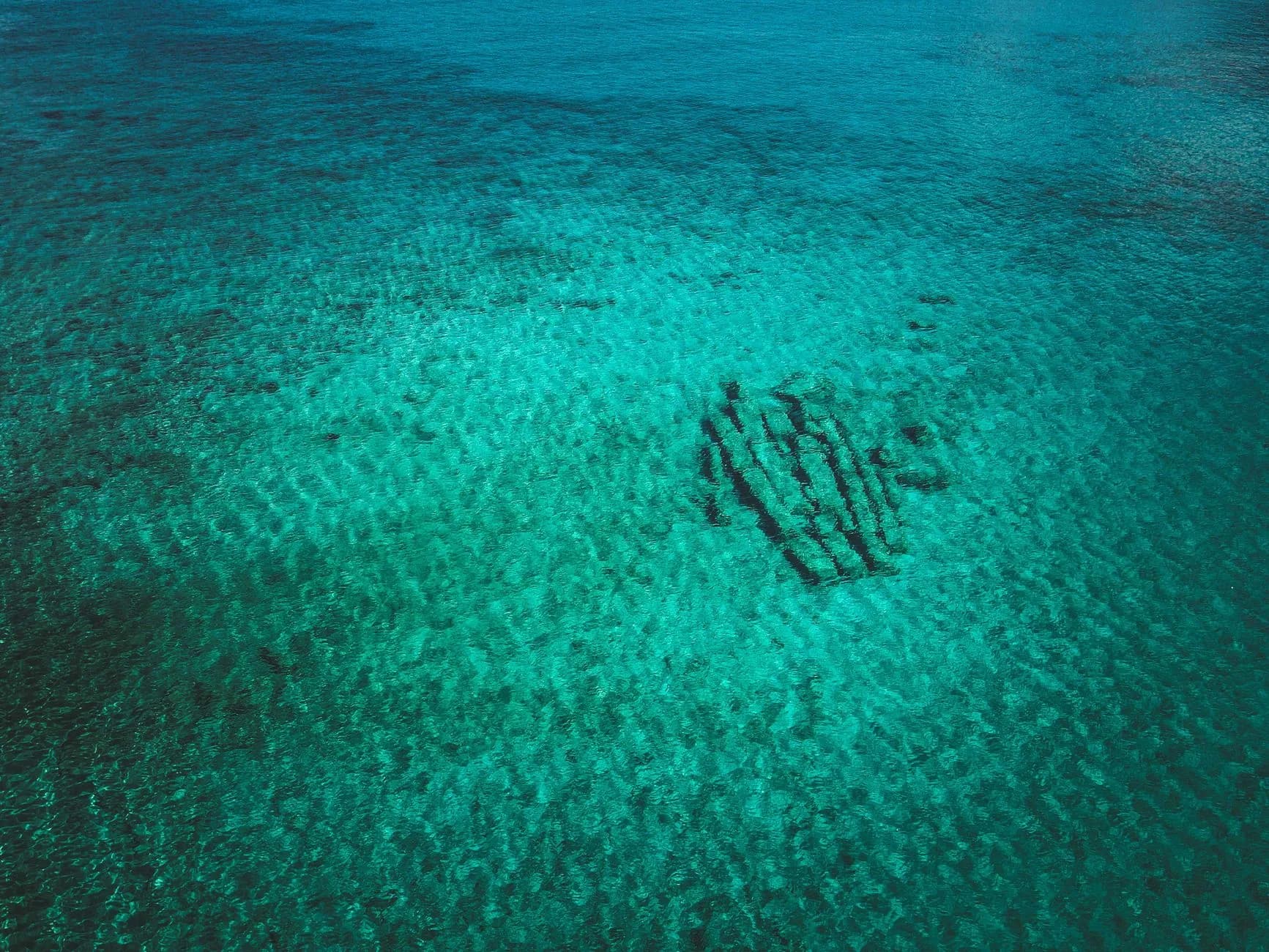
Photo by Francesco Ungaro on Pexels
Off North Bimini, in about five metres of clear Bahamian water, runs a line of large rectangular stone blocks, roughly half a mile long, curving at one end. Divers found it in 1968. It looks, from above, like a paved road that someone laid and the sea took.
The reason it is famous is not the rock. It is the timing.
What is documented
Edgar Cayce, the American psychic, had said in readings decades earlier that evidence of Atlantis would begin to appear near Bimini in 1968 or 1969. In 1968, divers looking in that area found this formation. The sequence is exactly as described and it is a matter of record.
The geology is also a matter of record. The blocks are beachrock — carbonate sand cemented in the intertidal zone into a hard, flat sheet, which then cracks as it dries and is undercut, producing rectangular blocks with straight joints. Field studies, including work by the US Geological Survey, examined the formation, dated it, and identified it as natural beachrock consistent with the Bahamian shoreline environment.
What was claimed
That the formation is a harbour wall, a road or a breakwater from a submerged civilisation — usually Atlantis, following Cayce. Supporting arguments have pointed to the regularity of the blocks, the apparent multiple courses in places, and the curve at one end.
What the tests showed
Several things, and each of them points the same way. The blocks’ internal grain orientation continues across the joints between them, which is what you see when a single sheet cracks in place and not what you see when quarried blocks are laid together. Dating placed formation in the range expected for beachrock in that setting. And there is no associated material culture — no pottery, no tools, no anything.
Why the case matters anyway

Because it is the cleanest example in this entire field of a prediction appearing to come true, and of why that appearance is not worth what it seems.
Cayce named a place, a rough date and a category of find. Divers went to that place, at that date, looking for that category of find — and found a natural formation that fitted it. The prediction did not locate Atlantis. It located divers.
Join the discussion
Still open on this one:
- 01
Has the multi-course claim ever been mapped properly?
It is the one feature that is genuinely awkward for the beachrock reading. A published survey of those specific sections would close the last gap.
Be the first to comment
Sources
Open them and check for yourself. Where a record is public, it is linked.
Beachrock and the Bimini "Road": geological investigations
US Geological Survey
Edgar Cayce readings on Bimini and Atlantis
Edgar Cayce Foundation · 1 Jan 1940 · no public copy located
Related
Consciousness
Terminal lucidity: when a destroyed brain briefly works again
People with advanced dementia sometimes become clear, coherent and recognisably themselves shortly before death. It is documented in the medical literature, it happens, and nobody can currently explain it.
Consciousness
Ian Stevenson: forty years collecting children who remember other lives
A university psychiatrist spent his career documenting cases of young children who described a previous life, and checking whether the person they described had existed. He assembled over two thousand. The methodology is the argument.
Near Death Experiences
Pam Reynolds: the most-cited near-death case, and what it turns on
In 1991 a woman undergoing brain surgery under extraordinary conditions reported observing the operation. The surgical circumstances were unusually well documented. Whether she was unconscious at the time she perceived what she described is the whole argument.

Near Death Experiences
Near-death experiences: what the clinical research has established
Millions of people report a consistent set of experiences during cardiac arrest. That consistency is a real finding. What it means is where the argument starts, and hospital studies have been running for thirty years.
0 comments