

Derinkuyu: an underground city for twenty thousand people
Eighteen storeys carved into soft volcanic rock in Cappadocia, with ventilation shafts, wells, stables, chapels and doors that seal from the inside. It is real, it is enormous, and its purpose is not mysterious.
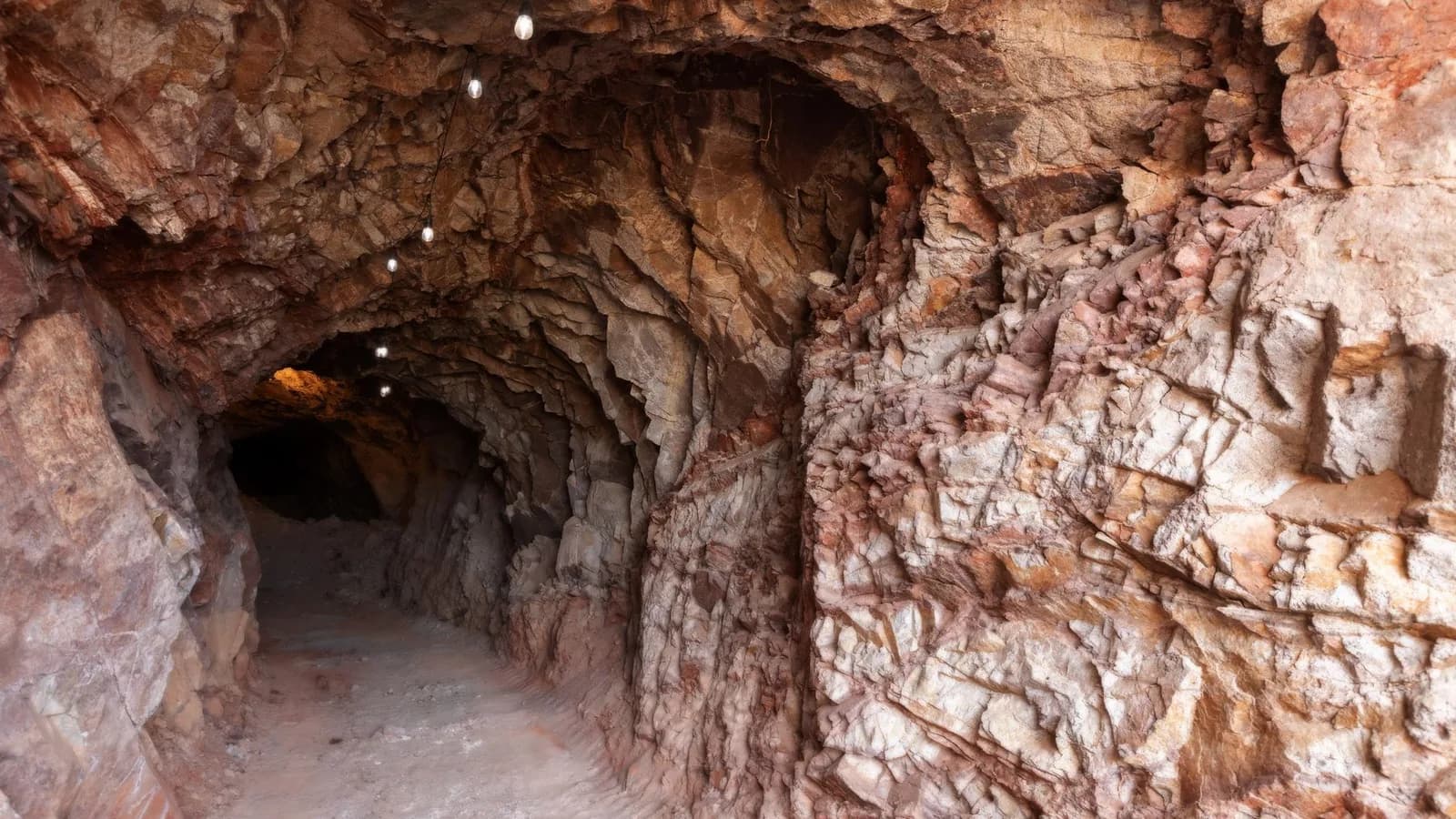
Derinkuyu is one of more than two hundred underground settlements in the Cappadocia region of Turkey.
Derinkuyu in central Turkey descends about eighty-five metres through some eighteen levels. It could shelter thousands of people — estimates run to twenty thousand with their livestock and supplies — and it was rediscovered in 1963 when a man knocked through a wall of his house.
It is one of over two hundred underground settlements in Cappadocia, and it is a good example of a site that needs no mystery because the real explanation is more impressive.
Why it was possible
Geology. Cappadocia is covered in tuff — volcanic ash consolidated into rock that is soft enough to carve with hand tools and hardens on exposure to air.
That combination is unusual and it is the whole reason these settlements exist. Digging is feasible with simple tools, and the result is structurally sound. The same rock produces the region’s distinctive eroded landscape.
What it was for
Refuge. The doors are the clearest evidence: circular stone slabs, up to half a tonne, which roll across passages and can only be moved from the inside.
That is not a design for living. It is a design for hiding from something that comes, and then leaving when it has gone.
Cappadocia sat on a frontier that was fought over repeatedly — by Persians, Romans, Arabs, and later others. The sites were used and extended over a very long period, with substantial use by early Christian communities during Arab-Byzantine warfare.
The dating question
Genuinely difficult, and worth stating honestly. Carving rock removes material rather than depositing it, so there is little stratigraphy and nothing organic to date from the excavation itself.
Dating relies on associated finds, on textual references — Xenophon describes underground dwellings in the region in the fourth century BC — and on architectural features such as chapels. Origins are usually placed with the Phrygians or earlier, with major expansion in the Byzantine period.
Why it deserves more attention than it gets
Because it is one of the largest human excavations of the pre-modern world and it was made by ordinary communities over generations, for the entirely comprehensible purpose of not being killed.
There is no puzzle about who or why. There is a genuinely remarkable feat of collective engineering by people whose names are not recorded, which is the usual situation and rarely treated as impressive enough.
Join the discussion
Still open on this one:
- 01
How old are the earliest phases?
The honest answer is that nobody knows precisely, because the excavation method destroys what dating requires. That is a methodological limit rather than a mystery.
Be the first to comment
Sources
Open them and check for yourself. Where a record is public, it is linked.
Göreme National Park and the Rock Sites of Cappadocia
UNESCO World Heritage Centre
British Museum
Related
Psychic Phenomena
The Nine: who — or what — were they?
On New Year’s Eve 1952, in a laboratory in Maine, a voice announced itself as one of nine. Over the next forty years it reached a credentialled scientist, a celebrity psychic, a bestselling book and the creator of Star Trek. This is what is documented, and what is not.
Psychic Phenomena
New Year’s Eve 1952: the first session with the Nine
The founding event of the whole Nine phenomenon happened in a Maine farmhouse on 31 December 1952. Here is what the record supports about that evening, and how much of the familiar account was written down much later.
Psychic Phenomena
D. G. Vinod: the man at the beginning of the Nine
Every version of the Nine story starts with Dr D. G. Vinod in a trance in Maine. He is also the person that story then almost entirely forgets. Why the first channel is the biggest hole in the record.
Psychic Phenomena
Andrija Puharich: the doctor who kept turning up
A qualified physician, an inventor with real patents, an army medical officer — and the constant in forty years of the strangest story in American parapsychology. Puharich is the reason the Nine keep touching institutions.
0 comments