

The Battersea poltergeist: twelve years at 63 Wycliffe Road
It began with a key nobody recognised, on a fifteen-year-old's bedroom floor, in January 1956. It went on for over a decade, was documented throughout, and the person at the centre of it is still alive.
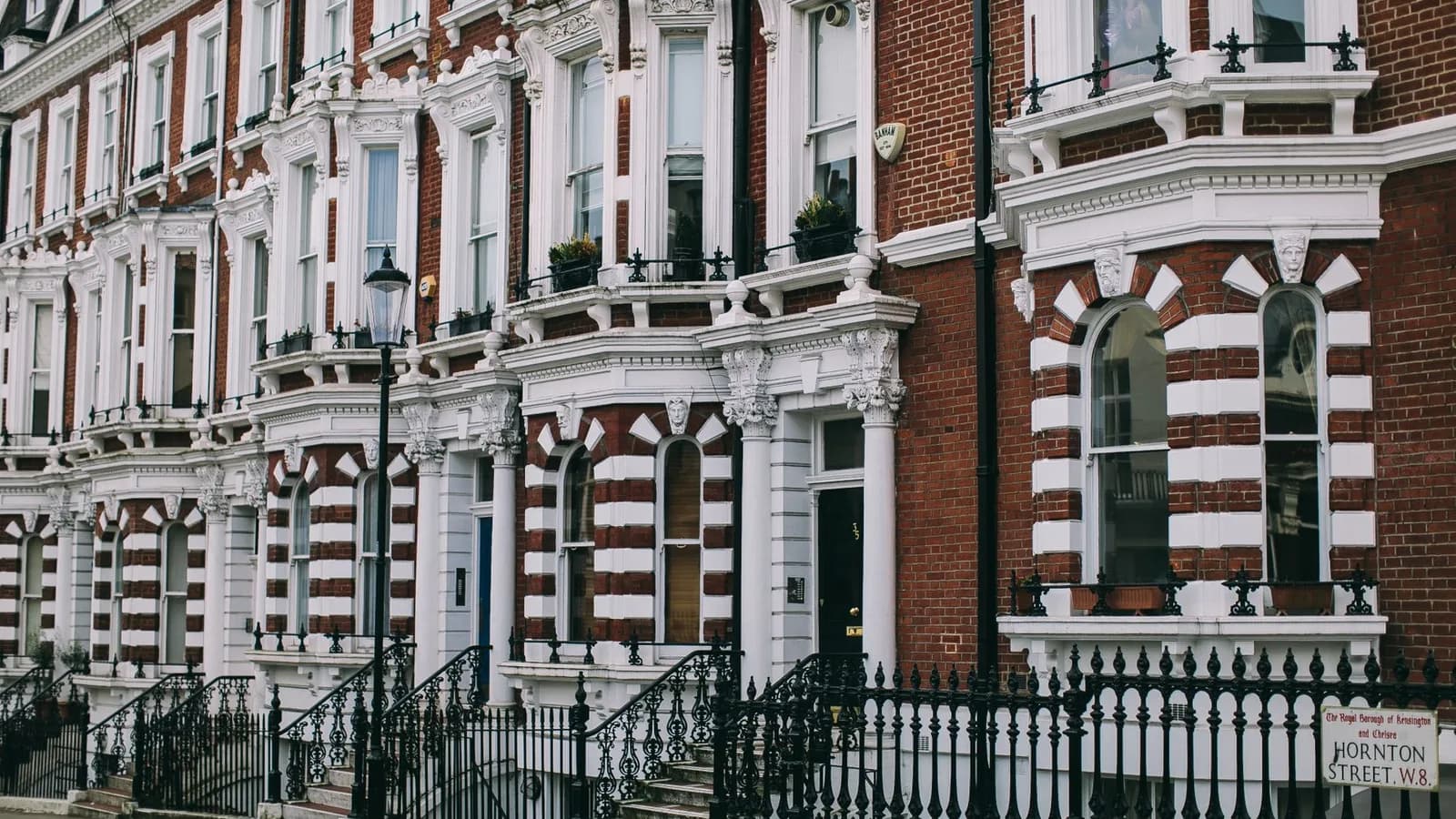
The Hitchings family lived in a terraced house in Battersea, south London.
In January 1956, at a terraced house in Wycliffe Road, Battersea, the Hitchings family found a small silver key on their fifteen-year-old daughter Shirley's bedroom floor. It fitted nothing in the house and nobody knew where it came from.
What followed lasted, on and off, into the late 1960s: loud knocking, objects moving and appearing, furniture disturbed, the family repeatedly woken. It became a national newspaper story.
Why this case is unusually good material
Because someone kept records.
Harold Chibbett, a tax officer and psychical researcher, investigated for years and documented it extensively — notes, correspondence, and a detailed running account. The archive survives and has been worked through by researchers.
There is also contemporary press coverage, and the family gave accounts at the time rather than decades later.
Donald
The disturbance developed a claimed identity. Communication by knocking established a personality calling itself Donald, which then produced written messages.
Donald claimed to be Louis Charles, the Dauphin — the son of Louis XVI who died in prison in 1795.
The claim is historically checkable and has an answer: genetic analysis of the preserved heart of the child who died in the Temple prison, published in 2000, matched Marie Antoinette's maternal line. The Dauphin died where the records say he died.
The Dauphin claim, and how it was settled
Donald's claimed identity turned out to be checkable, which is rare in this material.
The child who died in the Temple prison in Paris in 1795 was subject to an autopsy, during which the physician removed and preserved the heart. It survived, through several changes of custody, into the modern era.
In 2000 mitochondrial DNA from the heart was compared with samples from Marie Antoinette's hair and from living maternal-line relatives of the family. They matched.
Why the family stayed
The Hitchings family remained at Wycliffe Road throughout. In 1950s London, with a council tenancy and a working-class household, moving was not a straightforward option — a detail that is missing from most accounts and that shapes the whole case. The pressure a household is under is part of the evidence in poltergeist reports, and housing is usually part of that pressure.
The pattern the case fits
A pubescent girl at the centre; activity that follows her; disturbance in a crowded household under strain; a phenomenon that becomes more elaborate and more communicative as attention increases.
That is the standard shape of recorded poltergeist cases, from Borley to Enfield to Pontefract. Whatever it indicates, it is a consistent pattern rather than a coincidence.
Join the discussion
Still open on this one:
- 01
What became of the key?
The object that began the case has never been identified or matched to a lock. It is a small, concrete, unresolved detail in a case otherwise made of testimony.
Be the first to comment
See also
Everything this piece touches
Topic
Black Monk of Pontefract
West Yorkshire, 1966–69. Famous, and far more thinly documented than its reputation.
Topic
Enfield poltergeist
North London, 1977–79. The most heavily recorded poltergeist case; partly admitted as faked.
Topic
Borley Rectory
Essex. "The most haunted house in England", reassessed severely by the SPR in 1956.
Sources
Open them and check for yourself. Where a record is public, it is linked.
Society for Psychical Research
SPR
The National Archives
Related
Psychic Phenomena
The Nine: who — or what — were they?
On New Year’s Eve 1952, in a laboratory in Maine, a voice announced itself as one of nine. Over the next forty years it reached a credentialled scientist, a celebrity psychic, a bestselling book and the creator of Star Trek. This is what is documented, and what is not.
Psychic Phenomena
New Year’s Eve 1952: the first session with the Nine
The founding event of the whole Nine phenomenon happened in a Maine farmhouse on 31 December 1952. Here is what the record supports about that evening, and how much of the familiar account was written down much later.
Psychic Phenomena
D. G. Vinod: the man at the beginning of the Nine
Every version of the Nine story starts with Dr D. G. Vinod in a trance in Maine. He is also the person that story then almost entirely forgets. Why the first channel is the biggest hole in the record.
Psychic Phenomena
Andrija Puharich: the doctor who kept turning up
A qualified physician, an inventor with real patents, an army medical officer — and the constant in forty years of the strangest story in American parapsychology. Puharich is the reason the Nine keep touching institutions.
0 comments