

D. G. Vinod: the man at the beginning of the Nine
Every version of the Nine story starts with Dr D. G. Vinod in a trance in Maine. He is also the person that story then almost entirely forgets. Why the first channel is the biggest hole in the record.
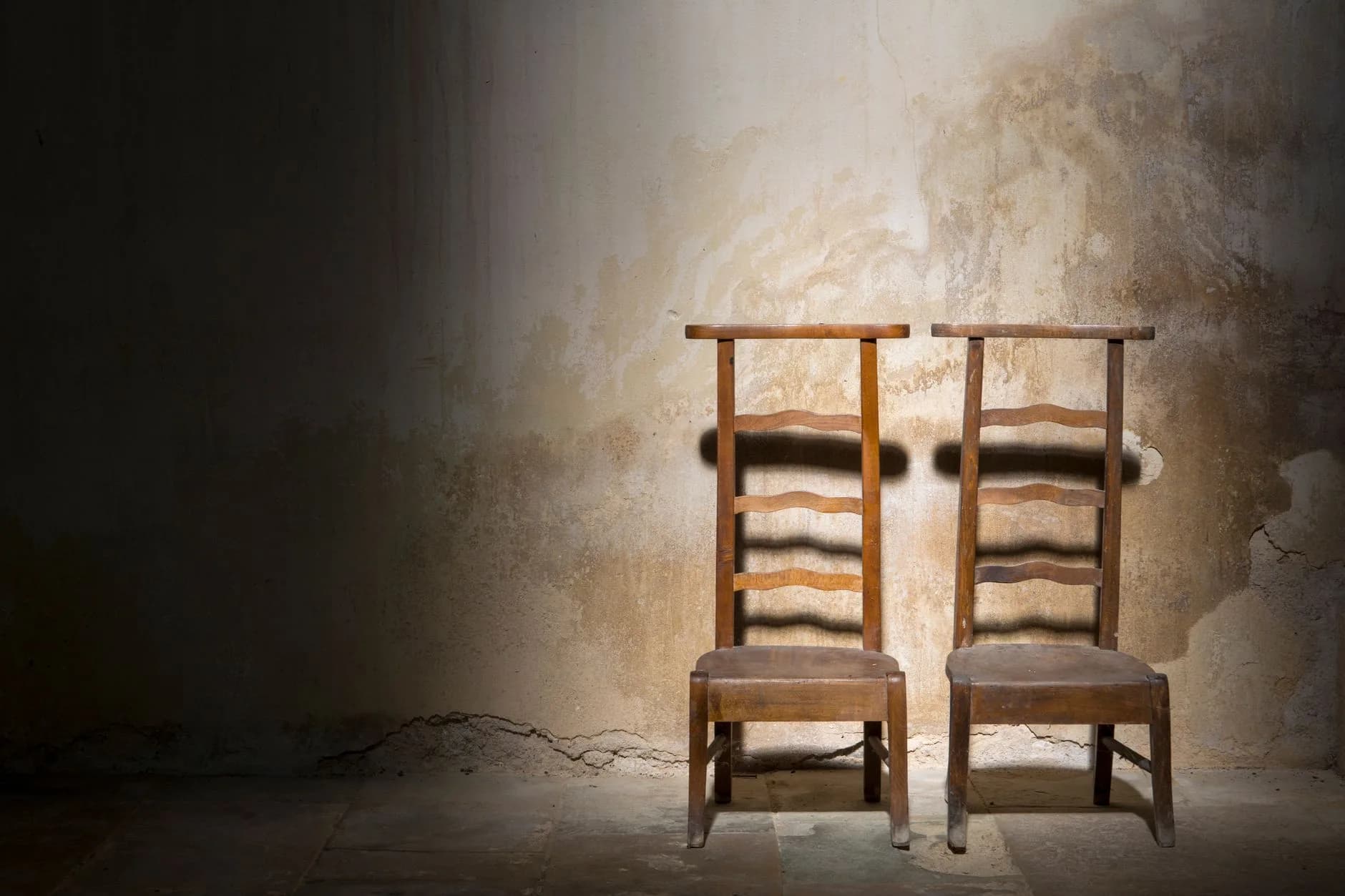
Photo by Jan van der Wolf on Pexels
The Nine have a first witness, and his name is Dr D. G. Vinod. He was the man in the chair on 31 December 1952. Without him there is no Round Table material, no Ennead identification, no Lab Nine, no screenplay. And he is the figure about whom the least is reliably known.
What is documented
Vinod was an Indian scholar who came into Puharich’s circle in 1952. He was not a professional medium; he was a man of learning who, on Puharich’s account, produced trance material of a kind neither of them expected. He took part in sessions at Glen Cove into 1953 and then returned to India.
That is close to the whole of it. He did not write a book about the Nine. He did not tour, lecture, or found an organisation. The public record of his life runs through other people’s accounts of him.
What was claimed
Puharich describes Vinod speaking in a voice and register unlike his own, in English of a philosophical density that Puharich found striking. Later writers have made more of this than the sources support — the language of the transcripts is described as unusual, not as impossible for an educated Indian scholar working in English.
It is also claimed in some retellings that Vinod was a lifelong sensitive with a track record. Nothing we have found establishes that. He appears in the story, and then he does not.
What was added later
Two decades of retelling gradually removed Vinod from his own event. In many summaries he is a passive instrument, a conduit with no biography — the phrasing tends towards "a Hindu sage" or "an Indian holy man", which is not a description of a person so much as a stage direction.
That flattening is common in channelling literature and it usually points the same way: the medium’s ordinary human context is inconvenient, because the more we know about the person, the more of the material can be accounted for by them.
What remains unexplained
Why he stopped. A man who allegedly became the mouthpiece for nine cosmic intelligences returned to India and, so far as the public record goes, did not pursue it. There are two obvious readings: the phenomenon ended, or he concluded something about it that he did not care to publicise. We have no evidence for either.
Join the discussion
Still open on this one:
- 01
What were Vinod’s full name, field and institutional affiliation?
He is almost always given only as "Dr D. G. Vinod". Establishing his actual background would let the 1952 transcripts be assessed properly for the first time.
- 02
Did he ever comment on the sessions after returning to India?
No such statement is known to us. Its absence is itself informative, in either direction.
Be the first to comment
See also
Everything this piece touches
Person
Andrija Puharich
Physician and parapsychologist; the constant figure across forty years of the Nine.
Topic
the Nine
Intelligences that announced themselves at a Maine research foundation on 31 December 1952.
Topic
Ennead
The nine gods of Heliopolis, headed by Atum. Attested across the Egyptian record.
Sources
Open them and check for yourself. Where a record is public, it is linked.
Uri: A Journal of the Mystery of Uri Geller
Andrija Puharich, Anchor Press/Doubleday · 1 Jan 1974 · no public copy located
Psi Encyclopedia, Society for Psychical Research
The Stargate Conspiracy
Lynn Picknett and Clive Prince, Little, Brown · 1 Jan 1999 · no public copy located
Related
Consciousness
Terminal lucidity: when a destroyed brain briefly works again
People with advanced dementia sometimes become clear, coherent and recognisably themselves shortly before death. It is documented in the medical literature, it happens, and nobody can currently explain it.
Consciousness
Ian Stevenson: forty years collecting children who remember other lives
A university psychiatrist spent his career documenting cases of young children who described a previous life, and checking whether the person they described had existed. He assembled over two thousand. The methodology is the argument.
Near Death Experiences
Pam Reynolds: the most-cited near-death case, and what it turns on
In 1991 a woman undergoing brain surgery under extraordinary conditions reported observing the operation. The surgical circumstances were unusually well documented. Whether she was unconscious at the time she perceived what she described is the whole argument.
Near Death Experiences
Near-death experiences: what the clinical research has established
Millions of people report a consistent set of experiences during cardiac arrest. That consistency is a real finding. What it means is where the argument starts, and hospital studies have been running for thirty years.
0 comments