

The Enfield poltergeist: the best-documented case, and the admission at its centre
Eighteen months, two investigators, hundreds of hours of tape and dozens of witnesses in a north London council house. One of the children later admitted faking some of it. Neither of those facts cancels the other.

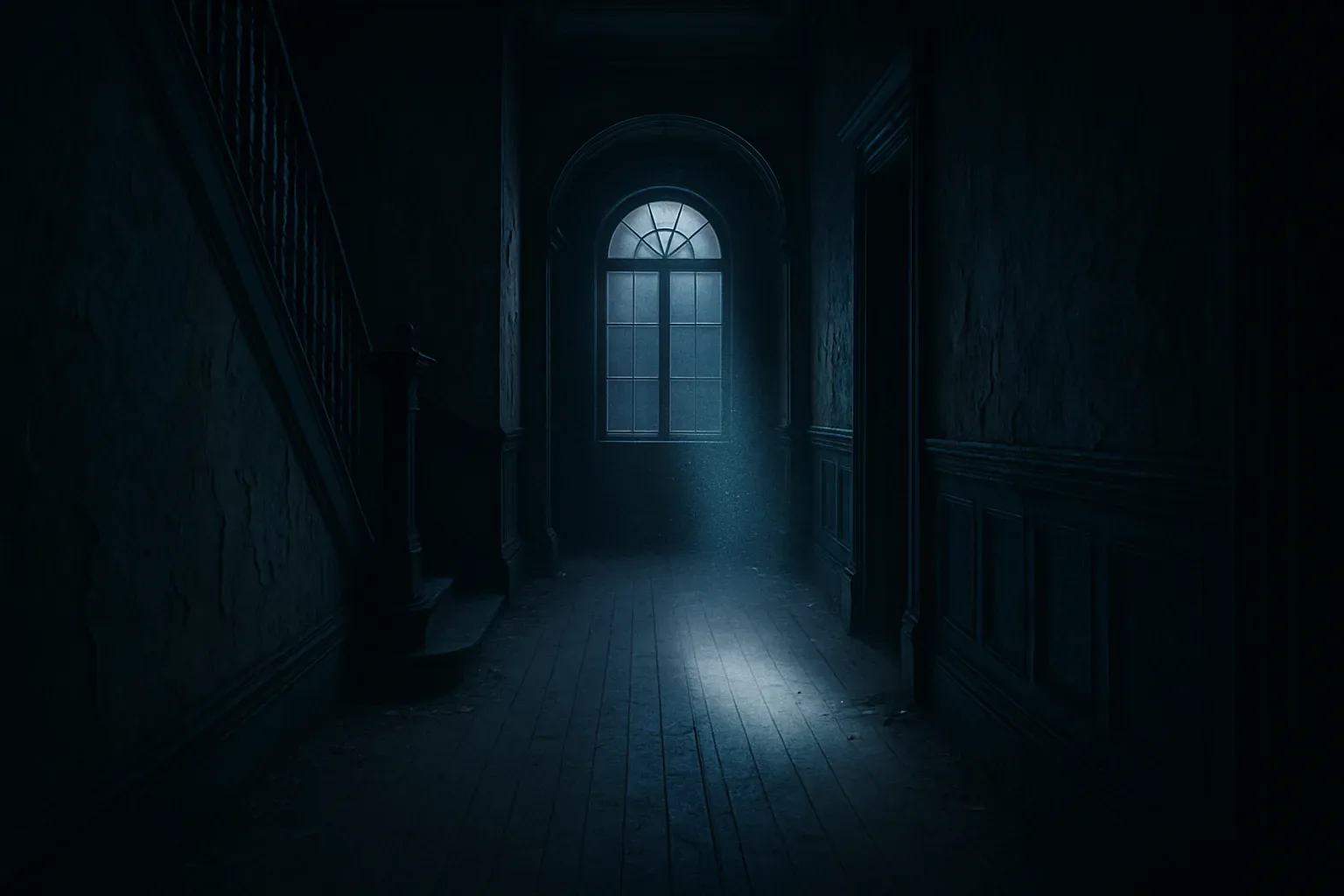
Photo by Azizi Co on Pexels
Between 1977 and 1979 a family in Green Street, Enfield, reported sustained poltergeist activity: furniture moving, knocking, objects thrown, and eventually a gruff male voice apparently coming from one of the children. It became the most investigated case of its kind in Britain and probably in the world.
What is documented
Two investigators from the Society for Psychical Research, Maurice Grosse and Guy Lyon Playfair, spent extended periods in the house over eighteen months and recorded a large quantity of audio tape. Police attended early on and an officer signed a statement about seeing a chair move.
Journalists, neighbours and other witnesses were present at various times. The volume of contemporaneous documentation is exceptional — this is not a case reconstructed from memory decades later.
The admission
Janet Hodgson, then eleven, later acknowledged that she and her sister had faked some of the phenomena — bending spoons, producing noises. Her own estimate, given in interviews years afterwards, was that a small proportion of the events were manufactured.
This is the single most important fact in the case and it needs stating plainly rather than defensively. Children in the house were, by their own account, producing some of the effects.
What the admission does and does not settle
It establishes that faking occurred, that the investigators did not always detect it, and that any individual event is therefore suspect unless independently controlled.
It does not, by itself, dispose of the case, for a reason that is easy to state and hard to act on: demonstrating that some events were faked does not demonstrate that all were. Investigators of these cases have long observed that children who begin with a genuine anomaly frequently supplement it once attention arrives, which is a psychologically ordinary thing for a child to do and an evidential disaster.
What remains unexplained
Honestly, the parts witnessed by adults who had no stake in it — the attending police officer among them — and the sheer duration. Sustaining a deception across eighteen months, under observation by two experienced investigators, is a substantial undertaking for two children in a difficult household.
Our reading is that Enfield is a case of genuine uncertainty rather than a solved fraud, and that its value is less in what it proves than in what it shows about investigating anything under these conditions.
Join the discussion
Still open on this one:
- 01
Are the original tapes accessible to independent researchers?
They are the primary evidence and the only route to reassessing the case with modern audio analysis.
- 02
What exactly did the attending officer report?
A signed police statement from 1977 is the most independent single element in the case, and it is usually paraphrased rather than quoted.
Be the first to comment
See also
Everything this piece touches
Sources
Open them and check for yourself. Where a record is public, it is linked.
This House is Haunted: The Amazing Inside Story of the Enfield Poltergeist
Guy Lyon Playfair, Souvenir Press · 1 Jan 1980 · no public copy located
Society for Psychical Research case archive
Society for Psychical Research
Related
Consciousness
Terminal lucidity: when a destroyed brain briefly works again
People with advanced dementia sometimes become clear, coherent and recognisably themselves shortly before death. It is documented in the medical literature, it happens, and nobody can currently explain it.
Consciousness
Ian Stevenson: forty years collecting children who remember other lives
A university psychiatrist spent his career documenting cases of young children who described a previous life, and checking whether the person they described had existed. He assembled over two thousand. The methodology is the argument.
Near Death Experiences
Pam Reynolds: the most-cited near-death case, and what it turns on
In 1991 a woman undergoing brain surgery under extraordinary conditions reported observing the operation. The surgical circumstances were unusually well documented. Whether she was unconscious at the time she perceived what she described is the whole argument.
Near Death Experiences
Near-death experiences: what the clinical research has established
Millions of people report a consistent set of experiences during cardiac arrest. That consistency is a real finding. What it means is where the argument starts, and hospital studies have been running for thirty years.
0 comments