

Borley Rectory: how the most haunted house in England was made
For decades it was the definitive English ghost story. Then the Society for Psychical Research investigated the investigator, and published a report that is still one of the most useful documents in the field.
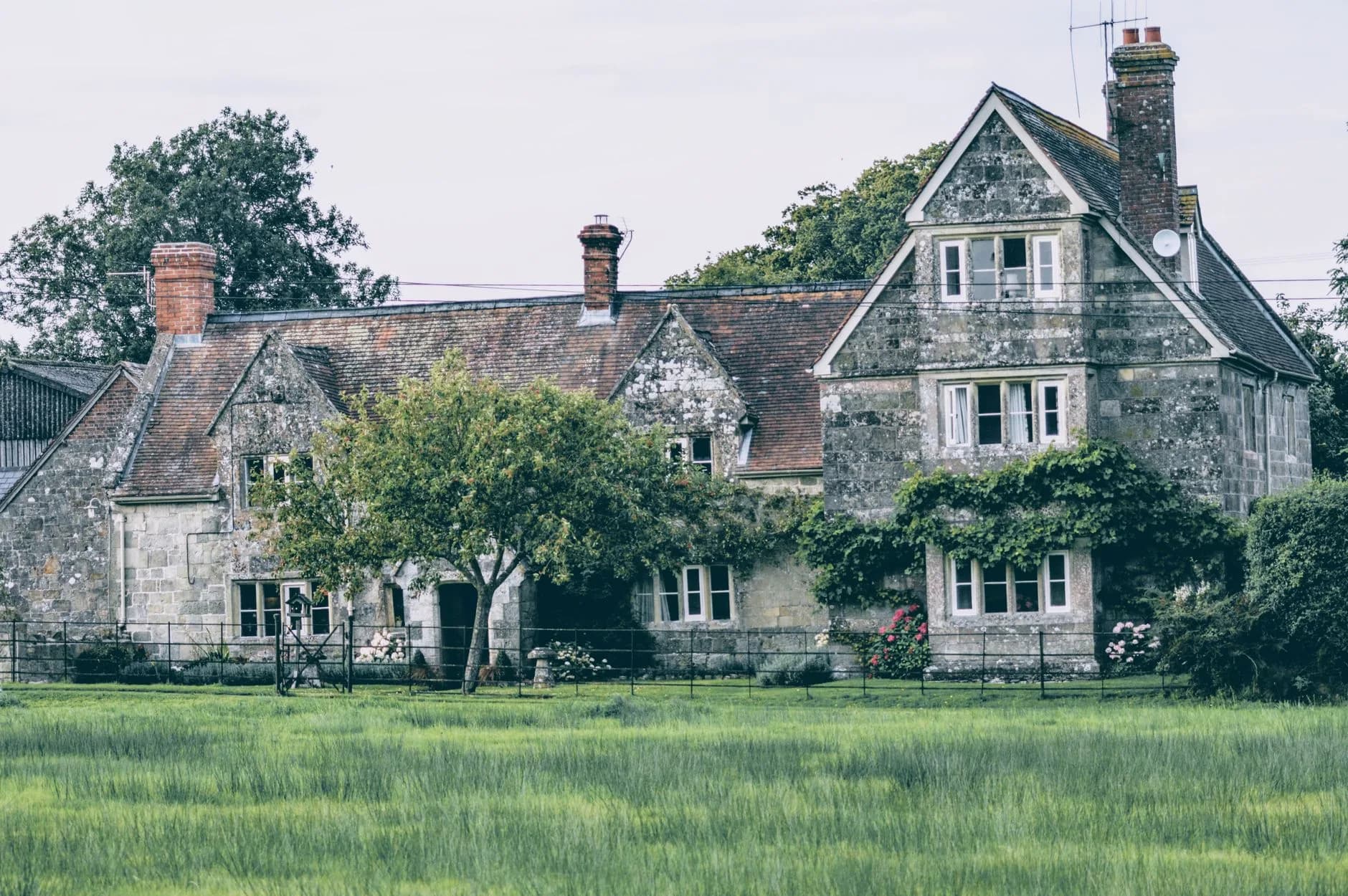
Photo by Wayne Evans on Pexels
Borley Rectory, a Victorian house in Essex, was for much of the twentieth century "the most haunted house in England" — a phrase coined to sell the story and repeated ever since. Its reputation rests almost entirely on the work of one man, and the reassessment of that work is the most instructive part of the whole case.
What is documented
The rectory existed, was built in 1862, and had a local reputation for strange occurrences before it became famous. Harry Price, a well-known psychical researcher, investigated it from 1929 and later rented the house for a year, recruiting observers to stay in it. He published two books on it. The house burned in 1939 and was demolished in 1944.
What was claimed
An extensive catalogue: footsteps, bells ringing, a phantom nun, a spectral coach, writing appearing on walls, objects moving, and — in the later phase — communications identifying a French nun and a murder.
What the SPR found
In 1956 the Society for Psychical Research published a detailed reassessment by Eric Dingwall, Kathleen Goldney and Trevor Hall. It examined Price’s records, interviewed surviving witnesses, and compared his published accounts with the underlying material.
Their findings were severe. They concluded that Price had exaggerated, selectively reported, and in places apparently manufactured phenomena; that the house’s pre-Price reputation was modest and largely explicable; and that a substantial proportion of the famous incidents could be accounted for by natural causes, by the expectations of observers Price had primed, or by Price himself.
What remains unexplained
Some reports predating Price’s involvement, and some from residents with no connection to him, remain unaccounted for in a mild way — the ordinary residue of odd noises in a large cold Victorian house.
That is all that is left, and it is worth sitting with. The most haunted house in England reduces, on examination, to a modest local tradition amplified into a legend by one energetic man with a publisher.
Join the discussion
Still open on this one:
- 01
What is the earliest independent account of anything odd at Borley?
Everything after 1929 is entangled with Price. The pre-1929 record is small, and it is the only part that can be assessed cleanly.
Be the first to comment
Sources
Open them and check for yourself. Where a record is public, it is linked.
The Haunting of Borley Rectory: A Critical Survey of the Evidence
Dingwall, Goldney and Hall, Society for Psychical Research · 1 Jan 1956 · no public copy located
The Most Haunted House in England
Harry Price, Longmans · 1 Jan 1940 · no public copy located
Related
Consciousness
Terminal lucidity: when a destroyed brain briefly works again
People with advanced dementia sometimes become clear, coherent and recognisably themselves shortly before death. It is documented in the medical literature, it happens, and nobody can currently explain it.
Consciousness
Ian Stevenson: forty years collecting children who remember other lives
A university psychiatrist spent his career documenting cases of young children who described a previous life, and checking whether the person they described had existed. He assembled over two thousand. The methodology is the argument.
Near Death Experiences
Pam Reynolds: the most-cited near-death case, and what it turns on
In 1991 a woman undergoing brain surgery under extraordinary conditions reported observing the operation. The surgical circumstances were unusually well documented. Whether she was unconscious at the time she perceived what she described is the whole argument.
Near Death Experiences
Near-death experiences: what the clinical research has established
Millions of people report a consistent set of experiences during cardiac arrest. That consistency is a real finding. What it means is where the argument starts, and hospital studies have been running for thirty years.
0 comments