

The Catalina Channel: why the reports cluster where the navy operates
Southern California's offshore waters produce more USO reports than almost anywhere. The honest explanation for most of that is not exotic, and the remainder is the part worth keeping.
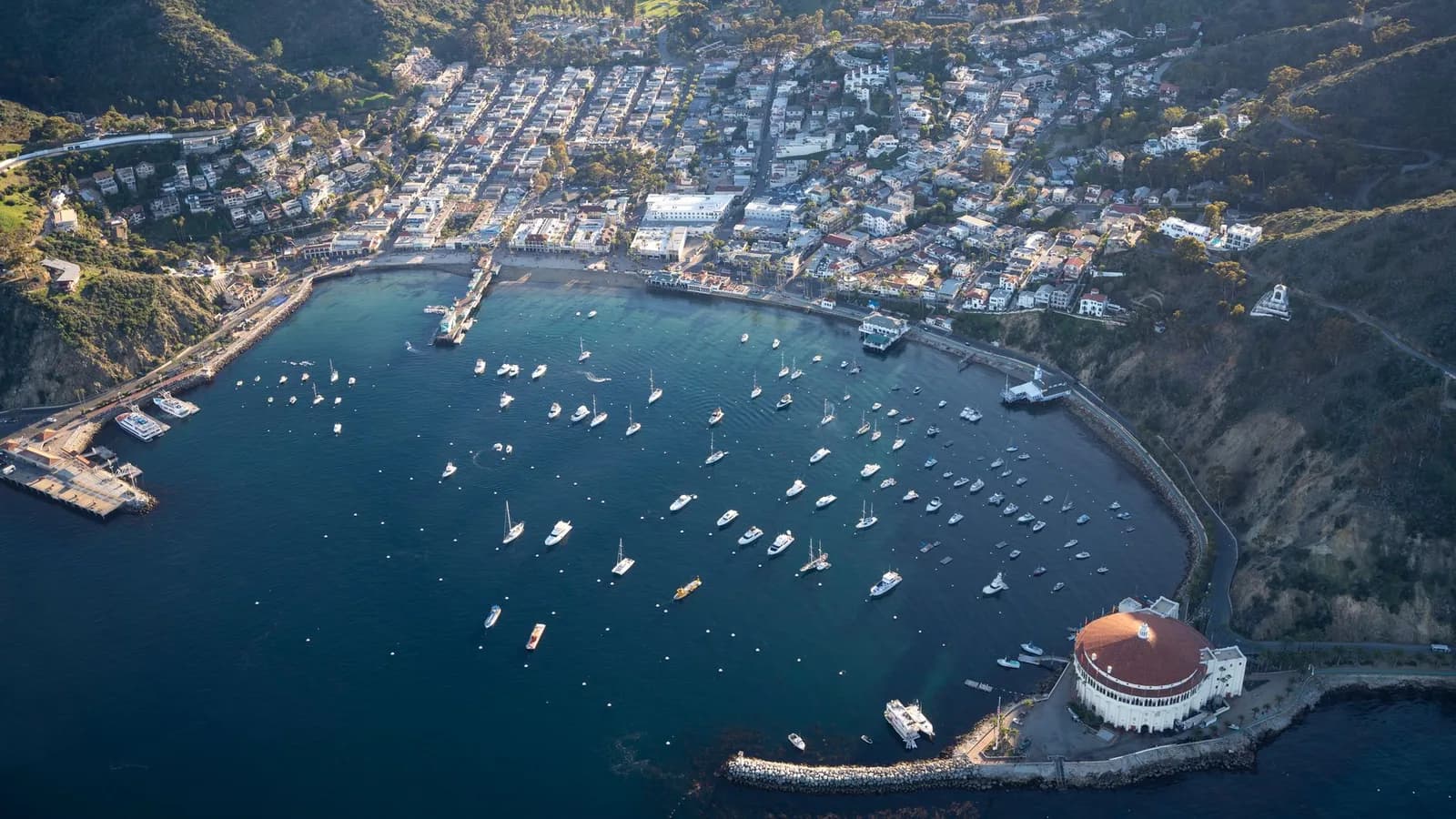
The channel between Santa Catalina Island and the mainland sits inside a major naval operating area.
The Catalina Channel runs between Santa Catalina Island and the Southern California mainland. It and the waters around it have generated reports of objects entering and leaving the sea for decades.
The area is worth treating carefully, because it is where the most credible modern case in the entire subject occurred, and also where the weakest material accumulates.
Why the area produces reports
It is one of the most heavily used stretches of ocean in the world.
The Southern California offshore ranges are a primary US Navy training and test area. Carrier strike groups work up there. Submarines transit. Aircraft operate continuously. The Point Mugu and San Clemente Island ranges are active test facilities.
It is also densely populated on the landward side, with millions of people, heavy air traffic into several major airports, and a large recreational boating community.
What is documented
The Nimitz encounter of November 2004 occurred in this operating area, roughly a hundred miles southwest of San Diego. It is covered in detail elsewhere on this site.
It matters here because of one element: radar operators aboard USS Princeton had been tracking objects descending from very high altitude to near sea level over several days before the aircraft intercept, and the object was reported near a disturbance in the water.
That is the strongest transmedium-adjacent observation in the modern record, and it comes with military radar, multiple witnesses and an official acknowledgement of the video's authenticity.
What is not documented
Most of the rest.
Reports of large objects entering the sea off Catalina, of underwater bases in the channel, and of craft operating between the island and the mainland circulate widely. They are drawn largely from witness accounts collected by researchers decades after the fact, without contemporaneous records.
No sonar record, no naval statement, no dated report from the period has been produced for any of the classic Catalina cases.
What the Princeton radar actually recorded
The strongest instrumented element in this region is worth setting out precisely, because it is usually summarised into vagueness.
In the days before 14 November 2004, operators aboard USS Princeton using the SPY-1 radar reported tracking objects appearing at high altitude — figures around eighty thousand feet have been given — and descending to near sea level in very short intervals.
The system had recently been upgraded, and the crew initially treated the returns as a fault. Checks were run and the equipment was assessed as working.
What honest coverage looks like
Separate the tiers. The Nimitz encounter has radar, witnesses, video and official acknowledgement, and it belongs in a different category from everything else attributed to these waters.
The bulk of the Catalina material is uncorroborated recollection from a region that would generate uncorroborated recollection whether or not anything unusual were present.
Join the discussion
Still open on this one:
- 01
Do any 1960s-70s naval records from the range mention water-entry events?
The classic Catalina cases date from that era. Range records exist and have not been systematically requested, which is a concrete and unglamorous piece of work nobody has done.
Be the first to comment
Sources
Open them and check for yourself. Where a record is public, it is linked.
All-domain Anomaly Resolution Office
US Department of Defense
NOAA
Related

Psychic Phenomena
The Nine: who — or what — were they?
On New Year’s Eve 1952, in a laboratory in Maine, a voice announced itself as one of nine. Over the next forty years it reached a credentialled scientist, a celebrity psychic, a bestselling book and the creator of Star Trek. This is what is documented, and what is not.

Psychic Phenomena
New Year’s Eve 1952: the first session with the Nine
The founding event of the whole Nine phenomenon happened in a Maine farmhouse on 31 December 1952. Here is what the record supports about that evening, and how much of the familiar account was written down much later.

Psychic Phenomena
D. G. Vinod: the man at the beginning of the Nine
Every version of the Nine story starts with Dr D. G. Vinod in a trance in Maine. He is also the person that story then almost entirely forgets. Why the first channel is the biggest hole in the record.

Psychic Phenomena
Andrija Puharich: the doctor who kept turning up
A qualified physician, an inventor with real patents, an army medical officer — and the constant in forty years of the strangest story in American parapsychology. Puharich is the reason the Nine keep touching institutions.
0 comments