

Rudloe Manor: what was actually under Corsham
Called Britain's Area 51 for years, on the strength of a UFO desk that really was there. The genuine secret underneath turned out to be far larger, and it has now been declassified.
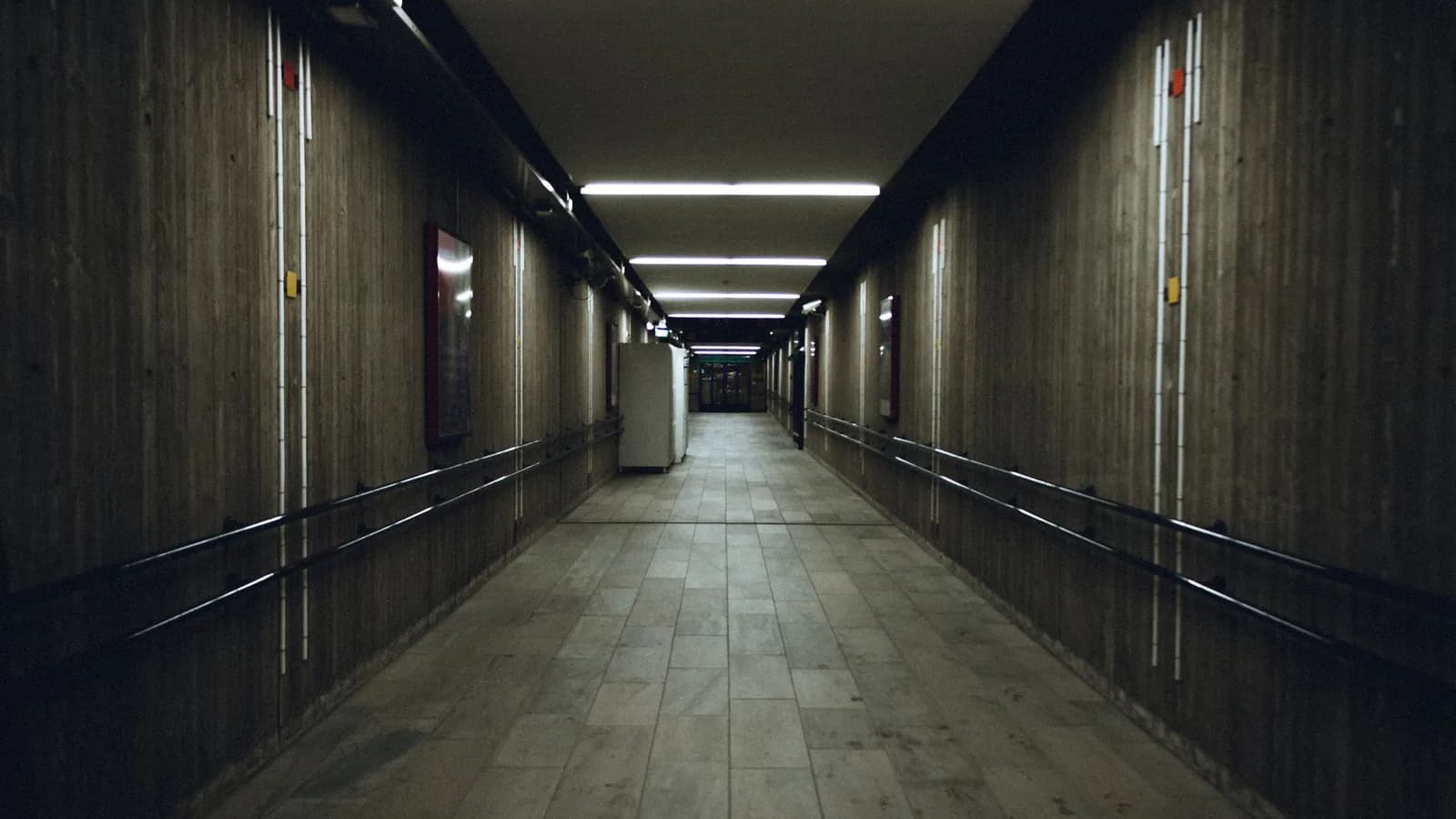
The Corsham quarries held a Cold War central government war headquarters.
RAF Rudloe Manor, near Corsham in Wiltshire, spent the 1990s with a reputation as the centre of British UFO secrecy. Researchers described it as the real home of the subject, distinct from the MoD desk in Whitehall that answered public letters.
The claim was not invented. It was a reasonable inference from something true, and the truth underneath it turned out to be a different secret altogether.
What was true
Rudloe Manor housed the RAF Provost and Security Services — the service's police and security branch.
The Ministry of Defence confirmed that its Flying Complaints Flight, based there, handled reports of unusual aerial activity until 1992, when the function moved. Reports from the public that reached RAF stations could be routed through it.
So there genuinely was a unit at Rudloe that received UFO reports. Researchers who said so were right.
The larger thing underneath
Beneath Corsham lie enormous former stone quarries, used from the Second World War onward as underground storage, factory space and headquarters.
One part of that complex, known at different times by names including Burlington and Turnstile, was built as the Central Government War Headquarters — the site to which the British government would relocate in a nuclear war.
It covered roughly a square mile underground, with accommodation for thousands, its own power, water, telephone exchange and a BBC studio. It was kept operational for decades.
Its existence was officially acknowledged and declassified in 2004, and it has since been documented and photographed.
What the UFO files release actually contained
Between 2008 and 2013 the Ministry of Defence transferred its UFO holdings to the National Archives — around sixty thousand pages, released in tranches and freely available.
They include public correspondence, RAF reports, radar assessments, internal minutes on how to answer parliamentary questions, and the Project Condign study.
They also include the material on how reports were routed internally, which is where the Rudloe question is answered.
What Project Condign concluded
The MoD’s own classified study of unexplained aerial phenomena, completed in 2000 and released in 2006, found no evidence of hostile intent or of extraterrestrial origin, and attributed a proportion of reports to poorly understood atmospheric plasma effects. Its plasma explanation has been criticised as unsupported. It remains the only serious British official assessment, and it is public.
Why the two got confused
Because the area was genuinely, heavily secret, and because secrecy does not come labelled.
Researchers correctly detected that something very large was being concealed around Corsham. They attached it to the subject they were investigating. The concealment was real; the subject was wrong.
Join the discussion
Still open on this one:
- 01
What is still in use under Corsham?
Parts of the underground estate remain in Ministry of Defence hands. What they are used for is not published, and that is an ordinary defence secret rather than an anomaly.
Be the first to comment
See also
Everything this piece touches
Programme
MoD UFO desk
Logged UK UFO reports from the 1950s until December 2009. The files are public.
Topic
NARA
The US National Archives, which holds much of the primary record.
Programme
Project Condign
MoD defence intelligence study, 2000. Concluded the phenomena are real but are not craft.
Topic
Area 51
US Air Force facility in southern Nevada, acknowledged publicly in 2013.
Sources
Open them and check for yourself. Where a record is public, it is linked.
The National Archives
The National Heritage List for England
Historic England
Related
Psychic Phenomena
The Nine: who — or what — were they?
On New Year’s Eve 1952, in a laboratory in Maine, a voice announced itself as one of nine. Over the next forty years it reached a credentialled scientist, a celebrity psychic, a bestselling book and the creator of Star Trek. This is what is documented, and what is not.
Psychic Phenomena
New Year’s Eve 1952: the first session with the Nine
The founding event of the whole Nine phenomenon happened in a Maine farmhouse on 31 December 1952. Here is what the record supports about that evening, and how much of the familiar account was written down much later.
Psychic Phenomena
D. G. Vinod: the man at the beginning of the Nine
Every version of the Nine story starts with Dr D. G. Vinod in a trance in Maine. He is also the person that story then almost entirely forgets. Why the first channel is the biggest hole in the record.
Psychic Phenomena
Andrija Puharich: the doctor who kept turning up
A qualified physician, an inventor with real patents, an army medical officer — and the constant in forty years of the strangest story in American parapsychology. Puharich is the reason the Nine keep touching institutions.
0 comments