

The Rohonc Codex: 448 pages nobody can read
A manuscript in a script nobody has identified, with illustrations mixing Christian, Muslim and pagan scenes. It has been in a Hungarian academy since 1838 and remains unread.
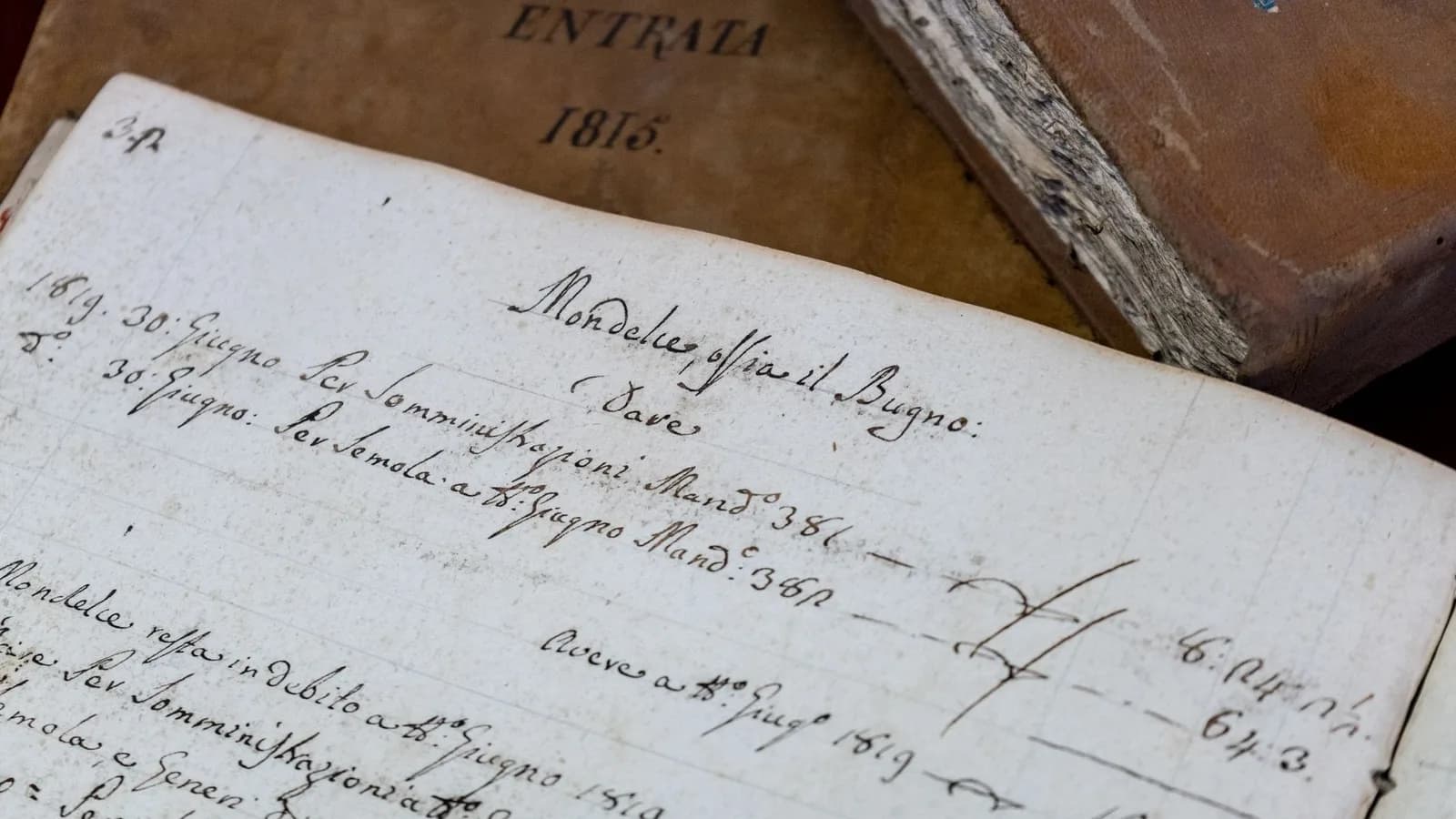
The codex runs to 448 pages in an unknown script, with around ninety illustrations.
The Rohonc Codex is a bound manuscript of 448 pages, written in a script that matches no known writing system, with around ninety illustrations. It came to the Hungarian Academy of Sciences in 1838, part of a library donated by Count Gusztáv Batthyány.
It is the Voynich manuscript's less famous relative and in some ways the harder problem.
What is in it
The script uses on the order of two hundred distinct symbols — far more than an alphabet, closer to a syllabary or a system with logographic elements. It runs right to left, and the pages are read bottom to top in at least part of the manuscript.
The illustrations are the most informative part. They show scenes that appear religious: crosses, crescents, a swastika-like symbol, figures in what read as devotional postures, and what look like episodes from a narrative.
The mixture is odd. Christian, Islamic and other imagery appear together, which does not correspond to any obvious devotional tradition.
The forgery question
It is taken seriously by serious people, which distinguishes this case from most.
Suspicion has attached to Sámuel Literáti Nemes, a nineteenth-century Hungarian antiquarian and a documented forger of manuscripts, who was active in exactly the period and the circles the codex emerged from.
Nothing has established the connection. It rests on opportunity and known behaviour rather than on evidence about this object.
What structural analysis can do without meaning
The Király and Tokai work is worth understanding as a method, because it applies to every undeciphered text.
Before asking what a script says, you can ask how it behaves. Which symbols cluster together. Which appear at the start of sections. Whether symbol frequency follows the distribution natural languages produce.
That analysis identified reading direction, recurring sequences that behave like proper names, and a set of symbols that function as numerals — which allowed sections to be matched to a structure resembling a religious narrative.
Where decipherment stands
A long list of attempts, mostly claiming a known language — Hungarian, Dacian, an early Romanian, Hindi, Brahmi-derived scripts. None has been accepted, and most fail the basic test: a proposed reading has to work across the whole manuscript, not on a selected page.
The most substantial recent work is by Levente Zoltán Király and Gábor Tokai, who from around 2018 published a structural analysis identifying the direction of reading, recurring elements, and what appear to be numbers and proper names, and argued the content is a religious text.
That is not a decipherment and they do not present it as one. It is the first work to establish structure rather than assert meaning, which is how these problems get solved when they get solved.
Join the discussion
Still open on this one:
- 01
Is the ink contemporary with the paper?
Ink analysis would go a long way towards settling the forgery question, and it does not appear to have been published.
Be the first to comment
See also
Everything this piece touches
Sources
Open them and check for yourself. Where a record is public, it is linked.
The British Library
British Museum
Related
Psychic Phenomena
The Nine: who — or what — were they?
On New Year’s Eve 1952, in a laboratory in Maine, a voice announced itself as one of nine. Over the next forty years it reached a credentialled scientist, a celebrity psychic, a bestselling book and the creator of Star Trek. This is what is documented, and what is not.
Psychic Phenomena
New Year’s Eve 1952: the first session with the Nine
The founding event of the whole Nine phenomenon happened in a Maine farmhouse on 31 December 1952. Here is what the record supports about that evening, and how much of the familiar account was written down much later.
Psychic Phenomena
D. G. Vinod: the man at the beginning of the Nine
Every version of the Nine story starts with Dr D. G. Vinod in a trance in Maine. He is also the person that story then almost entirely forgets. Why the first channel is the biggest hole in the record.

Psychic Phenomena
Andrija Puharich: the doctor who kept turning up
A qualified physician, an inventor with real patents, an army medical officer — and the constant in forty years of the strangest story in American parapsychology. Puharich is the reason the Nine keep touching institutions.
0 comments