

Cicada 3301: what the puzzle actually asked, and how to tell the real thing from the imitations
Three annual internet puzzles of genuine cryptographic competence, posters on five continents, and then silence. The test for authenticity has always been a single PGP key, and almost nobody mentions it.
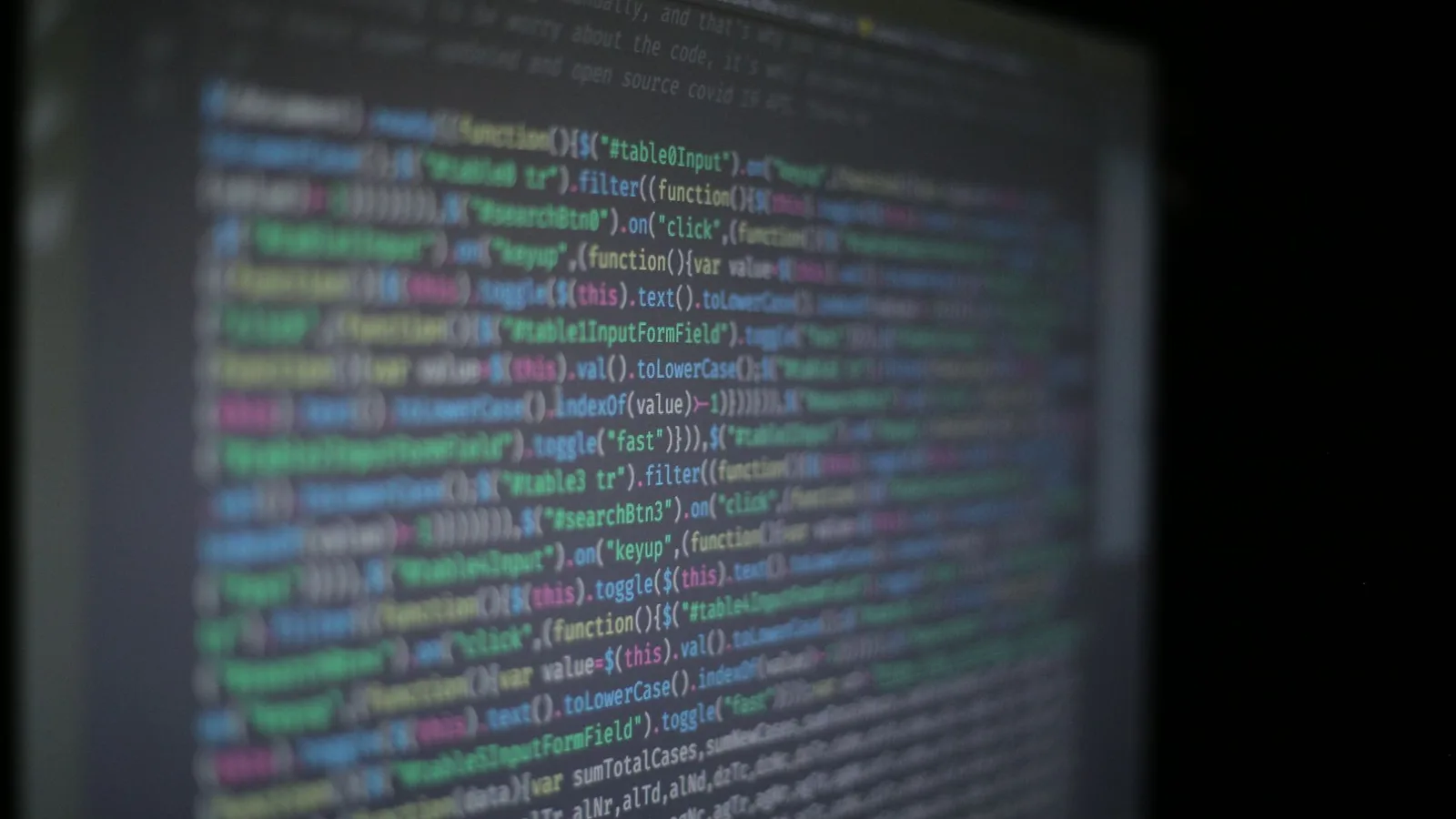
Code on a screen. The Cicada puzzles combined image steganography, classical book codes and public-key signatures, and were technically correct throughout.
On 4 January 2012 an image appeared on 4chan: white text on black, announcing that its authors were looking for highly intelligent individuals and had devised a test to find them. It was signed 3301.
What followed was the most competently constructed public puzzle of the internet era. It ran for three years, it was never explained, and it stopped.
What the first puzzle involved
The chain, in order, required: noticing that the image contained hidden data, extracting it with the steganography tool OutGuess, applying a Caesar shift, and working a book code against the Mabinogion.
That produced a telephone number in Texas. Calling it gave a recorded message pointing to prime numbers. Those led to a web address, and from there to a set of GPS coordinates.
The coordinates identified physical locations on five continents — among them Warsaw, Seoul, Paris, Sydney, Miami, Granada and Okinawa — where paper posters bearing QR codes had been fixed to street furniture. Somebody had physically placed them.
The posters led to a second book code, this time against William Gibson's Agrippa, and finally to a service on Tor.
On 5 February 2012 a signed message announced that the individuals sought had been found, and the puzzle closed.
The second and third puzzles
A second puzzle opened on 4 January 2013. It drew on Aleister Crowley's Liber AL vel Legis, used audio steganography, and distributed a bootable Linux image.
A third opened in January 2014. It introduced the Liber Primus: a book of roughly seventy-four pages written in a runic alphabet with an associated numerical scheme.
Around twenty pages have been read. The rest have not, and the effort has continued for more than a decade without a consensus solution.
What the solved pages contain is worth noting, because it is not what people expect. They are not technical. They read as instruction in a philosophical register — about self-knowledge, about not accepting authority over one's own mind, about privacy as a condition of thought.
The Liber Primus differs in one important way from a genuinely unreadable document such as the Voynich manuscript. It was built to be solved. Somebody holds the key, the scheme is internally consistent, and pages have in fact been read. That is a much better position to be stuck in, and it is why work on it continues.
What was claimed
That it was a recruitment front for an intelligence service — GCHQ, the NSA, the CIA, MI6, according to preference.
There is no evidence for this and there is a reasonable argument against it. Agencies recruit through advertised channels because they need to vet applicants, and a global anonymous puzzle selects for exactly the population an agency cannot clear.
Other claims: a cult, a privacy collective, a distributed test for cryptographic aptitude by a group building something. Some solvers have said they made contact and were asked not to discuss it, which is unverifiable in both directions.
What is genuinely notable
The cryptography was correct. That sounds like faint praise and it is not: the great majority of elaborate internet puzzles contain errors that reveal an amateur. This one did not.
The posters cost money and required people in a dozen cities. Whoever ran it had organisation as well as skill.
And the content, where it can be read, is ideologically consistent. It sits squarely in the cypherpunk tradition — the same intellectual world that produced strong public-key cryptography and anonymous networks — rather than anywhere near a government.
Where this leaves it
Most probably a small private group of skilled people with a specific set of convictions, who ran three recruitment puzzles and then either finished, lost interest, or decided the exercise was complete.
Join the discussion
Still open on this one:
- 01
Has the Liber Primus been solved?
No. Roughly twenty of about seventy-four pages have been read. There has been no progress toward a complete solution in years.
- 02
Was Cicada 3301 an intelligence agency?
No evidence supports it, and the recruitment method would be unusable by an agency that has to vet and clear the people it hires.
Be the first to comment
See also
Everything this piece touches
Sources
Open them and check for yourself. Where a record is public, it is linked.
Internet Archive
Liber Primus and puzzle archives, community-maintained
Cicada solver archives · no public copy located
Related
Psychic Phenomena
The Nine: who — or what — were they?
On New Year’s Eve 1952, in a laboratory in Maine, a voice announced itself as one of nine. Over the next forty years it reached a credentialled scientist, a celebrity psychic, a bestselling book and the creator of Star Trek. This is what is documented, and what is not.
Psychic Phenomena
New Year’s Eve 1952: the first session with the Nine
The founding event of the whole Nine phenomenon happened in a Maine farmhouse on 31 December 1952. Here is what the record supports about that evening, and how much of the familiar account was written down much later.
Psychic Phenomena
D. G. Vinod: the man at the beginning of the Nine
Every version of the Nine story starts with Dr D. G. Vinod in a trance in Maine. He is also the person that story then almost entirely forgets. Why the first channel is the biggest hole in the record.
Psychic Phenomena
Andrija Puharich: the doctor who kept turning up
A qualified physician, an inventor with real patents, an army medical officer — and the constant in forty years of the strangest story in American parapsychology. Puharich is the reason the Nine keep touching institutions.
0 comments