


Case File 041 · Open — no confirming evidence
Loch Ness
1933 · Loch Ness, Inverness-shire, Scotland · 57.32°N 4.42°W
- Documents
- 12
- Images
- 0
- Videos
- 1
- Witnesses
- 6
Overview
There is a monster on the bottom of Loch Ness. It is nine metres long, it lies in about 180 metres of water near Urquhart Bay, and an autonomous submarine photographed it in April 2016. It was built for Billy Wilder’s The Private Life of Sherlock Holmes, and it sank because Wilder disliked the humps on its back and had them cut off — the humps were what kept it afloat. That is the only large unidentified object anyone has ever brought back from the loch, and it took about a day to identify.
Loch Ness is 36 kilometres long, 227 metres deep at its deepest point, and holds more fresh water than every lake in England and Wales put together. Peat washed in off the surrounding hills stains it the colour of strong tea, which is why underwater photography there has always been close to useless. It has been swept end to end by a line of sonar boats, sampled for DNA at every depth, watched from the shore in shifts for five weeks at a stretch, and monitored continuously for seven weeks by a 15-tonne transducer array parked off Temple Pier. Nothing recovered from any of it requires an animal unknown to science.
What the record does contain is unusually clean. Each generation brought its best available instrument to the same body of water, which makes this one of the few cases where you can watch a claim behave under changing methods rather than under changing opinion. It also contains four celebrated pieces of evidence whose makers were eventually named: a set of footprints pressed with a hippopotamus foot, a photograph of a putty neck on a clockwork toy submarine, a pair of retouched underwater frames, and a rotting tree stump. Set against those are sonar contacts nobody has ever accounted for, a chief constable who thought the animal real enough to worry about who might shoot it, and a public sightings register still taking entries. This file separates the three groups, and does not pretend the middle one is empty.
Timeline
c. AD 697–700
A saint stops a beast in the River Ness
Adomnán, ninth abbot of Iona, writes the Life of Columba. Book II, chapter 27 has Columba coming upon mourners burying a man bitten to death by a water beast, and stopping the creature with the sign of the cross. The event is placed around 565, roughly 130 years before Adomnán wrote. The setting is the River Ness, not the loch.
2 May 1933
"Strange Spectacle on Loch Ness"
The Inverness Courier prints an account of a disturbance seen the previous month by Aldie Mackay, who ran the Drumnadrochit Hotel, and her husband John. It was written up by Alex Campbell, the local water bailiff and a part-time correspondent for the paper. The editor, Evan Barron, supplied the word monster. Neither the couple nor the correspondent was named in print.
22 July 1933
The Spicers see something cross the road
George Spicer, a London company director, and his wife reported an animal crossing the road ahead of their car between Dores and Foyers. The Courier carried it on 4 August. This is the sighting that moved the story off the water and into the newspapers as a creature rather than a wave.
12 November 1933
The first photograph
Hugh Gray photographed something near Foyers. The image is blurred and has been read as a dog swimming with a stick in its mouth, an otter, a swan and a rotting fish. It is the earliest photograph in the case and no reading of it has ever settled.
21 December 1933
Footprints on the shore
Marmaduke Wetherell, a big-game hunter hired by the Daily Mail, announced large four-toed spoor on the shoreline and estimated the animal at over twenty feet. The paper declared the creature established fact. Casts went to the Natural History Museum.
Early January 1934
The Natural History Museum reads the casts
The museum reported that the prints had been made with the foot of a hippopotamus — the kind then sold mounted as an umbrella stand or ashtray. The Daily Mail dropped Wetherell. Decades later Alastair Boyd traced a hippo-foot object to Wetherell’s own family.
5 January 1934
Arthur Grant, on a motorcycle, near Abriachan
A veterinary student reported nearly riding into an animal on the road at night. Grant’s account is among the most detailed of the early land sightings and, unlike the Spicers’, was given by someone with some anatomical training.
21 April 1934
The surgeon’s photograph
The Daily Mail published the image credited to Robert Kenneth Wilson, a London gynaecologist: a small head on a curved neck rising from flat water. It became the visual definition of the Loch Ness Monster for sixty years.
13 July 1934
The Mountain expedition begins
Sir Edward Mountain paid twenty men to watch the loch with binoculars and cameras from nine in the morning to six at night, for five weeks. Twenty-one photographs were taken. None was considered conclusive. It remains one of the largest sustained shore watches ever mounted.
15 August 1938
A chief constable asks who is going to stop them
William Fraser, chief constable of Inverness-shire, wrote that the existence of the creature was beyond doubt and that a party had arrived with a purpose-built harpoon gun intending to take it dead or alive. He recorded that his power to protect it was very doubtful. The letter was released by the National Archives of Scotland on 27 April 2010.
April 1960
Tim Dinsdale films a moving hump
Dinsdale, an aeronautical engineer, shot 16mm film of an object crossing the loch near Foyers. He did not shoot it continuously: the camera was clockwork and he stopped twice to wind it. That detail becomes decisive six years later.
1962
The Loch Ness Investigation Bureau is founded
A standing organisation with camera platforms on the shore, volunteer watchers and, later, underwater equipment. It operated until 1972 and is the reason a decade of the loch is documented at all.
1966
The RAF interprets the Dinsdale film
JARIC, the Joint Air Reconnaissance Intelligence Centre, assessed the film and concluded the object was probably animate — chiefly because it moved too fast to be the local fishing dinghies. The assessment assumed one continuous take. Dinsdale had wound the camera twice.
1970
Roy Mackal sinks six camera traps
Mackal, a biologist at the University of Chicago working with the Bureau, moored six baited camera traps in the loch — clockwork Instamatics with flash cubes, rigged to fire four frames when a bait line was pulled. Three were lost in a gale the same year.
August 1972
The flipper photographs
Robert Rines and the Academy of Applied Science ran a strobe camera alongside sonar in Urquhart Bay and produced frames later published as showing a large diamond-shaped flipper. They were the strongest-looking physical evidence the case had ever had.
September 1972
Two oceanographers do the arithmetic on food
R. W. Sheldon and S. R. Kerr published a calculation in Limnology and Oceanography working from the loch’s likely fish yield. Their result cuts both ways: a population of around 156 animals of 100 kilograms is supportable, but only a single individual of two to three tonnes.
20 June 1975
The gargoyle head
Rines obtained two further subsurface images south-east of Temple Pier, one showing a horned head-like object, the other read as a head, neck and body. They were circulated worldwide.
11 December 1975
The animal is given a scientific name
Sir Peter Scott and Robert Rines published "Naming the Loch Ness monster" in Nature 258, 466–468, proposing Nessiteras rhombopteryx — Ness monster with diamond-shaped fin — on the strength of the flipper frames. The MP Nicholas Fairbairn pointed out that the name is an anagram of "monster hoax by Sir Peter S".
May–July 1983
Seven weeks of continuous sonar, and nothing
Rikki Razdan and Alan Kielar moored a 15-tonne array of 144 sonar transducers in a 12 by 12 grid off Temple Pier, capable of flagging any target over three metres passing beneath it, and monitored continuously for seven weeks. No large moving target was recorded.
Winter 1984–85
The flipper frames are compared with the originals
Razdan and Kielar obtained the JPL enhancements from Alan Gillespie, the engineer who had performed them, and found them coarse and edgeless — nothing like the clean diamond published. Their reassessment ran in the Skeptical Inquirer; Discover ran an unretouched frame beside the famous one the same year.
8–9 October 1987
Operation Deepscan
Adrian Shine put twenty-four boats fitted with Lowrance echo sounders in a line across the loch and drove them down its length as a curtain. Three contacts were logged in deep water, stronger than fish echoes, and none could be relocated. Around 60 per cent of the loch was covered.
October 1987
The gargoyle head is dredged up
During the same operation the diver Dick Raynor photographed and recovered a rotting tree stump from the loch bed that Adrian Shine identified as the object in Rines’s 1975 photograph. It was still recognisable after twelve years underwater. It is on display at Drumnadrochit.
March 1994
The surgeon’s photograph is explained
David Martin and Alastair Boyd published the account given to them by Christian Spurling, Wetherell’s stepson, before Spurling’s death in November 1993 at the age of ninety. Spurling said he had built a neck and head of plastic wood onto a clockwork toy submarine, at Wetherell’s request, as revenge on the Daily Mail for the hippo-foot humiliation.
April 2016
A monster is found, and it is made of latex
Kongsberg Maritime’s MUNIN autonomous underwater vehicle, working with the Loch Ness Project on Operation Groundtruth, imaged a nine-metre model of the monster on the loch bed. It was the prop from The Private Life of Sherlock Holmes, sunk during filming after its buoyant humps were removed at the director’s insistence.
June 2018
The loch is sampled for DNA
A team led by Neil Gemmell of the University of Otago, with collaborators at Copenhagen, Hull, Bangor and the Highlands and Islands, took more than 250 water samples across the loch and at depth, to sequence the genetic material suspended in the water.
5 September 2019
The eDNA results are announced
Roughly 3,000 taxa were identified. No reptile DNA, no shark, no sturgeon, no catfish, nothing unassignable at large-vertebrate scale. European eel DNA was present at essentially every sampling point. Gemmell offered the large-eel hypothesis as the surviving possibility and said the data could not speak to the size of any individual.
21 July 2023
Somebody checks whether the eels can be that big
Floe Foxon published a statistical treatment in JMIRx Bio, fitting catch data from Loch Ness and other European fresh waters. The probability of an eel reaching one metre in the loch came out at roughly one in 50,000; at the sizes sightings describe, effectively zero.
26–27 August 2023
The Quest
The Loch Ness Centre and Loch Ness Exploration ran the largest surface search since the 1970s, with hundreds of volunteers, a thermal drone and hydrophones. On a Deepscan cruise the day before, Alan McKenna and the boat’s passengers heard four loud unfamiliar noises through the hydrophone. The recorder was not running.
1 April 2025
One of Mackal’s cameras comes back
The National Oceanography Centre’s Autosub, the vehicle the public named Boaty McBoatface, snagged a mooring during engineering trials and brought up one of the 1970 camera traps from about 180 metres. Adrian Shine identified it. An NOC engineer developed the film. Nothing on it.
Key people
Alex Campbell
Water bailiff, Loch Ness; part-time correspondent for the Inverness Courier
Wrote the May 1933 report that started the modern case, and went on filing sightings and reports for decades afterwards. He is the single most consequential figure in the file and also the most awkward one: the man who reported the phenomenon was also employed on the loch and had a long-running interest in it.
Marmaduke Wetherell
Big-game hunter and film-maker, hired by the Daily Mail in December 1933
Found the footprints, was publicly humiliated when the Natural History Museum identified them as a hippopotamus, and — on the account his stepson gave sixty years later — answered by constructing the photograph that defined the creature for the rest of the century. Both of the two most famous early pieces of evidence trace back to him.
Christian Spurling
Model maker; stepson of Marmaduke Wetherell
Said he built the head and neck from plastic wood and fixed them to a toy submarine. He gave the account to David Martin and Alastair Boyd shortly before his death in November 1993, aged ninety, and it is the only first-hand statement anyone has produced about how the surgeon’s photograph was made.
Robert Rines
Patent lawyer and founder of the Academy of Applied Science
Ran the underwater photography programme from 1972 until his death in 2009 and produced the flipper and gargoyle-head images. Both were eventually accounted for — one by retouching, one by a tree stump. Darren Naish’s assessment of the episode is that it was over-keen desperation rather than fraud, and the evidence supports that reading.
Sir Peter Scott
Naturalist and conservationist; co-author of the 1975 Nature paper
Lent the case its only piece of formal scientific standing by co-proposing a binomial name for the animal. His belief in it was long-held and openly published, which is the main reason the anagram is generally treated as coincidence rather than confession.
Adrian Shine
Founder, the Loch Ness Project
Has worked the loch since the 1970s and is responsible for most of what is actually known about it as a body of water. He led Operation Deepscan, identified the tree stump behind the gargoyle head, and identified the 1970 camera trap in 2025. He is neither a believer nor a debunker, and the Project’s own position — that the Deepscan contacts remain unexplained — is stated in its own words on its own site.
Alastair Boyd
Loch Ness researcher; co-author of the 1994 exposure
Helped destroy the most famous photograph in the case while continuing to maintain that he had seen a large animal in the loch himself in 1979. He is the reason the file cannot be reduced to believers on one side and sceptics on the other.
Neil Gemmell
Geneticist, University of Otago
Led the 2018 environmental DNA survey, the most sensitive search ever run at Loch Ness. He was consistently careful in public about what the eel result did and did not permit, and consistently reported as having found a giant eel. The gap between those two things is instructive.
Evidence
Each item carries a status. Where something is contested or has been debunked, it says so.
The Life of Columba, Book II, chapter 27
VerifiedDocument
The text is genuine, the manuscript tradition is early, and the episode reads exactly as described. What it does not do is bear on the loch. Adomnán wrote around 130 years after the events he places in the 560s; the beast is in the River Ness, downstream; and a holy man subduing a wild animal with a blessing is one of the standard set pieces of the genre, appearing in saints’ lives across Europe. It is the oldest document in the file and the least evidential.
The Inverness Courier report, 2 May 1933
VerifiedDocument
The founding document of the modern case, and it is worth reading for what it is: an unsigned report of an anonymous couple’s sighting, written by a man who worked on the loch, with the word monster added by the editor. Everything after it — the Daily Mail, the hunters, the hoaxes, the tourism — descends from this single column.
Wetherell’s footprints, December 1933
DebunkedPhysical
Casts were examined at the Natural History Museum within about two weeks and identified as impressions of a hippopotamus foot, an item then commonly sold as a mounted umbrella stand. This is the cleanest resolution in the whole file: physical evidence, a named institution, a fast public verdict, and no residual ambiguity.
The Hugh Gray photograph, 12 November 1933
ContestedPhotograph
The earliest photograph, taken near Foyers. It is genuinely indistinct, which is why it has survived: a dog with a stick, an otter, a swan, a decomposing fish and an unknown animal have all been argued from the same frame. No analysis has commanded agreement, and unlike the surgeon’s photograph nobody has ever claimed authorship of a hoax.
The surgeon’s photograph, 21 April 1934
DebunkedPhotograph
A model roughly a foot high — plastic wood over a clockwork toy submarine — according to Christian Spurling, who said he built it. Independent support is circumstantial but consistent: Steuart Campbell’s 1984 optical analysis, done a decade before the confession, put the object at two or three feet at most, which is far too small for the animal the picture is taken to show. A minority of researchers still dispute the Spurling account, largely on the grounds that a small submarine handles badly in open water. The reading here is that the confession stands.
The Dinsdale film, April 1960
ContestedFilm
JARIC’s 1966 assessment that the object was probably animate rested on its speed being too high for a local fishing dinghy — and on the assumption of one continuous take, which the film is not. Recent frame-stacking has recovered a pale mass at the rear of the object in multiple frames, consistent with a helmsman sitting at a stern engine. The film is not a hoax and Dinsdale never treated it as one; the boat reading is now the stronger of the two.
The 1972 flipper photographs
DebunkedPhotograph
The clean diamond-shaped flipper was applied by hand with a brush. Alan Gillespie, who ran the JPL computer enhancement, confirmed that the published images were not his output; his were grainy and edgeless. Razdan and Kielar obtained the originals directly from him and published the comparison in 1984. The most probable subject of the underlying frames is silt on the loch bed, disturbed by the camera rig itself.
The 1975 gargoyle head
DebunkedPhotograph
A rotting tree stump on the loch bed, photographed and recovered by Dick Raynor during Operation Deepscan in October 1987 and identified by Adrian Shine as the object in the 1975 frame. Twelve years underwater and it was still recognisable. The stump can be seen at the exhibition in Drumnadrochit.
Nessiteras rhombopteryx — Nature, 11 December 1975
VerifiedDocument
Scott and Rines really did publish a proposed binomial in Nature, and it is the closest the case has come to formal scientific recognition. It is also entirely dependent on the flipper photographs, which means the name now rests on a retouched image. The anagram spotted by Nicholas Fairbairn is a genuine anagram and almost certainly a coincidence — Scott’s belief in the animal was decades old and published at length.
The Operation Deepscan contacts, October 1987
ContestedSonar
Three contacts in deep water, stronger than fish echoes, none relocatable on a return pass. The Loch Ness Project, which ran the operation, has never claimed more for them than that they are unexplained, and has offered debris, thermal layering and seals as candidates. This is the most substantial unresolved item in the file, and it is unresolved rather than positive.
The ISCAN continuous monitoring array, summer 1983
VerifiedSonar
A 15-tonne, 144-transducer array moored off Temple Pier for seven weeks, imaging in three dimensions and set to flag any target over three metres. It was, in method, the most rigorous search ever mounted at the loch. It recorded no large moving target. A negative result from one bay over seven weeks does not clear a 36-kilometre loch, and the authors did not say it did.
The Sheldon and Kerr trophic calculation, 1972
VerifiedScientific analysis
A published estimate of how much large animal Loch Ness can feed, working from the morphoedaphic index and a fish yield of around 0.55 kilograms per hectare per year. The answer is not zero: roughly 156 animals at 100 kilograms each, or one at two to three tonnes. Both sides quote it, and both are quoting it correctly — it is a genuinely two-edged result, which is rare.
The environmental DNA survey, 2018–2019
VerifiedScientific analysis
More than 250 samples across the loch and through the water column, roughly 3,000 taxa recovered, no reptile, no shark, no sturgeon, no catfish, and European eel DNA at almost every point. It is the most sensitive search the loch has had, because it does not require anything to be seen, caught or in front of a camera. Its stated limitation is that it cannot speak to the size of individuals. Its unstated one is recorded in the open questions below: this dossier has not been able to trace a peer-reviewed publication of the dataset.
Foxon’s eel size distribution, 2023
VerifiedScientific analysis
A statistical fit to catch data from Loch Ness and other European fresh waters, testing whether the eels the DNA survey found could be the animals people describe. A one-metre eel comes out at about one in 50,000. Anything approaching the size in the sighting reports is vanishingly improbable. The paper is the rare case of a cryptozoological hypothesis being stated precisely enough to be checked, and then checked.
The Sherlock Holmes prop
VerifiedPhysical
Nine metres of monster on the loch bed, imaged by an autonomous vehicle in April 2016 and identified without difficulty. It is in the file because it is the only large object of the right shape ever recovered from Loch Ness, and because it is a working demonstration of how much of the loch bed had never been looked at before 2016.
The Quest hydrophone noises, 25 August 2023
UnexaminedAudio
Four loud unfamiliar sounds heard through a hydrophone by Alan McKenna and everyone else aboard a Deepscan cruise. The recording equipment was not running. Nothing similar was heard during the two days of the organised search that followed. There is nothing to examine, and this file says so rather than treating a shipload of witnesses as a substitute.
Witness accounts
Reported a considerable disturbance in the water while driving back from Inverness with her husband John in April 1933 — rolling and plunging, the body compared to a whale’s, the water churning. The report was published anonymously; her name attached to it only much later. Everything in this file after May 1933 follows from this sighting, and what she actually saw has never been established.
Reported that an animal crossed the road in front of his car between Dores and Foyers on 22 July 1933, describing a long neck and a bulky body, and that it disappeared into the loch. His account moved the story from a disturbance on the water to a creature with a shape, and most subsequent descriptions carry that shape.
Wrote on 15 August 1938 that the existence of the creature was beyond doubt, that a party had arrived with a specially made harpoon gun intending to take it dead or alive, and that his own power to prevent them was very doubtful. He was not a witness to the animal. He is included because his letter is the clearest surviving measure of how seriously the thing was taken by people with jobs to lose.
Told David Martin and Alastair Boyd that he had built the head and neck out of plastic wood on a clockwork toy submarine at Wetherell’s request, that Wetherell’s son Ian took the photographs, and that Maurice Chambers passed them to Robert Kenneth Wilson to give the picture a respectable source. He described it as revenge on the Daily Mail. He was ninety and died shortly afterwards.
Has said he saw a large animal in the loch in 1979 and has never withdrawn it, while also having spent years establishing that the most famous photograph of that animal was a toy. He is the strongest single argument against reading this case as two camps.
Reported in September 2019 that the survey found no DNA consistent with a reptile or a large unknown vertebrate, and eel DNA at almost every sampling point. He stated repeatedly that the data could not establish the size of any individual eel, and that the giant-eel idea was therefore possible but unproven. That qualification was dropped from most of the coverage.
The argument
Both sides, given equal room. The alternative explanations are not an afterthought.
Supporting the claim
Three sonar contacts have never been accounted for
Operation Deepscan logged returns in deep water that were stronger than fish echoes and could not be found again on a second pass. The organisation that ran it says on its own website that they remain unexplained, and that organisation spends its time deflating this case rather than inflating it. Debris, thermal layering and seals have all been offered; none has been demonstrated. An unexplained contact is not an animal. It is also not nothing, and forty years of subsequent work has not turned it into nothing.
The food-supply objection does not actually forbid it
Sheldon and Kerr are usually cited as having ruled the animal out. They did not. Their published figures allow around 156 individuals at 100 kilograms, which is a viable population by any reasonable standard, and one individual at two to three tonnes. The trophic argument constrains the size and number of any unknown animal in Loch Ness. It does not exclude one, and the paper is explicit that a few large animals could exist.
Nobody has searched most of it
Deepscan, the most complete sweep ever attempted, covered about 60 per cent of the loch in two days. Rines and Razdan both worked one bay. The 2016 vehicle survey found a nine-metre object nobody knew was there, which had been lying on the bottom since 1969 in a loch that had been searched continuously for half a century. That is a real statement about coverage, and it is made by the sceptical side’s own instrument.
The witness pool is not made of cranks
A chief constable wrote to his superiors about protecting the animal from armed men. A veterinary student reported nearly hitting it. Twenty paid observers watched the water for five weeks. And the man who did more than anyone to demolish the surgeon’s photograph, Alastair Boyd, maintains that he saw a large animal there in 1979 and has never had a reason to say so that served him. None of that is evidence of a species. It is evidence that the reports are not reducible to hoax and hysteria, and any account that tries to reduce them that way has to deal with Boyd.
Alternative explanations
The loch is ten thousand years old and was under ice before that
This is the argument that ends the plesiosaur version, and it does not require examining a single photograph. Loch Ness sits in a glacial trough along the Great Glen Fault and took its present form after the ice retreated, roughly ten thousand years ago. Before that it was not a lake. A relict marine reptile surviving 66 million years to be trapped in a body of water that did not exist for 65.99 million of them is not a hypothesis with a weak spot; it is a hypothesis with no mechanism at all. Whatever else might be in the loch, it got there since the ice.
Boat wakes on a long, deep, narrow lake
Every vessel of any size throws a Kelvin wake at a fixed angle of about 19.5 degrees to its heading, and in a loch this shape the wave train reflects off steep sides and interferes with itself. The observed result is humps that appear to sit still and then surge forward, complete with something that reads as a bow wave — and it can happen up to half an hour after the boat that caused it has gone out of sight. This is not a theory about what witnesses might have confused; it is a documented surface phenomenon on this specific loch, and it produces exactly the thing people report.
The founding evidence was manufactured, and by identifiable people
Sceptical arguments usually have to say that witnesses were mistaken. Here they do not have to. The footprints were pressed with a hippo foot; the museum said so within a fortnight. The photograph was a model; the man who built it said so and named the others involved. The flipper was applied with a paintbrush; the engineer whose enhancement was supposedly the source says the published images are not his work. The gargoyle head is a tree stump and the stump is on display. Four of the five most reproduced pieces of evidence in the case have a known author and a known method.
The same arithmetic, read the other way
Sheldon and Kerr allow a population at 100 kilograms. They do not allow one at the size the sightings describe. A twenty-foot animal of the kind Spicer and the photographs suggest sits near their upper bound, where the loch supports one individual — and one individual is not a species. Anything that has been in there since the ice needs a breeding population maintained for ten thousand years, and the food web will not carry a breeding population of animals that size.
Eels, which is the last serious candidate, and the numbers are against them
The eel hypothesis is the best thing the case has going, because the DNA is genuinely there and eels are genuinely long, dark and sinuous. Foxon took it seriously enough to test it: fit the catch data, ask how probable a very large eel is. One metre comes out at about one in 50,000, and the curve falls off a cliff after that. Eels almost certainly account for some sightings. They cannot account for the ones that made the loch famous, and the honest form of the eel argument concedes that.
Everything ordinary that a loch contains
Red deer swim across it. So do otters, and otters surface in a line of arches that looks precisely like humps. Cormorants sit low with the neck raised. Logs waterlogged at one end float vertically and roll. Standing waves run the length of a body of water shaped like this one. None of these is a satisfying answer to any individual sighting, and that is the point: the sighting reports are not one phenomenon needing one explanation, and treating them as though they were is the error both sides make.
Video
Interviews and documentary material relating to this case.
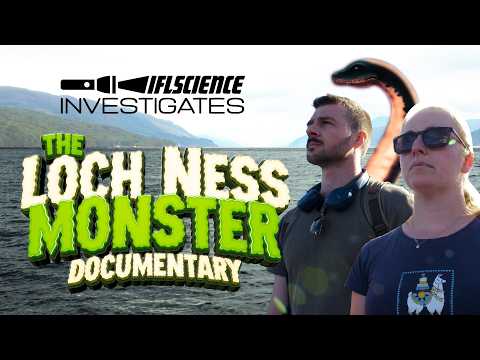
Covers the survey history and why the story outlasts each of its explanations.
Latest developments
13 Apr 2016
A nine-metre monster is recovered from the loch bed
Kongsberg’s MUNIN vehicle imaged the prop from The Private Life of Sherlock Holmes during Operation Groundtruth with the Loch Ness Project. Beyond the joke, the survey was the first high-resolution map of much of the loch floor, and it is the reason anyone can now say with confidence what is and is not down there in the areas covered.
5 Sept 2019
The most sensitive search ever run returns eels
The eDNA announcement moved the argument decisively. Before it, the sceptical case was that no good evidence had been found; after it, the case is that a method capable of detecting an animal without seeing it was applied across the whole loch and found nothing unexpected. The giant-eel hypothesis survives as the only candidate the data leaves standing, and it is not a strong one.
21 Jul 2023
The eel hypothesis is tested and does not hold
Foxon’s paper closed the loop the DNA survey opened. Eels are there in quantity; eels of the size sightings describe are statistically almost impossible. The chain from the most sensitive search to its most plausible explanation and then to that explanation’s failure took four years, all of it in public and all of it checkable.
1 Apr 2025
A 1970 camera trap surfaces by accident
The National Oceanography Centre’s Autosub caught a mooring line during engineering trials and brought up one of Roy Mackal’s baited Instamatic traps from about 180 metres. The film was developed and showed nothing. The camera is now on display at Drumnadrochit, which is the appropriate place for it: the objects this loch reliably yields are the ones people put in it.
What we could not settle
Loose ends we are still working on.
- 01
Where is the peer-reviewed publication of the 2018 eDNA dataset?
Gemmell said in September 2019 that a paper would follow, and the result has been cited ever since as the definitive modern search. Research for this dossier did not locate a published paper on the Loch Ness dataset. That is a statement about what could be found, not proof that none exists — but the most-cited evidence in the modern case should not rest on a press conference, and until the paper is traced the finding cannot be checked by anyone outside the team.
- 02
What produced the three Deepscan contacts?
Logged in deep water in October 1987, stronger than fish echoes, never relocated. Debris, thermal layering and seals have all been proposed and none demonstrated. Nothing in thirty-nine years has resolved them, and they are the only substantial unexplained instrument reading in the case.
- 03
Do the unretouched 1972 frames survive, and who holds them?
Razdan and Kielar obtained copies from Alan Gillespie at JPL in the early 1980s and published a comparison. Where the originals are now, and whether the full sequence rather than the selected frames still exists, has not been established in the public record.
- 04
How large can a European eel in Loch Ness actually grow?
The eDNA survey raised the question and cannot answer it; Foxon answered it statistically from catch data, which is not the same as catching one. No outsized specimen has ever been taken from the loch. A single large eel in a net would settle more than another decade of sonar.
- 05
Are the other five 1970 camera traps still on the bottom?
Mackal moored six. Three were lost in a gale that year and one came up in 2025 by accident, on a vehicle that was not looking for it. The rest have not been accounted for, and each is a sealed capsule of unexposed or exposed film from a period the case has almost no physical record of.
- 06
What did Aldie Mackay see in April 1933?
The founding sighting of the entire modern case, reported anonymously, written up by a man employed on the loch, and never independently examined. No investigator has ever taken a statement from her about it, and the account everyone works from is a newspaper paraphrase written by a third party. It is the one early event to which no specific explanation has ever been attached.
- 07
Why did the reports keep coming after 1994?
The photograph that defined the animal was publicly explained thirty-two years ago and the sightings register is still taking entries. That is a fact about the case and it has never been studied properly. It is not evidence of an animal; it may be the most interesting thing in the file.
Got something to add?
A question, a source we missed, a correction, or something you saw yourself — all of it is welcome here. You do not need to be an expert, and you are allowed to disagree with us.
Nobody has yet — go on.
Sources
Sources
Open them and check for yourself. Where a record is public, it is linked.
Explained: what sparked the mystery of the Loch Ness Monster 90 years ago?
The Inverness Courier
The monster in the River Ness in Vita Sancti Columbae
University of Amsterdam research repository
The Surgeon’s Photo — case history and sources
Museum of Hoaxes
The 1972 Loch Ness Monster flipper photos
D. Naish, Tetrapod Zoology · 17 Aug 2020
Sonar and photographic searches for the Loch Ness monster: a reassessment
R. Razdan & A. Kielar; The Skeptical Inquirer, Winter 1984–85, p. 147
P. Scott & R. Rines; Nature 258, 466–468 · 11 Dec 1975
The population density of monsters in Loch Ness
R. W. Sheldon & S. R. Kerr; Limnology and Oceanography 17(5), 796–798 · 1 Sept 1972
Operation Deepscan — the Loch Ness Project’s own account
The Loch Ness Project · 9 Oct 1987
First eDNA study of Loch Ness points to something fishy
University of Otago · 5 Sept 2019
The Loch Ness Monster: if it’s real, could it be an eel?
F. Foxon; JMIRx Bio 1, e49063 · 21 Jul 2023
1970s Loch Ness Monster movie prop found
The Maritime Executive · 14 Apr 2016
NOC ocean robot finds long-lost Loch Ness Monster camera trap
National Oceanography Centre · 1 Apr 2025
Findings revealed from The Quest weekend
The Loch Ness Centre
Wave good bye to Nessie: the wake phenomenon that can explain many Loch Ness sightings
The Skeptic
Loch Ness — dimensions, depth and formation
Encyclopædia Britannica
Loch Ness Monster had police protection in the 1930s — the Fraser letter
The Christian Science Monitor · 29 Apr 2010
The Official Loch Ness Monster Sightings Register
G. Campbell
The Loch Ness Mystery Solved
R. Binns, 1983 — no stable public link; widely held in libraries · no public copy located
The Loch Ness Monster: The Evidence
S. Campbell — no stable public link; widely held in libraries · no public copy located
Nessie: The Surgeon’s Photograph Exposed
D. Martin & A. Boyd, 1999 — no stable public link · no public copy located
See also
Everything this piece touches
Other case files
 Case File 063
Göbekli Tepe
c. 9500 BC · Germuş range, Şanlıurfa Province, Türkiye
A limestone ridge in south-eastern Türkiye where hunter-gatherers raised carved megaliths a thousand years before pottery. The dating is not in dispute. Almost everything built on top of it is.
10 documents · 0 images · 2 videos
 Case File 051
Area 51
1955–present · Groom Lake, Lincoln County, Nevada
A flight test range the United States denied existed for forty years, in litigation, against men who had worked there. It was acknowledged in a presidential memorandum in 1995 and named in a CIA history in 2013. What it was for is documented. What it is for now is not.
5 documents · 0 images · 1 videos
 Case File 018
MKULTRA
1953–73 · United States and Canada
Twenty years of CIA research into drugs, hypnosis and behavioural control. The records were destroyed in 1973; what survives does so by a filing error, and it is enough.
0 documents · 0 images · 0 videos
 Case File 017
The Patterson–Gimlin film
1967 · Bluff Creek, northern California
Fifty-nine seconds of 16mm film shot on 20 October 1967. Two hoax claimants, one missing camera original, and a reel surfaced in 2026 that nobody outside the production has examined.
13 documents · 0 images · 1 videos
 Case File 009
Rendlesham Forest
1980 · Suffolk, England
December 1980, Suffolk. Three nights, two airbases, and a memorandum that has been argued over ever since. Britain’s most examined case.
0 documents · 1 images · 2 videos
 Case File 031
Nimitz Tic Tac
2004 · Pacific Ocean
November 2004, off the coast of Baja California. Radar, FLIR and aircrew accounts from the USS Nimitz carrier strike group, assembled in one place.
0 documents · 0 images · 4 videos
 Case File 024
Roswell
1947 · New Mexico
July 1947, Lincoln County, New Mexico. The recovery that produced two official explanations, decades of testimony and one of the most heavily documented disputes in the field.
0 documents · 1 images · 1 videos
0 comments