

Lake Baikal: a story with only one source
Soviet divers are said to have encountered large humanoid figures in silver suits in the world's deepest lake, with three dying in the attempt to catch them. Following the source is the whole exercise.
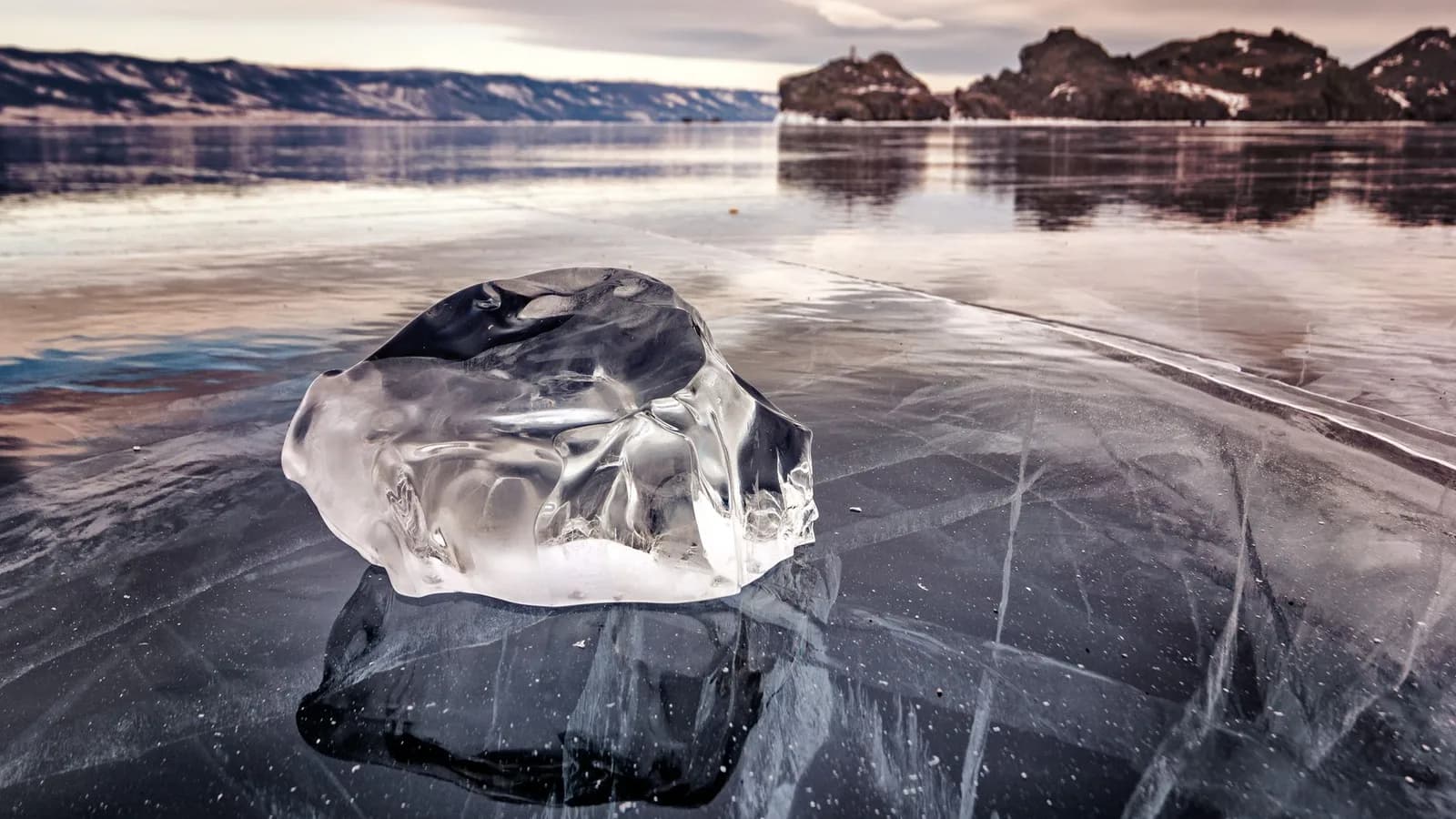
Baikal is the deepest lake on Earth, reaching over 1,600 metres.
Lake Baikal in southern Siberia is the deepest lake on Earth at over 1,600 metres, holds around a fifth of the world's unfrozen fresh surface water, and is around 25 million years old — the oldest lake in existence.
It is genuinely one of the strangest bodies of water on the planet, with hundreds of endemic species including a freshwater seal whose presence in landlocked Siberia is still not fully explained.
It also carries a story that has circulated widely, and that story is a useful exercise in following a claim to its origin.
The claim
That in 1982, Soviet military divers training in the lake encountered large humanoid figures — around three metres tall, in tight silver suits and spherical helmets — at depths of roughly fifty metres.
That an attempt was made to capture one, that the divers were thrown upward by some force, and that three of the seven died of decompression injury while others were permanently disabled.
Where it comes from
A Russian newspaper report, published around 2009, describing an alleged declassified document said to originate from a Soviet military archive.
That is the source. Not a document, but a press account of a document.
What can be checked, and is not
A diving fatality is one of the most heavily documented events in any military. It generates a casualty record, a next of kin notification, a medical report, a unit investigation and a pension file.
Three deaths in one incident would leave a substantial paper trail in multiple places. Named individuals could be sought. No names have ever been published.
That absence is the strongest thing that can be said about the case, and it points one way.
The seals, which are the real puzzle
The nerpa is the world's only exclusively freshwater seal, and it lives in a lake nearly three thousand kilometres from the nearest ocean.
How it got there is genuinely unresolved. The leading proposal is that ancestors reached the lake via river systems connected to the Arctic during a glacial period, and were then isolated when those connections closed.
Genetic work links it most closely to the ringed seal of the Arctic, which is consistent, but the timing and route are not settled.
What is actually strange about Baikal
The real anomalies are biological and geological. The endemic seal. Deep-water oxygen circulation unlike other lakes of comparable depth. Ice formations — dark rings visible from orbit — whose formation mechanism has been the subject of active research.
Methane and gas hydrate deposits on the lake floor, which produce eruptions and surface disturbances.
All of that is documented in the scientific literature, and all of it is more interesting than the divers.
Join the discussion
Still open on this one:
- 01
Does any Soviet naval record of a 1982 Baikal fatality exist?
It is an answerable archival question that nobody appears to have pursued, and it would settle the case in either direction.
Be the first to comment
Sources
Open them and check for yourself. Where a record is public, it is linked.
NOAA
All-domain Anomaly Resolution Office
US Department of Defense
Related

Psychic Phenomena
The Nine: who — or what — were they?
On New Year’s Eve 1952, in a laboratory in Maine, a voice announced itself as one of nine. Over the next forty years it reached a credentialled scientist, a celebrity psychic, a bestselling book and the creator of Star Trek. This is what is documented, and what is not.
Psychic Phenomena
New Year’s Eve 1952: the first session with the Nine
The founding event of the whole Nine phenomenon happened in a Maine farmhouse on 31 December 1952. Here is what the record supports about that evening, and how much of the familiar account was written down much later.
Psychic Phenomena
D. G. Vinod: the man at the beginning of the Nine
Every version of the Nine story starts with Dr D. G. Vinod in a trance in Maine. He is also the person that story then almost entirely forgets. Why the first channel is the biggest hole in the record.

Psychic Phenomena
Andrija Puharich: the doctor who kept turning up
A qualified physician, an inventor with real patents, an army medical officer — and the constant in forty years of the strangest story in American parapsychology. Puharich is the reason the Nine keep touching institutions.
0 comments