

Antônio Villas-Boas: the abduction that came first
Four years before Betty and Barney Hill, a young Brazilian farmer described being taken aboard a craft. He reported it, sought nothing, became a lawyer, and never changed his account.
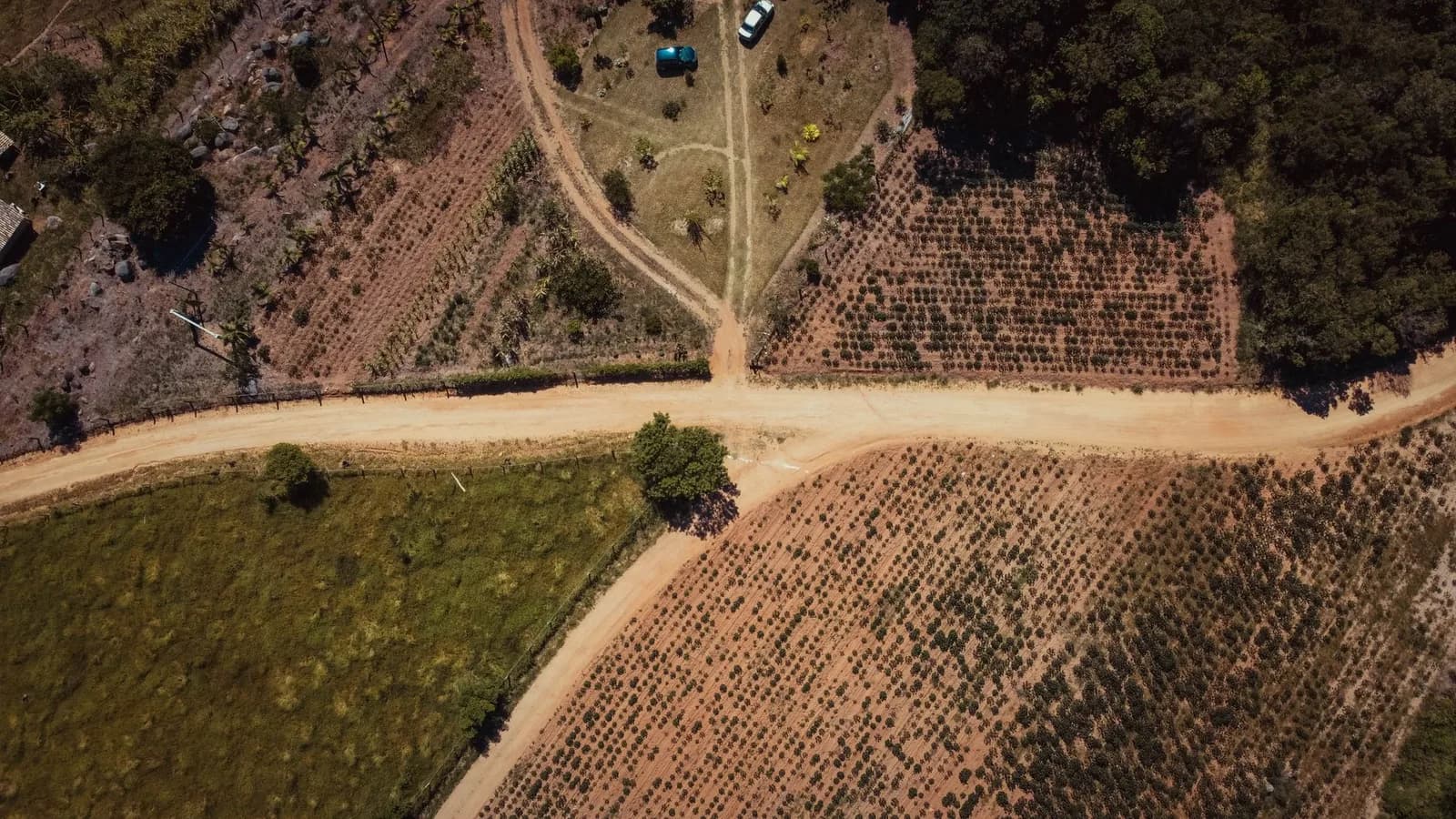
Villas-Boas was ploughing at night on his family farm in Minas Gerais.
On the night of 15 October 1957, Antônio Villas-Boas was ploughing his family's land in Minas Gerais, Brazil. He was twenty-three.
He described a light descending, his tractor failing, and being seized by figures in suits and helmets and taken aboard a craft. He said he was undressed, covered in a gel, had blood taken from his chin, and was left in a room where a small fair-haired woman came to him and they had intercourse. He was then shown out.
He reported subsequent illness with symptoms he attributed to radiation exposure — nausea, lesions, and marks on his skin.
Why the chronology matters
The Villas-Boas case is October 1957. The Betty and Barney Hill case, usually described as the first abduction account, is September 1961.
Villas-Boas is four years earlier, and his account was not in circulation in the English-speaking world when the Hills reported. It was documented by the Brazilian physician Olavo Fontes in 1958, and was not widely published internationally until the 1960s.
What he did afterwards
Very little, which is the most striking feature of the case.
He gave his account to a doctor and to investigators. He was medically examined. He did not sell the story, did not tour, did not write a book, and largely avoided publicity for the rest of his life.
He went on to study law and worked as a lawyer. He maintained the account until his death in 1991 and never recanted.
Fontes's medical examination reported skin lesions and scarring consistent with what he described, though the cause could not be established.
Why Fontes held it back
Olavo Fontes, the physician who documented the case in 1958, did not publish it widely for years.
His stated reason was the content. He judged that an account with this sexual element would be dismissed and would damage the credibility of the Brazilian investigators pursuing other cases.
The report circulated privately among researchers and reached the English-speaking world properly only in the 1960s, after the Hill case had established what an abduction account was supposed to look like.
What weighs against it
A single witness with no corroboration. Nobody else saw anything, and there is no physical evidence beyond the medical findings, which are consistent with several causes.
The narrative also has features that read as culturally specific: the encounter as described maps onto folklore motifs that long predate aviation, and the account has been read as a young man's experience rendered in the imagery available to him.
Join the discussion
Still open on this one:
- 01
What did the 1958 medical examination actually record?
Fontes's findings are the only physical component. The original documentation is in Portuguese and has been quoted more often than it has been examined.
Be the first to comment
Sources
Open them and check for yourself. Where a record is public, it is linked.
US National Archives
The National Archives
Related
Psychic Phenomena
The Nine: who — or what — were they?
On New Year’s Eve 1952, in a laboratory in Maine, a voice announced itself as one of nine. Over the next forty years it reached a credentialled scientist, a celebrity psychic, a bestselling book and the creator of Star Trek. This is what is documented, and what is not.
Psychic Phenomena
New Year’s Eve 1952: the first session with the Nine
The founding event of the whole Nine phenomenon happened in a Maine farmhouse on 31 December 1952. Here is what the record supports about that evening, and how much of the familiar account was written down much later.
Psychic Phenomena
D. G. Vinod: the man at the beginning of the Nine
Every version of the Nine story starts with Dr D. G. Vinod in a trance in Maine. He is also the person that story then almost entirely forgets. Why the first channel is the biggest hole in the record.

Psychic Phenomena
Andrija Puharich: the doctor who kept turning up
A qualified physician, an inventor with real patents, an army medical officer — and the constant in forty years of the strangest story in American parapsychology. Puharich is the reason the Nine keep touching institutions.
0 comments