

The Wow! signal: seventy-two seconds, and nothing since
In August 1977 an Ohio radio telescope recorded a narrowband burst so strong the astronomer checking the printout wrote one word beside it. Nobody has heard it again, and no explanation has stuck.
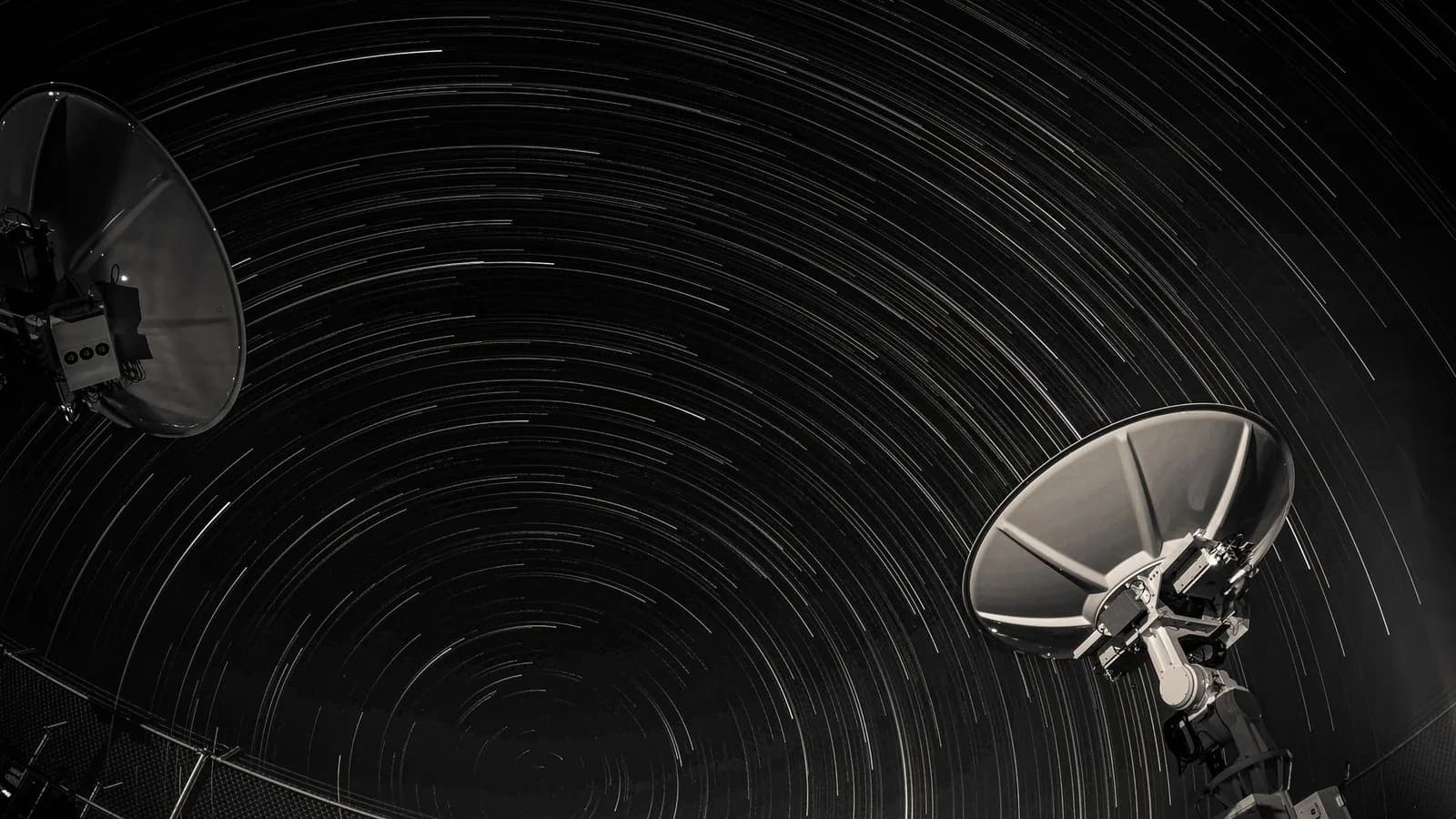
The signal was recorded by the Big Ear radio telescope at Ohio State University.
On 15 August 1977 the Big Ear radio telescope at Ohio State University recorded a burst of radio energy from the direction of Sagittarius. Reviewing the computer printout days later, the astronomer Jerry Ehman circled the sequence of characters representing its intensity and wrote "Wow!" in the margin.
Nearly fifty years later it remains the most interesting unexplained result in the history of the search for extraterrestrial intelligence, and the reasons are technical rather than romantic.
What was actually recorded
A narrowband signal close to 1420 MHz — the frequency at which neutral hydrogen radiates, and the frequency SETI researchers had argued for decades any deliberate transmission would use, because it is the most conspicuous landmark in the radio spectrum.
It lasted 72 seconds, which is exactly what a fixed telescope observing a point in the sky as the Earth turns would see from a source that stayed put. Its intensity rose and fell in the shape that beam pattern predicts.
It was strong — around thirty times the background — and narrowband. Natural astrophysical sources tend to be broadband; narrow bandwidth is characteristic of a transmitter.
Why it is not proof of anything
One observation, never repeated. The same patch of sky has been searched many times since with more sensitive instruments and nothing has been found.
Big Ear also had two feed horns, and a genuine sky source should have appeared in both a few minutes apart. Only one recorded it — which is odd, and which the surviving records do not fully resolve.
The explanations offered
Terrestrial interference is the obvious candidate and the hardest to exclude retrospectively. A reflection off space debris, or a transmitter briefly in the wrong place, would produce a one-off narrowband burst — but the frequency is protected internationally for radio astronomy, and the duration matches sidereal drift rather than a passing source.
A comet was proposed in 2017, on the grounds that hydrogen clouds around comets could emit near 1420 MHz. The proposal was examined and largely rejected: the comets in question were not in the right place, and comets do not produce narrowband emission of that kind.
More recently it has been suggested that a cloud of cold hydrogen could be stimulated into a brief maser-like emission by a sudden burst from a magnetar. That is a serious proposal and it is not confirmed.
What it actually taught SETI
That a single detection is worth very little, and that the field needed to be designed around repeatability from the start. Modern searches are built to re-observe candidates automatically within minutes, precisely so that a future Wow! signal can be confirmed or dismissed on the night rather than argued about for half a century.
Join the discussion
Still open on this one:
- 01
Why did only one of Big Ear’s two feed horns record it?
A genuine sky source should have crossed both. This is the strongest technical objection and it has never been fully resolved from the surviving records.
Be the first to comment
Sources
Open them and check for yourself. Where a record is public, it is linked.
SETI Institute
NASA
Related

Psychic Phenomena
The Nine: who — or what — were they?
On New Year’s Eve 1952, in a laboratory in Maine, a voice announced itself as one of nine. Over the next forty years it reached a credentialled scientist, a celebrity psychic, a bestselling book and the creator of Star Trek. This is what is documented, and what is not.

Psychic Phenomena
New Year’s Eve 1952: the first session with the Nine
The founding event of the whole Nine phenomenon happened in a Maine farmhouse on 31 December 1952. Here is what the record supports about that evening, and how much of the familiar account was written down much later.

Psychic Phenomena
D. G. Vinod: the man at the beginning of the Nine
Every version of the Nine story starts with Dr D. G. Vinod in a trance in Maine. He is also the person that story then almost entirely forgets. Why the first channel is the biggest hole in the record.

Psychic Phenomena
Andrija Puharich: the doctor who kept turning up
A qualified physician, an inventor with real patents, an army medical officer — and the constant in forty years of the strangest story in American parapsychology. Puharich is the reason the Nine keep touching institutions.
0 comments