

ʻOumuamua: the first interstellar visitor, and the argument about it
In 2017 an object passed through the solar system on a path that meant it came from outside it. It behaved oddly enough that a Harvard astronomer proposed it was artificial. The measurement is real; the interpretation is one of several.
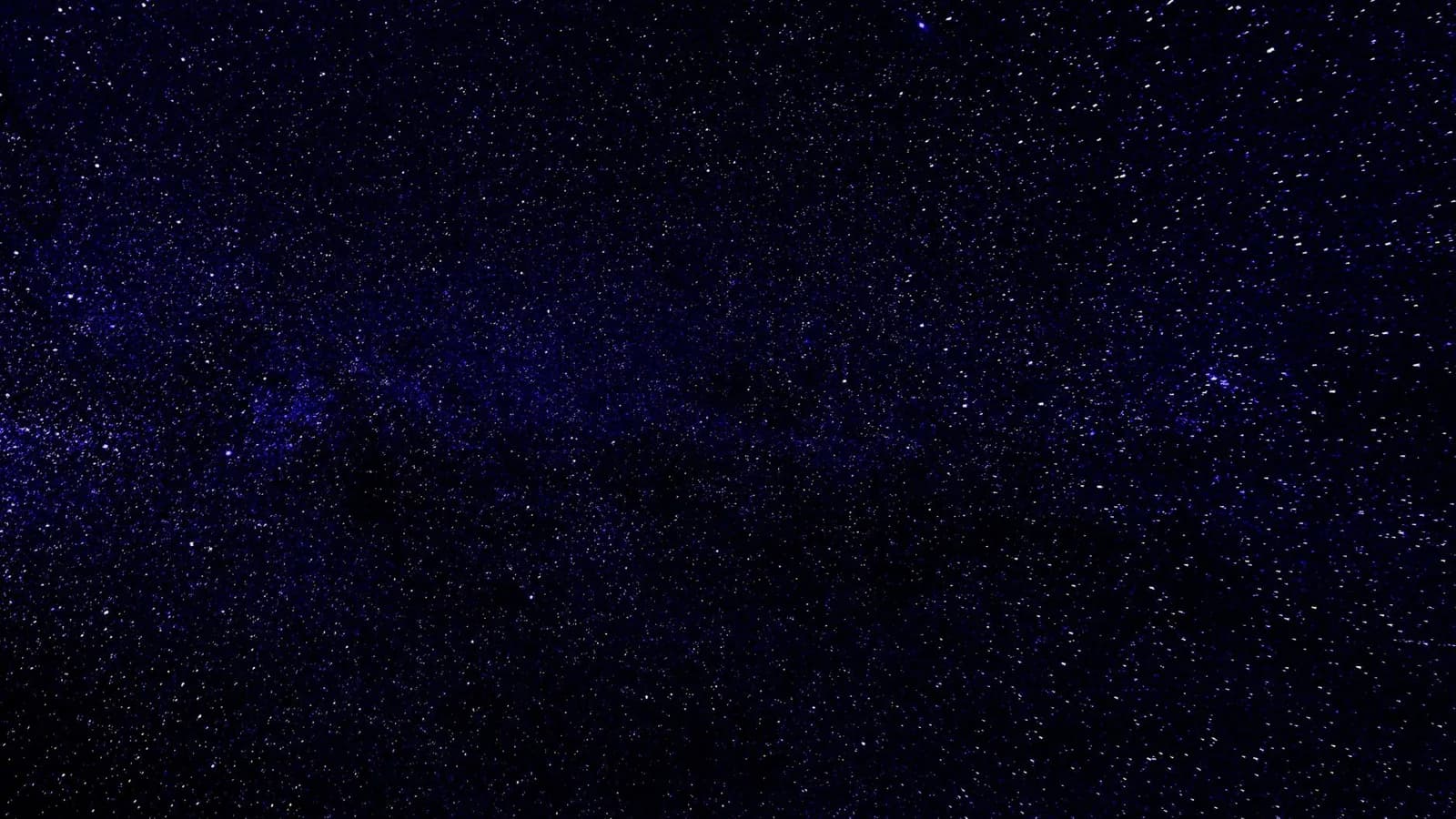
No image resolves ʻOumuamua as anything but a point of light. Every depiction of its shape is an artist’s inference.
On 19 October 2017 the Pan-STARRS survey on Haleakalā detected an object already on its way out of the solar system. Its trajectory was hyperbolic — it was not bound to the Sun, had not come from the Oort cloud, and would never return. It was the first confirmed interstellar object, and it was named ʻOumuamua.
It was observed for a few weeks and then it was gone. Everything argued about since rests on that brief window.
What was measured
Its brightness varied dramatically as it tumbled — by a factor of about ten, over roughly eight hours. That implies an extreme shape: something several times longer than it is wide, either cigar-like or, on the more favoured reading, flattened like a disc.
It showed no coma and no tail. Comets outgas visibly; this did not, to the limits of the observations.
And it accelerated. Its departure did not match a purely gravitational trajectory — there was a small additional push away from the Sun, decreasing with distance.
The explanations
Outgassing of something invisible to the instruments. Hydrogen or nitrogen ice would sublimate and push without producing the dust that makes a visible tail. A 2023 analysis argued that hydrogen trapped in water ice, released as the object warmed, accounts for the acceleration quantitatively.
An extremely low-density structure — a fractal dust aggregate — on which sunlight alone would exert enough pressure to produce the observed push.
A fragment of a larger body torn apart by tidal forces near another star, which would account for the shape.
And the one that made it famous: a lightsail, natural or otherwise, argued by Avi Loeb on the grounds that radiation pressure explains the acceleration if the object is thin and light enough.
What we will never know
ʻOumuamua is gone and cannot be revisited. Every question about it must be answered from a few weeks of observations by telescopes that were not expecting it.
That is the real lesson. The second interstellar object, 2I/Borisov, was found in 2019 and looked like an ordinary comet — and was caught earlier, so it was studied better. The Vera Rubin Observatory is expected to find these regularly, and the next anomalous one will be observed properly.
Join the discussion
Still open on this one:
- 01
How common are objects with this shape and behaviour?
One example tells you almost nothing. The Vera Rubin Observatory should find interstellar objects routinely, and the answer to whether ʻOumuamua was strange depends entirely on what normal turns out to be.
Be the first to comment
Sources
Open them and check for yourself. Where a record is public, it is linked.
NASA
International Astronomical Union
Related

Psychic Phenomena
The Nine: who — or what — were they?
On New Year’s Eve 1952, in a laboratory in Maine, a voice announced itself as one of nine. Over the next forty years it reached a credentialled scientist, a celebrity psychic, a bestselling book and the creator of Star Trek. This is what is documented, and what is not.
Psychic Phenomena
New Year’s Eve 1952: the first session with the Nine
The founding event of the whole Nine phenomenon happened in a Maine farmhouse on 31 December 1952. Here is what the record supports about that evening, and how much of the familiar account was written down much later.

Psychic Phenomena
D. G. Vinod: the man at the beginning of the Nine
Every version of the Nine story starts with Dr D. G. Vinod in a trance in Maine. He is also the person that story then almost entirely forgets. Why the first channel is the biggest hole in the record.

Psychic Phenomena
Andrija Puharich: the doctor who kept turning up
A qualified physician, an inventor with real patents, an army medical officer — and the constant in forty years of the strangest story in American parapsychology. Puharich is the reason the Nine keep touching institutions.
0 comments