

K2-18b: how to read a biosignature headline
A planet 124 light years away has produced the strongest claim yet of a molecule associated with life. It is also the clearest case study in how far a tentative detection travels before it reaches a reader.
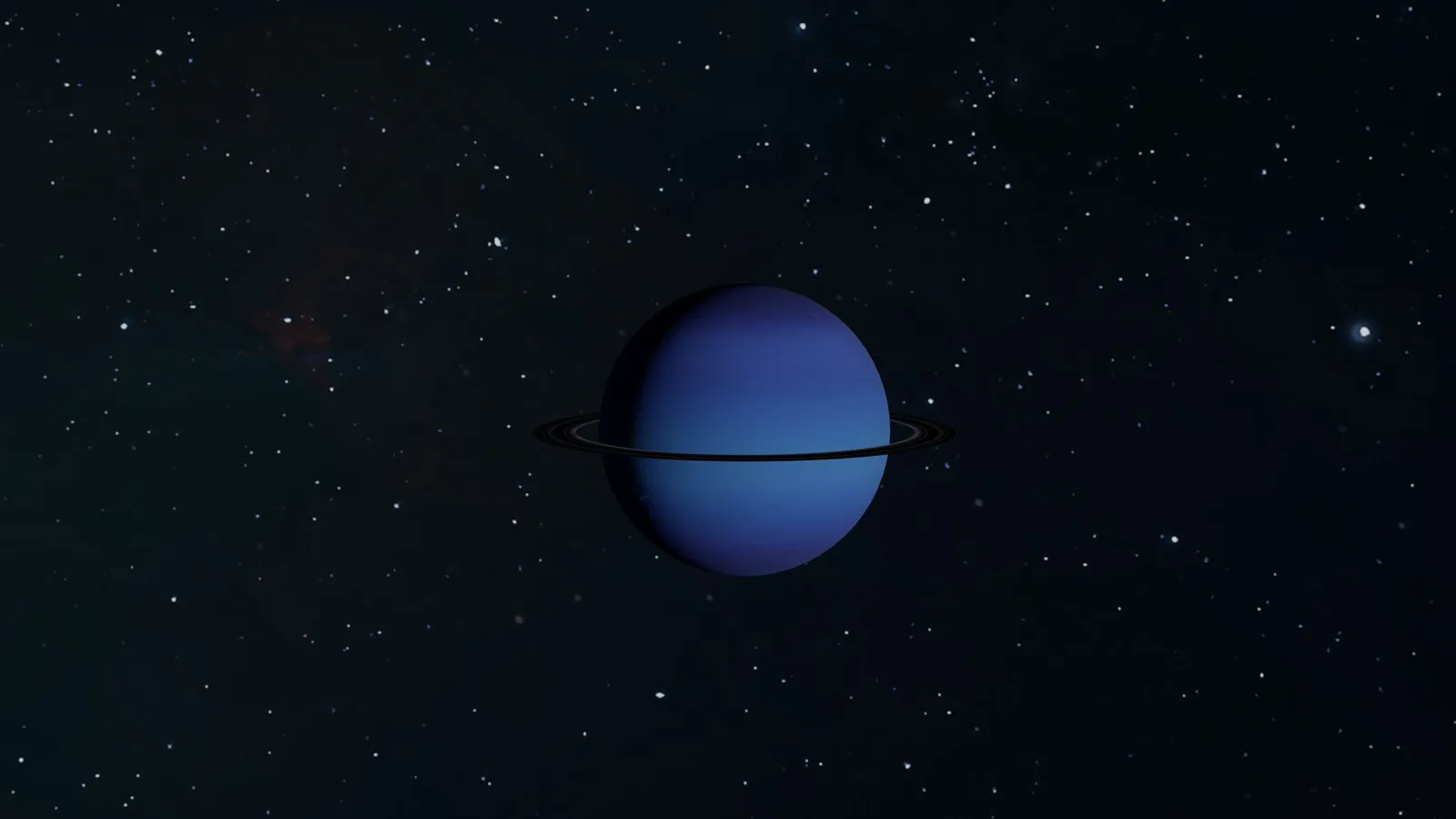
K2-18b has never been imaged. Everything known about it comes from starlight filtered through its atmosphere.
K2-18b orbits a red dwarf about 124 light years away. It is larger than Earth and smaller than Neptune, in the temperate zone of its star, and it has become the most discussed planet in the search for life beyond the solar system.
It is also the best available lesson in the distance between a measurement and a headline.
How anyone knows anything about it
By watching it pass in front of its star. Some starlight passes through the planet’s atmosphere on the way to us, and molecules there absorb specific wavelengths. Comparing the spectrum during transit with the spectrum outside it reveals what the atmosphere contains.
The signal is tiny — a fraction of a per cent of the star’s light — and it must be extracted from noise using models of what the atmosphere might be. Different assumptions produce different answers from the same data. This is not a criticism; it is what the technique is.
What has been reported
Observations with the James Webb Space Telescope found carbon-bearing molecules including methane and carbon dioxide, which is a solid and interesting result in its own right.
The attention came from something further: a tentative signal consistent with dimethyl sulfide. On Earth, DMS is produced overwhelmingly by marine life, which is why it is discussed as a possible biosignature.
Why the caution is not pedantry
Several reasons, all of which apply to any result of this kind.
Statistical significance. The DMS signal has been reported at confidence levels well below what physics conventionally requires before calling something a detection. Signals at that level appear and disappear as data accumulates, routinely.
Molecular ambiguity. Different molecules absorb at overlapping wavelengths. A feature attributed to DMS may be produced by something else, and alternatives have been proposed.
Abiotic production. That DMS is made by life on Earth does not mean only life makes it. Non-biological routes have been identified, including on a comet — which substantially weakens the inference even if the detection holds.
And the planet itself is disputed. Whether K2-18b is a water world with an ocean, or a much hotter body with a deep hydrogen envelope and no surface at all, is not settled — and the second reading makes biology far less plausible regardless of what is in the atmosphere.
The questions to ask of any such headline
What confidence level? Below about three sigma, treat as a hint. Physics reserves discovery language for five.
Has it been independently confirmed with different instruments or teams? A single pipeline’s result is provisional however good the team.
Are there non-biological explanations, and have they been excluded rather than merely mentioned?
Join the discussion
Still open on this one:
- 01
Does the DMS signal survive further observation?
This is answerable and is being answered. More JWST time on this planet will either strengthen it towards significance or dissolve it, which is exactly how it should work.
Be the first to comment
Sources
Open them and check for yourself. Where a record is public, it is linked.
NASA
James Webb Space Telescope science
Space Telescope Science Institute
Related
Psychic Phenomena
The Nine: who — or what — were they?
On New Year’s Eve 1952, in a laboratory in Maine, a voice announced itself as one of nine. Over the next forty years it reached a credentialled scientist, a celebrity psychic, a bestselling book and the creator of Star Trek. This is what is documented, and what is not.
Psychic Phenomena
New Year’s Eve 1952: the first session with the Nine
The founding event of the whole Nine phenomenon happened in a Maine farmhouse on 31 December 1952. Here is what the record supports about that evening, and how much of the familiar account was written down much later.

Psychic Phenomena
D. G. Vinod: the man at the beginning of the Nine
Every version of the Nine story starts with Dr D. G. Vinod in a trance in Maine. He is also the person that story then almost entirely forgets. Why the first channel is the biggest hole in the record.

Psychic Phenomena
Andrija Puharich: the doctor who kept turning up
A qualified physician, an inventor with real patents, an army medical officer — and the constant in forty years of the strangest story in American parapsychology. Puharich is the reason the Nine keep touching institutions.
0 comments