

The Fermi paradox: a lunchtime remark that will not go away
The galaxy is old, large and full of planets. Crossing it, even slowly, takes a fraction of its age. So the question Enrico Fermi is said to have asked over lunch in 1950 still has no good answer.
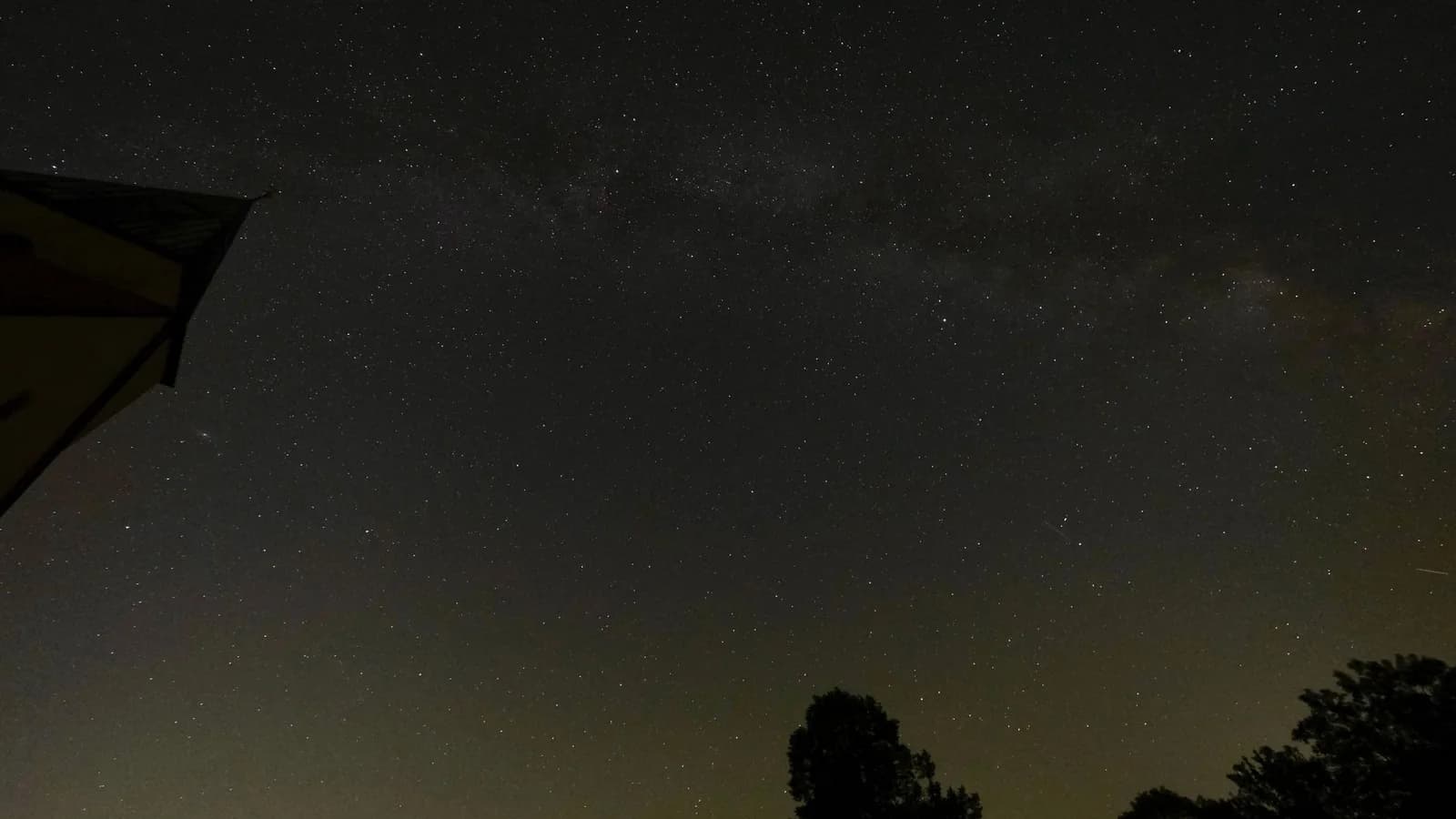
The galaxy is roughly 13 billion years old and 100,000 light years across.
The story is that over lunch at Los Alamos in 1950, in a conversation that had drifted onto flying saucers, Enrico Fermi asked: where is everybody?
The anecdote is thin and the accounts differ. The argument underneath it is not thin at all, and it has survived seventy-five years of attempts to dispose of it.
The argument
The galaxy is about thirteen billion years old and about a hundred thousand light years across. A civilisation expanding at even a thousandth of light speed — slower than we could manage now, using technology we can describe — would cross it in about a hundred million years.
That is under one per cent of the galaxy’s age. So if technological civilisations arise at all often, the galaxy should have been thoroughly settled long before Earth had multicellular life.
It has not been. That is the paradox: not that we have heard nothing, but that we appear to be living in an empty galaxy that has had ample time to fill.
The families of answer
They are rare. Some step between chemistry and technology is far harder than it looks — the origin of life, or the eukaryotic cell, or intelligence itself. On Earth each took a very long time.
They do not last. Civilisations reliably destroy themselves or collapse within a window too short to expand. This is the answer nobody enjoys.
They are there and we cannot see them. Not transmitting, not expanding, or expanding in ways we would not recognise. This overlaps with the observation that our own detectability is falling as our technology improves.
They are hiding, or we are contained. These are unfalsifiable, which is not the same as false but does place them outside what evidence can settle.
We are early. Star formation will continue for a very long time, and the universe may simply be young — most planets that will ever exist do not yet exist.
Why it belongs on this site
Because it is the strongest argument against the assumption underneath a great deal of UAP writing. If the galaxy were full of travelling civilisations, we should be seeing evidence far less ambiguous than lights on infrared cameras.
That cuts both ways and is worth stating carefully. It does not prove nothing is here. It does mean the quiet, marginal, endlessly-contested character of the evidence is a fact that needs explaining rather than explaining away — and Vallée’s objection to the spacecraft hypothesis is essentially the Fermi paradox restated at close range.
Join the discussion
Still open on this one:
- 01
Which step in the chain is the hard one?
Origin of life, complex cells, intelligence, or survival. Everything turns on this and we have one example of each, which is the smallest sample it is possible to have.
Be the first to comment
Sources
Open them and check for yourself. Where a record is public, it is linked.
NASA
SETI Institute
Related

Psychic Phenomena
The Nine: who — or what — were they?
On New Year’s Eve 1952, in a laboratory in Maine, a voice announced itself as one of nine. Over the next forty years it reached a credentialled scientist, a celebrity psychic, a bestselling book and the creator of Star Trek. This is what is documented, and what is not.
Psychic Phenomena
New Year’s Eve 1952: the first session with the Nine
The founding event of the whole Nine phenomenon happened in a Maine farmhouse on 31 December 1952. Here is what the record supports about that evening, and how much of the familiar account was written down much later.

Psychic Phenomena
D. G. Vinod: the man at the beginning of the Nine
Every version of the Nine story starts with Dr D. G. Vinod in a trance in Maine. He is also the person that story then almost entirely forgets. Why the first channel is the biggest hole in the record.

Psychic Phenomena
Andrija Puharich: the doctor who kept turning up
A qualified physician, an inventor with real patents, an army medical officer — and the constant in forty years of the strangest story in American parapsychology. Puharich is the reason the Nine keep touching institutions.
0 comments