

The Drake equation: not a prediction, a way of organising ignorance
Written on a blackboard in 1961 to structure a meeting agenda, it is the most famous equation in the search for life and the most consistently misused.
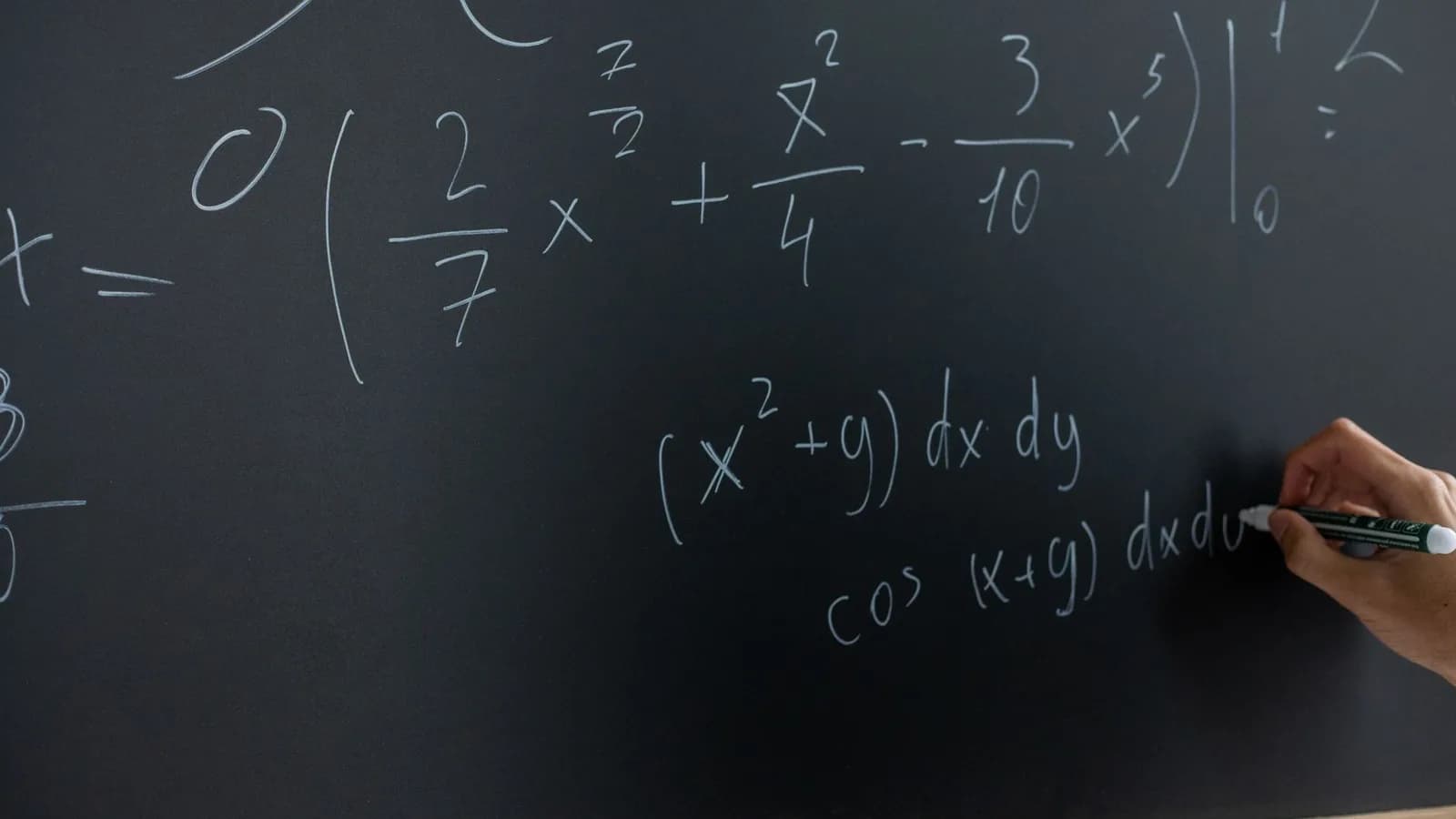
Drake wrote the terms on a blackboard in 1961 to structure a meeting agenda, not to calculate an answer.
In 1961 Frank Drake was organising a small meeting at Green Bank on the possibility of detecting other civilisations. Needing an agenda, he wrote out the factors that would determine how many there were to detect. The result has been called the Drake equation ever since.
It is not a formula for calculating an answer. It is a list of everything you would need to know, arranged so that you can see what you do not.
What it says
The number of detectable civilisations in our galaxy is the rate of star formation, multiplied by the fraction of stars with planets, the number of planets per star that could support life, the fraction where life appears, the fraction where it becomes intelligent, the fraction that develops detectable technology, and finally the length of time such a civilisation remains detectable.
Seven terms. Each is a multiplier, so any one of them being near zero drives the whole result to near zero regardless of the others.
Why the answers vary so wildly
Because the unmeasured terms are unmeasured across many orders of magnitude, and a product of uncertain factors compounds that uncertainty rather than averaging it.
Published estimates have ranged from millions of civilisations to substantially fewer than one. Both are arithmetically valid. Neither is informative, and a result that can be moved from millions to zero by adjusting a term nobody can measure is not telling you about the universe — it is telling you about the person choosing the terms.
The term that dominates
The last one: how long a civilisation stays detectable. It is the only term that is not about whether life arises but about whether it persists, and it is the one about which we have exactly one data point, still running.
If civilisations remain detectable for millions of years the galaxy should be conspicuous. If for a few centuries, it should be silent even if life is everywhere. That single unknown spans the entire range of possible answers.
How to use it properly
As a checklist for what a claim depends on. When someone asserts the galaxy is full of life, or that we are alone, the equation tells you which term they have assumed, and whether anyone can measure it yet.
That is a genuinely useful discipline, and it is the reason a blackboard agenda from 1961 is still worth teaching.
Join the discussion
Still open on this one:
- 01
Has life ever arisen twice independently?
Even a second origin on Earth — a shadow biosphere with different biochemistry — would transform the estimate. Nobody has systematically looked.
Be the first to comment
Sources
Open them and check for yourself. Where a record is public, it is linked.
SETI Institute
NASA
Related

Psychic Phenomena
The Nine: who — or what — were they?
On New Year’s Eve 1952, in a laboratory in Maine, a voice announced itself as one of nine. Over the next forty years it reached a credentialled scientist, a celebrity psychic, a bestselling book and the creator of Star Trek. This is what is documented, and what is not.

Psychic Phenomena
New Year’s Eve 1952: the first session with the Nine
The founding event of the whole Nine phenomenon happened in a Maine farmhouse on 31 December 1952. Here is what the record supports about that evening, and how much of the familiar account was written down much later.
Psychic Phenomena
D. G. Vinod: the man at the beginning of the Nine
Every version of the Nine story starts with Dr D. G. Vinod in a trance in Maine. He is also the person that story then almost entirely forgets. Why the first channel is the biggest hole in the record.

Psychic Phenomena
Andrija Puharich: the doctor who kept turning up
A qualified physician, an inventor with real patents, an army medical officer — and the constant in forty years of the strangest story in American parapsychology. Puharich is the reason the Nine keep touching institutions.
0 comments