

From Task Force to AARO: the current official machinery
In five years the US government went from having no formal UAP process to a permanent office with a statutory basis and a public reporting duty. What it has actually said is less dramatic than the fact of its existence.

The assessments describe a data problem, and are careful not to characterise what remains unresolved.
Documented, current, and the least mythologised part of this section.
The sequence
2019. The US Navy publishes formal procedures for aircrew to report unidentified aircraft. The significance is cultural rather than scientific: it makes reporting a normal professional act rather than a career risk.
August 2020. The Department of Defense establishes the Unidentified Aerial Phenomena Task Force, standing up a body with a defined remit.
June 2021. The Office of the Director of National Intelligence publishes a preliminary assessment covering 144 reports from 2004 to 2021. It identifies one with confidence — a deflating balloon — and leaves the rest unresolved, while stating explicitly that the data is insufficient rather than the phenomena inexplicable.
July 2022. The All-domain Anomaly Resolution Office is established, with a broader remit covering space, air, sea and transmedium, and a statutory reporting requirement.
What the assessments actually say
Consistently, three things.
That the reports are real reports, made by trained personnel, and that a proportion involve multiple sensors.
That the data is insufficient for attribution in most cases — sensors not calibrated for the task, no coordinated collection, and inconsistent reporting.
And that the plausible explanations include airborne clutter, atmospheric phenomena, foreign adversary systems, classified American programmes, and a residual category.
That last category is the one everything hinges on, and the assessments are careful not to characterise it.
The historical assessment
AARO published a historical review of US government involvement with UAP, examining claims of recovered materials and reverse-engineering programmes. Its finding was that no such programme was substantiated, and that several persistent claims traced to misidentified conventional programmes or to circular sourcing.
It has been criticised for its methodology and for not interviewing certain claimants. Those criticisms are worth noting alongside the finding rather than instead of it.
Why the machinery matters more than its output
Because for the first time there is a standing office with a legal obligation to collect, analyse and report. The 1950s equivalent was a small desk with no scientific staff and an institutional preference for closing cases.
Whatever the phenomena turn out to be, the reporting infrastructure is now several orders of magnitude better than it has ever been — and that is the development most likely to actually resolve something.
Join the discussion
Still open on this one:
- 01
What is in the residual category?
The assessments decline to characterise it and that reticence is deliberate. It is the single most consequential open question in current official UAP work.
Be the first to comment
Sources
Open them and check for yourself. Where a record is public, it is linked.
Preliminary Assessment: Unidentified Aerial Phenomena
Office of the Director of National Intelligence · 25 Jun 2021 · no public copy located
US National Archives and Records Administration
NARA
George Washington University
Related
Psychic Phenomena
The Nine: who — or what — were they?
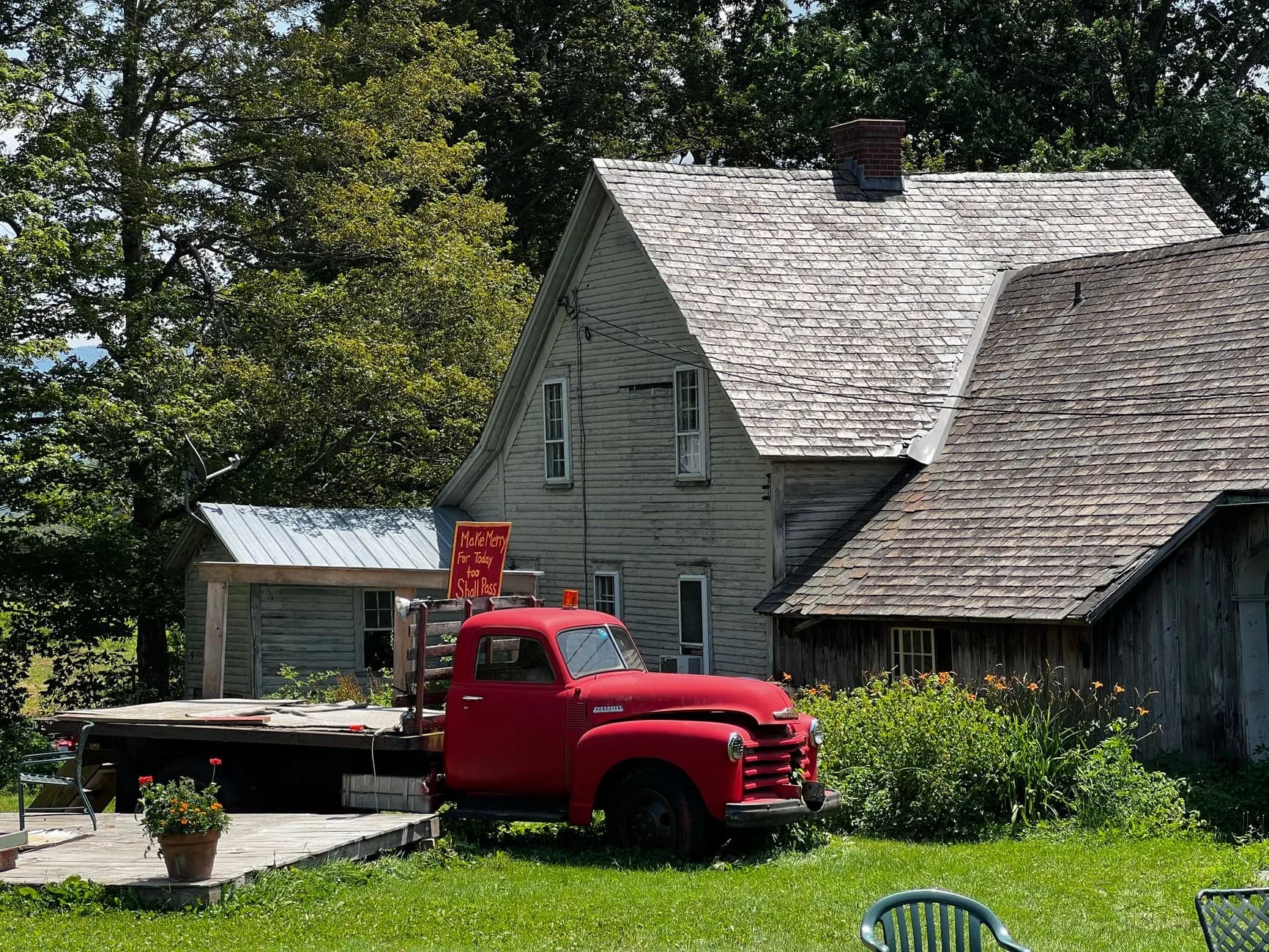
On New Year’s Eve 1952, in a laboratory in Maine, a voice announced itself as one of nine. Over the next forty years it reached a credentialled scientist, a celebrity psychic, a bestselling book and the creator of Star Trek. This is what is documented, and what is not.
Psychic Phenomena
New Year’s Eve 1952: the first session with the Nine
The founding event of the whole Nine phenomenon happened in a Maine farmhouse on 31 December 1952. Here is what the record supports about that evening, and how much of the familiar account was written down much later.
Psychic Phenomena
D. G. Vinod: the man at the beginning of the Nine
Every version of the Nine story starts with Dr D. G. Vinod in a trance in Maine. He is also the person that story then almost entirely forgets. Why the first channel is the biggest hole in the record.

Psychic Phenomena
Andrija Puharich: the doctor who kept turning up
A qualified physician, an inventor with real patents, an army medical officer — and the constant in forty years of the strangest story in American parapsychology. Puharich is the reason the Nine keep touching institutions.
0 comments