

Jack Ruby: what the psychiatrists actually found
The man who shot Lee Harvey Oswald was examined repeatedly in custody, and by 1964 a psychiatrist with a CIA research history had concluded he was technically insane. What that does and does not tell us.
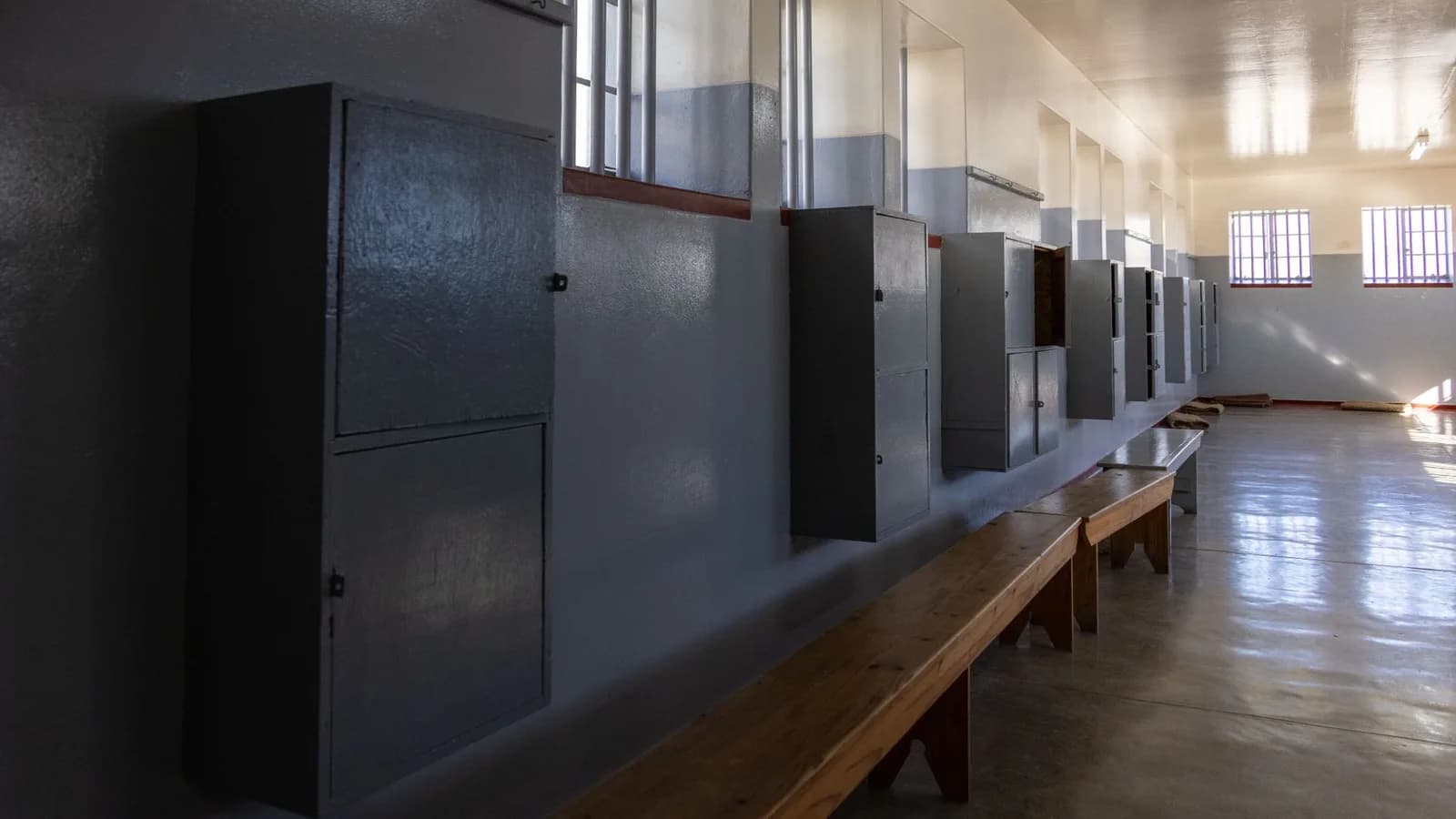
A prison interior. Ruby was held in Dallas County jail, where his mental state deteriorated through 1964; no photograph here is of that building.
On 24 November 1963, in the basement of Dallas police headquarters, Jack Ruby stepped out of a crowd of reporters and shot Lee Harvey Oswald in front of live television cameras. Oswald died without ever standing trial for the killing of President Kennedy.
Everything about why Ruby did it has been argued over since. This piece is narrower: what the doctors who examined him actually recorded.
What is documented
Ruby was assessed by several psychiatrists across 1964 and after, for the defence, the prosecution and the court. His condition deteriorated markedly during that year.
In late April 1964, following a suicide attempt in jail, he was examined by Louis Jolyon West, then chairman of psychiatry at the University of Oklahoma. West found him acutely psychotic — a paranoid state with hallucinations and suicidal ideation — and concluded he was technically insane and required immediate psychiatric hospitalisation.
Ruby's delusions had a specific content. He came to believe that Jews were being massacred in the streets outside, and that he was responsible for it. He was convinced he could hear it happening.
Why West is interesting here
Because of what he had been paid to study. Between 1955 and 1956 West held MKULTRA Subproject 43, a CIA grant funding work titled "Psychophysiological Studies of Hypnosis and Suggestibility", with an accompanying paper on dissociative states.
Nine years later he was the psychiatrist assessing the mental state of the man who killed the president's alleged assassin.
The competing readings of Ruby's decline
That he was psychotic before the shooting, and the killing was an act of a disturbed man. His behaviour in the preceding days was erratic and his account of his motive shifted.
That imprisonment and the enormity of what he had done produced the breakdown. This is the most economical explanation and it fits the timeline: he was not floridly psychotic in November and was by the following spring.
Or that he was silenced. Ruby himself said, more than once, that he could not tell the truth in Dallas and asked to be taken to Washington to testify. He told the Warren Commission that his life was in danger and that a full explanation would not be possible where he was.
That last is a documented statement by Ruby, and it is a statement by a man several psychiatrists had by then found to be delusional. Both halves of that sentence are true and neither cancels the other.
What is genuinely unresolved
His motive. Ruby gave several accounts — grief for the president, sparing Jacqueline Kennedy a trial, an impulse — and none has ever satisfied anyone, including the Warren Commission, which examined his organised-crime associations at length and reached no conclusion linking them to the shooting.
And the request to testify in Washington, which was never granted. He died of cancer in January 1967, awaiting a retrial.
Join the discussion
Still open on this one:
- 01
Who requested West to examine Ruby?
The most answerable question in this case and, as far as we can establish, not settled in print. The court and defence records should show it.
- 02
Why was Ruby never taken to Washington?
He asked repeatedly, on the record. The reasoning behind the refusal is a documentary question about the Commission rather than a speculative one about Ruby.
Be the first to comment
Sources
Open them and check for yourself. Where a record is public, it is linked.
Report of the President's Commission on the Assassination of President Kennedy
US National Archives
US National Archives and Records Administration
Louis Jolyon West papers, 1890–1998
UCLA Library Special Collections
Related
Psychic Phenomena
The Nine: who — or what — were they?
On New Year’s Eve 1952, in a laboratory in Maine, a voice announced itself as one of nine. Over the next forty years it reached a credentialled scientist, a celebrity psychic, a bestselling book and the creator of Star Trek. This is what is documented, and what is not.
Psychic Phenomena
New Year’s Eve 1952: the first session with the Nine
The founding event of the whole Nine phenomenon happened in a Maine farmhouse on 31 December 1952. Here is what the record supports about that evening, and how much of the familiar account was written down much later.
Psychic Phenomena
D. G. Vinod: the man at the beginning of the Nine
Every version of the Nine story starts with Dr D. G. Vinod in a trance in Maine. He is also the person that story then almost entirely forgets. Why the first channel is the biggest hole in the record.
Psychic Phenomena
Andrija Puharich: the doctor who kept turning up
A qualified physician, an inventor with real patents, an army medical officer — and the constant in forty years of the strangest story in American parapsychology. Puharich is the reason the Nine keep touching institutions.
0 comments