

The Ennead: did the Nine exist before 1952?
The Nine were identified with the nine gods of Heliopolis, headed by Atum. The Ennead is entirely real and thousands of years old — which is exactly why the identification needs examining rather than accepting.
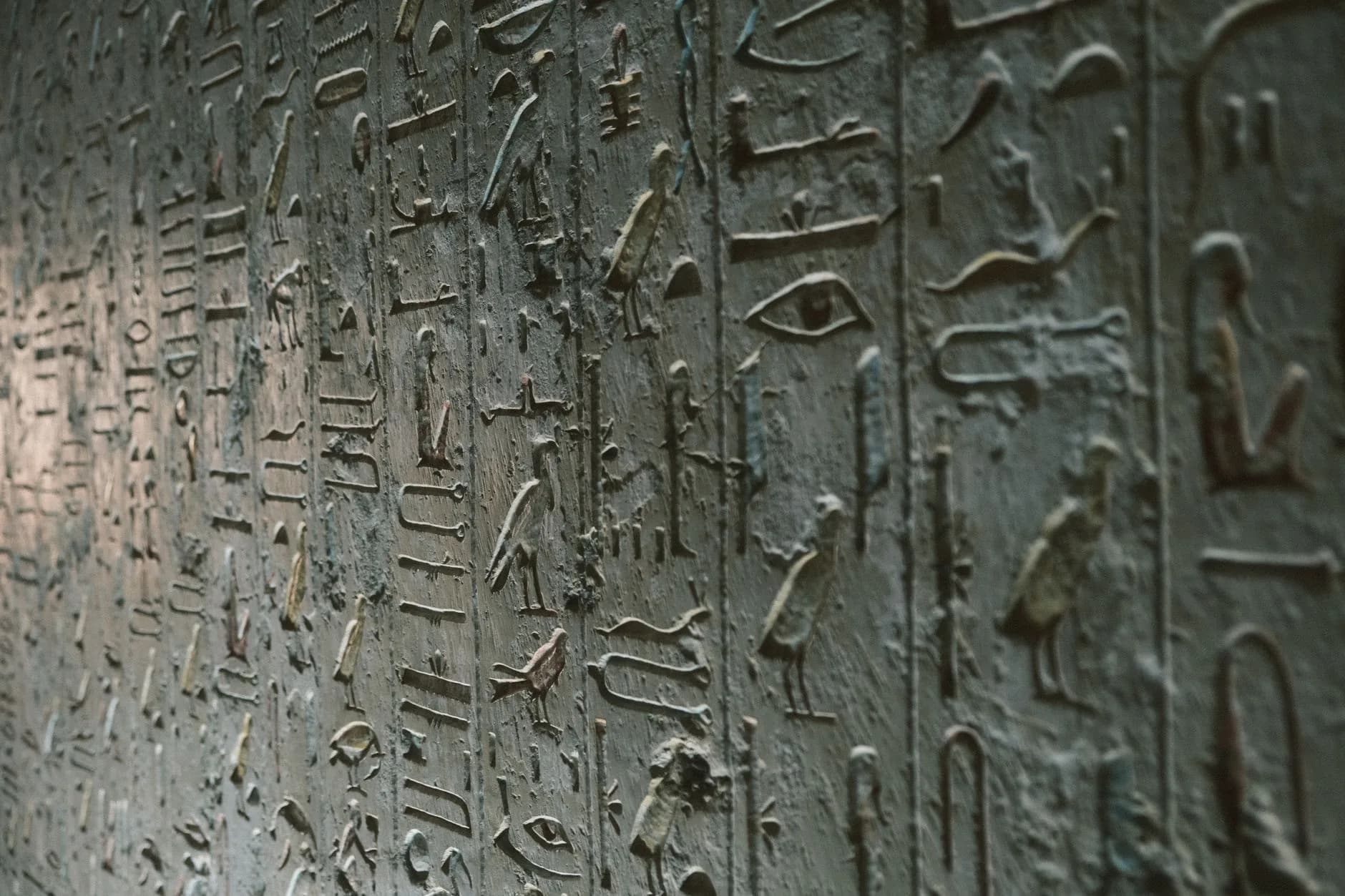
Photo by Muhammed Fatih Beki on Pexels
The single most persuasive-sounding claim about the Nine is that they are old. Not a 1950s American phenomenon but something that has spoken to people before, and that the Egyptians knew as the Ennead. It is a powerful claim, and it deserves to be taken apart carefully, because the Ennead is real.
What is documented
The Ennead of Heliopolis — pesedjet in Egyptian, meaning simply "the nine" — is one of the best-attested theological groupings in the ancient world. It is headed by Atum, the self-created god, from whom emerge Shu and Tefnut, then Geb and Nut, then Osiris, Isis, Set and Nephthys. It appears in the Pyramid Texts, among the oldest religious writings that survive anywhere.
This is not fringe material. It is mainstream Egyptology, taught in every introductory course, and any decently stocked library will have the primary texts in translation.
What was claimed
In the material that comes out of the Round Table sessions and, later, through Phyllis Schlemmer, the communicators are associated with the Ennead directly. The principal voice in the Schlemmer material, "Tom", is presented as Atum — the head of the Ennead, the creator god at the top of the Heliopolitan cosmology.
The claim, then, is not that the Nine resemble the Ennead. It is that they are the Ennead, and that Egyptian religion is a record of earlier contact.
What was added later
Here is the difficulty. The Ennead identification does not make the Nine ancient; it makes the Nine consistent with a body of information that was freely available in 1952 to anyone with a library card. Puharich was an educated, widely read man. The Ennead is not obscure knowledge.
For the identification to count as evidence, the sessions would need to produce something about Egyptian religion that was not publicly known at the time and later turned out to be right. Nothing of that kind has been demonstrated. What we have is a well-read circle producing material congruent with what a well-read circle would know.
What remains unexplained
Nothing about the Ennead itself, which Egyptology handles perfectly well. What is unresolved is a narrower and more answerable question: at what point in the sequence did the Egyptian identification enter, and from whom?
If it is in the 1952–53 transcripts in the communicators’ own words, that is a meaningful fact about the material. If it first appears in Puharich’s later framing, that is a meaningful fact about Puharich. The transcripts would settle it and they are not fully public.
Join the discussion
Still open on this one:
- 01
When does the Ennead identification first appear in the primary material?
The answer distinguishes a claim made by the communicators from an interpretation made by the researcher. It is the most decidable question in the whole cluster.
- 02
Did the sessions produce any Egyptological claim that was not known in 1952?
This is the standard test for information that could not have come from the medium. As far as we can establish, it has never been applied here.
Be the first to comment
See also
Everything this piece touches
Person
Phyllis Schlemmer
Medium and author; principal channel for the Nine material from the mid-1970s.
Person
Andrija Puharich
Physician and parapsychologist; the constant figure across forty years of the Nine.
Topic
the Nine
Intelligences that announced themselves at a Maine research foundation on 31 December 1952.
Sources
Open them and check for yourself. Where a record is public, it is linked.
The Ancient Egyptian Pyramid Texts
James P. Allen, Society of Biblical Literature · 1 Jan 2005 · no public copy located
The Only Planet of Choice: Essential Briefings from Deep Space
Phyllis V. Schlemmer and Palden Jenkins, Gateway Books · 1 Jan 1993 · no public copy located
Uri: A Journal of the Mystery of Uri Geller
Andrija Puharich, Anchor Press/Doubleday · 1 Jan 1974 · no public copy located
Related
Consciousness
Terminal lucidity: when a destroyed brain briefly works again
People with advanced dementia sometimes become clear, coherent and recognisably themselves shortly before death. It is documented in the medical literature, it happens, and nobody can currently explain it.
Consciousness
Ian Stevenson: forty years collecting children who remember other lives
A university psychiatrist spent his career documenting cases of young children who described a previous life, and checking whether the person they described had existed. He assembled over two thousand. The methodology is the argument.
Near Death Experiences
Pam Reynolds: the most-cited near-death case, and what it turns on
In 1991 a woman undergoing brain surgery under extraordinary conditions reported observing the operation. The surgical circumstances were unusually well documented. Whether she was unconscious at the time she perceived what she described is the whole argument.

Near Death Experiences
Near-death experiences: what the clinical research has established
Millions of people report a consistent set of experiences during cardiac arrest. That consistency is a real finding. What it means is where the argument starts, and hospital studies have been running for thirty years.
0 comments