

The Somerton Man: solved in 2022, and most accounts have not noticed
A body on an Australian beach in 1948, an unidentifiable man, a scrap of Persian poetry in a hidden pocket. It was the great unsolved case of the century until genetic genealogy answered it.
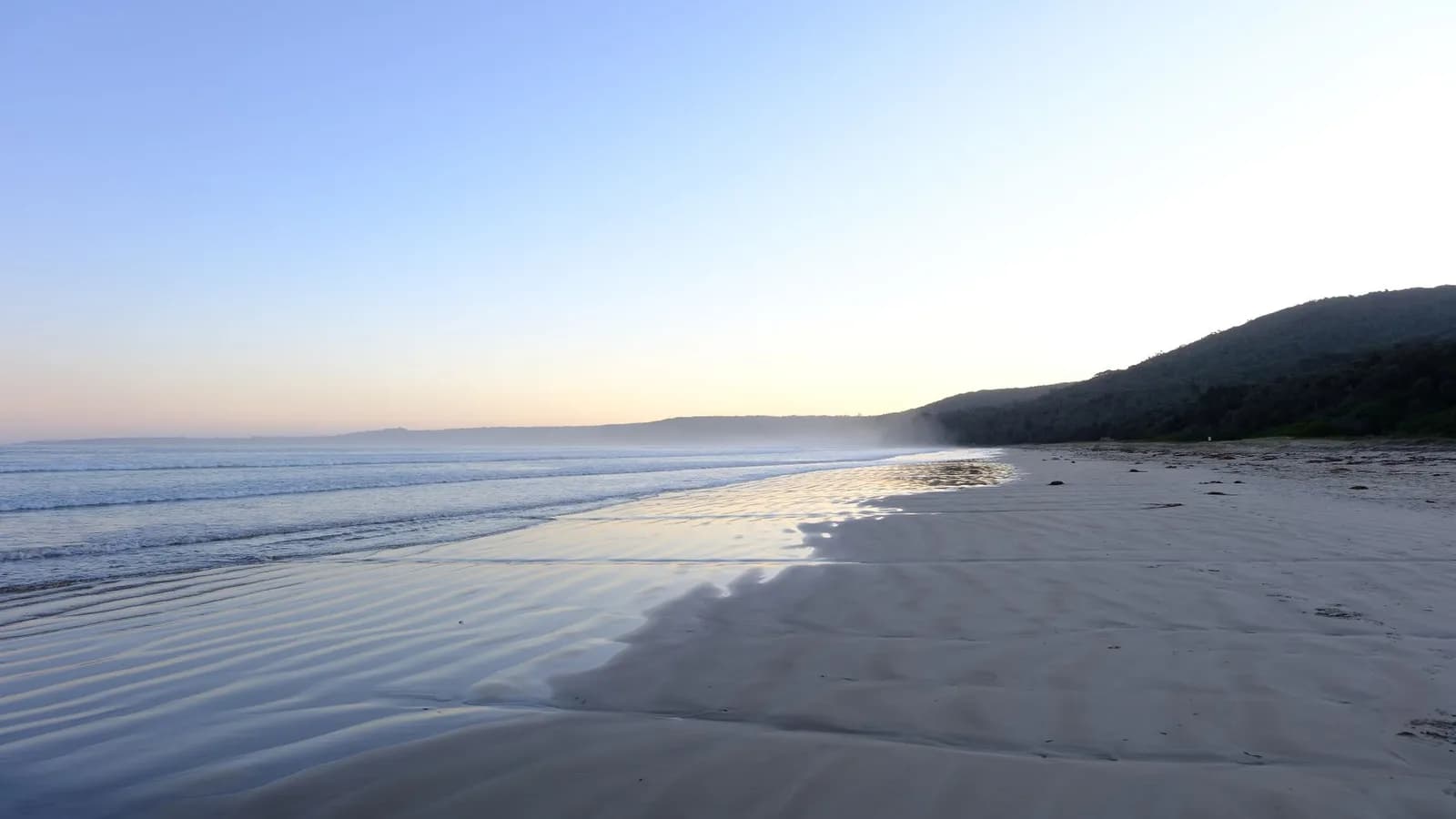
The body was found on Somerton beach, Adelaide, on 1 December 1948. He was identified in 2022.
On 1 December 1948 a man was found dead on Somerton beach in Adelaide. He carried no identification. His clothing labels had been removed. Nobody came forward.
In a hidden fob pocket was a scrap of paper torn from a book, printed with two words: Tamám Shud — Persian, meaning "it is ended", the final words of the Rubáiyát of Omar Khayyám.
Why it became famous
The details are extraordinary and every one of them is documented.
The book the scrap came from was found, months later, in a car parked nearby. In it were pencilled lines of apparently random capital letters, and a telephone number belonging to a nurse who lived close to the beach.
When shown a cast of the dead man’s face, she reacted strongly. She denied knowing him, and maintained that for the rest of her life.
It was 1948, in a port city, in the early Cold War, with an unidentified man carrying a coded note and a poem about the end of things. The espionage reading was irresistible and it dominated for seventy years.
How it was solved
In 2022 a team led by Derek Abbott at the University of Adelaide, working with the genetic genealogist Colleen Fitzpatrick, identified him from DNA recovered from hairs preserved in the plaster death mask.
They built a family tree from matches in consumer genealogy databases — the same technique used in criminal cold cases — and arrived at a name: Carl "Charles" Webb, an electrical instrument maker born in Melbourne in 1905.
South Australia Police have since confirmed the identification through their own testing.
What that leaves
Considerably less mystery, and a sadder story.
Webb was estranged from his wife, who had moved to South Australia. He had a history of depression. He was not a spy; he was a man with a difficult life who travelled to the state where his estranged wife lived and died on a beach.
The cause of death remains undetermined. Poisoning was long suspected and never demonstrated.
Why we include a solved case
Because it demonstrates the thing this site keeps arguing. A case famous for seventy years for being unexplainable was explained — not by a revelation, but by somebody applying a new technique to physical evidence that had been sitting in storage the whole time.
Most accounts online still present it as unsolved. That gap between the record and the retelling is the recurring subject of this entire section.
Join the discussion
Still open on this one:
- 01
What do the pencilled letters mean?
Still undeciphered. With Webb identified, they can now be tested against texts he is known to have owned, which was impossible before.
Be the first to comment
Sources
Open them and check for yourself. Where a record is public, it is linked.
National Archives of Australia
NAA
British Library
Related
Psychic Phenomena
The Nine: who — or what — were they?
On New Year’s Eve 1952, in a laboratory in Maine, a voice announced itself as one of nine. Over the next forty years it reached a credentialled scientist, a celebrity psychic, a bestselling book and the creator of Star Trek. This is what is documented, and what is not.
Psychic Phenomena
New Year’s Eve 1952: the first session with the Nine
The founding event of the whole Nine phenomenon happened in a Maine farmhouse on 31 December 1952. Here is what the record supports about that evening, and how much of the familiar account was written down much later.
Psychic Phenomena
D. G. Vinod: the man at the beginning of the Nine
Every version of the Nine story starts with Dr D. G. Vinod in a trance in Maine. He is also the person that story then almost entirely forgets. Why the first channel is the biggest hole in the record.

Psychic Phenomena
Andrija Puharich: the doctor who kept turning up
A qualified physician, an inventor with real patents, an army medical officer — and the constant in forty years of the strangest story in American parapsychology. Puharich is the reason the Nine keep touching institutions.
0 comments