

Skull and Bones: the boring version is the interesting one
A Yale student society founded in 1832 that takes fifteen members a year. The rituals are undergraduate theatre. The membership list is the part worth looking at.
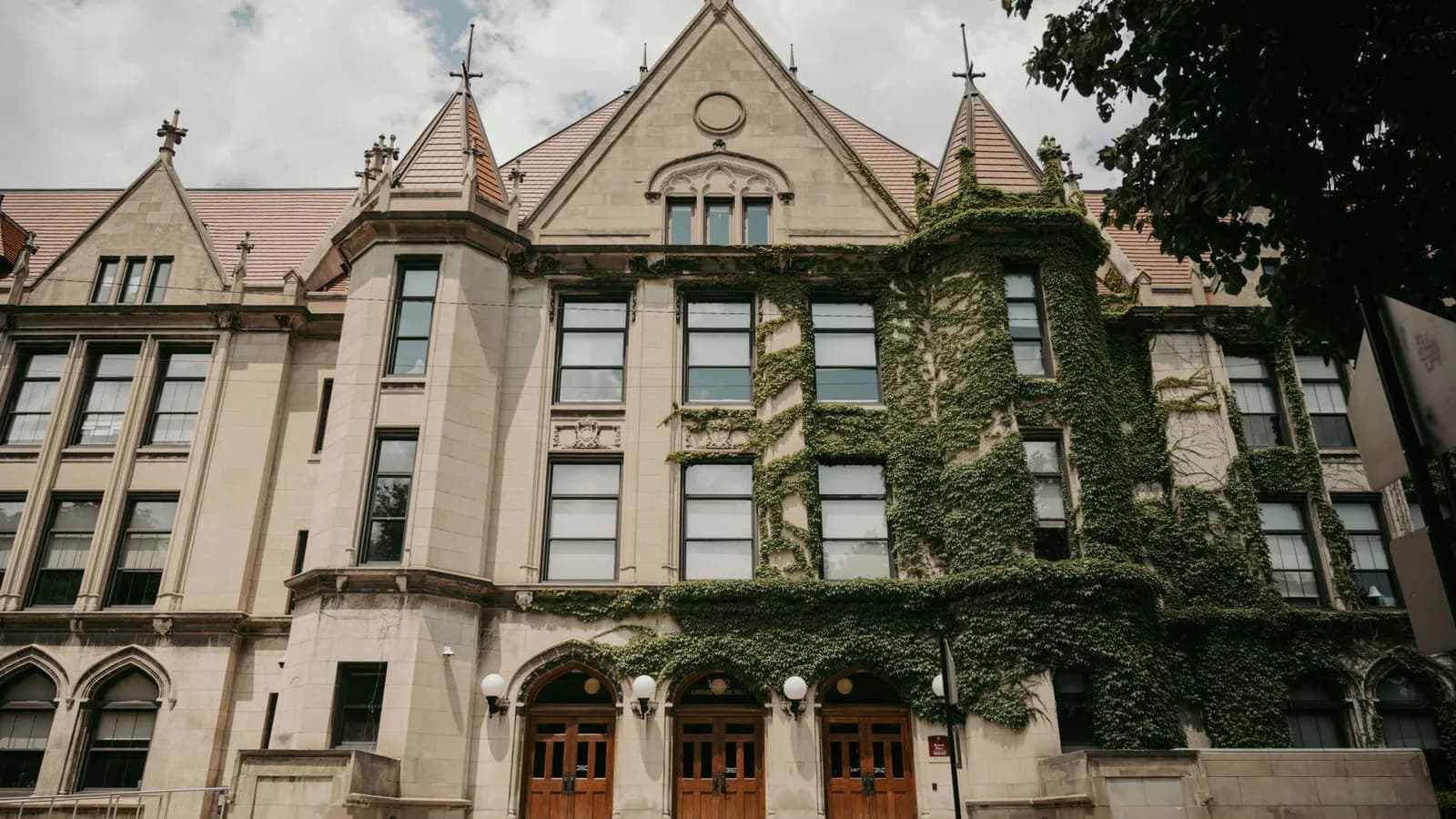
The society has selected fifteen Yale seniors a year since 1832.
Skull and Bones was founded at Yale in 1832 by William Huntington Russell and Alphonso Taft. It selects fifteen members from each senior class, a process known as tapping, and meets in a windowless building on campus known as the Tomb.
It is the most written-about student society in the world, and almost all of the writing is about the wrong thing.
What is documented
The membership, largely. Yale class records and members' own biographies establish a great deal, and the society has never been genuinely hidden — its existence, building and selection process are public.
Members have included Alphonso Taft, who became Attorney General and Secretary of War; his son William Howard Taft, president and later chief justice; Prescott Bush; George H. W. Bush; George W. Bush; and John Kerry.
In 2004 both major candidates for the American presidency were members. Neither would discuss it. That is a real and remarkable fact.
The rituals
Accounts describe initiation involving a coffin, recitation of personal history, and considerable theatre, in a building furnished with skulls and memorabilia.
Society rituals of this general kind were common in nineteenth-century American student life, and the imagery belongs to that tradition rather than to anything older.
Treating the ceremony as the substance is the standard error. Undergraduates in a dark room with a skull are undergraduates in a dark room with a skull.
What Yale societies actually did
Skull and Bones was one of several, and the system around it explains more than the society itself.
Scroll and Key, Wolf's Head and others operated the same way, and together they constituted a selection layer within an institution that was already selecting from a narrow social base.
For much of the nineteenth and twentieth centuries the effect was to identify, at twenty-one, a small group who would be introduced to each other and to previous members permanently.
The Geronimo claim
The persistent story is that members including Prescott Bush stole the skull of the Apache leader Geronimo from his grave at Fort Sill in 1918 and that it is held in the Tomb.
In 2009 Geronimo's descendants sued to recover the remains. The case was dismissed on procedural grounds and no evidence was produced that the society holds them.
The society has never confirmed it. The claim appears to originate in society correspondence describing such a theft, which may itself be boasting. It is unresolved and probably unresolvable without access nobody has.
Join the discussion
Still open on this one:
- 01
Is the full membership list complete?
Substantial portions are known from Yale records and obituaries. Whether any period is systematically missing has not been established.
Be the first to comment
Sources
Open them and check for yourself. Where a record is public, it is linked.
The National Archives
The British Library
Related
Psychic Phenomena
The Nine: who — or what — were they?
On New Year’s Eve 1952, in a laboratory in Maine, a voice announced itself as one of nine. Over the next forty years it reached a credentialled scientist, a celebrity psychic, a bestselling book and the creator of Star Trek. This is what is documented, and what is not.
Psychic Phenomena
New Year’s Eve 1952: the first session with the Nine
The founding event of the whole Nine phenomenon happened in a Maine farmhouse on 31 December 1952. Here is what the record supports about that evening, and how much of the familiar account was written down much later.
Psychic Phenomena
D. G. Vinod: the man at the beginning of the Nine
Every version of the Nine story starts with Dr D. G. Vinod in a trance in Maine. He is also the person that story then almost entirely forgets. Why the first channel is the biggest hole in the record.
Psychic Phenomena
Andrija Puharich: the doctor who kept turning up
A qualified physician, an inventor with real patents, an army medical officer — and the constant in forty years of the strangest story in American parapsychology. Puharich is the reason the Nine keep touching institutions.
0 comments