

Roanoke: the colonists left a note saying where they went
The Lost Colony is the founding mystery of English America. The colonists carved their destination on a post before leaving, and deliberately omitted the signal that would have meant they were in danger.
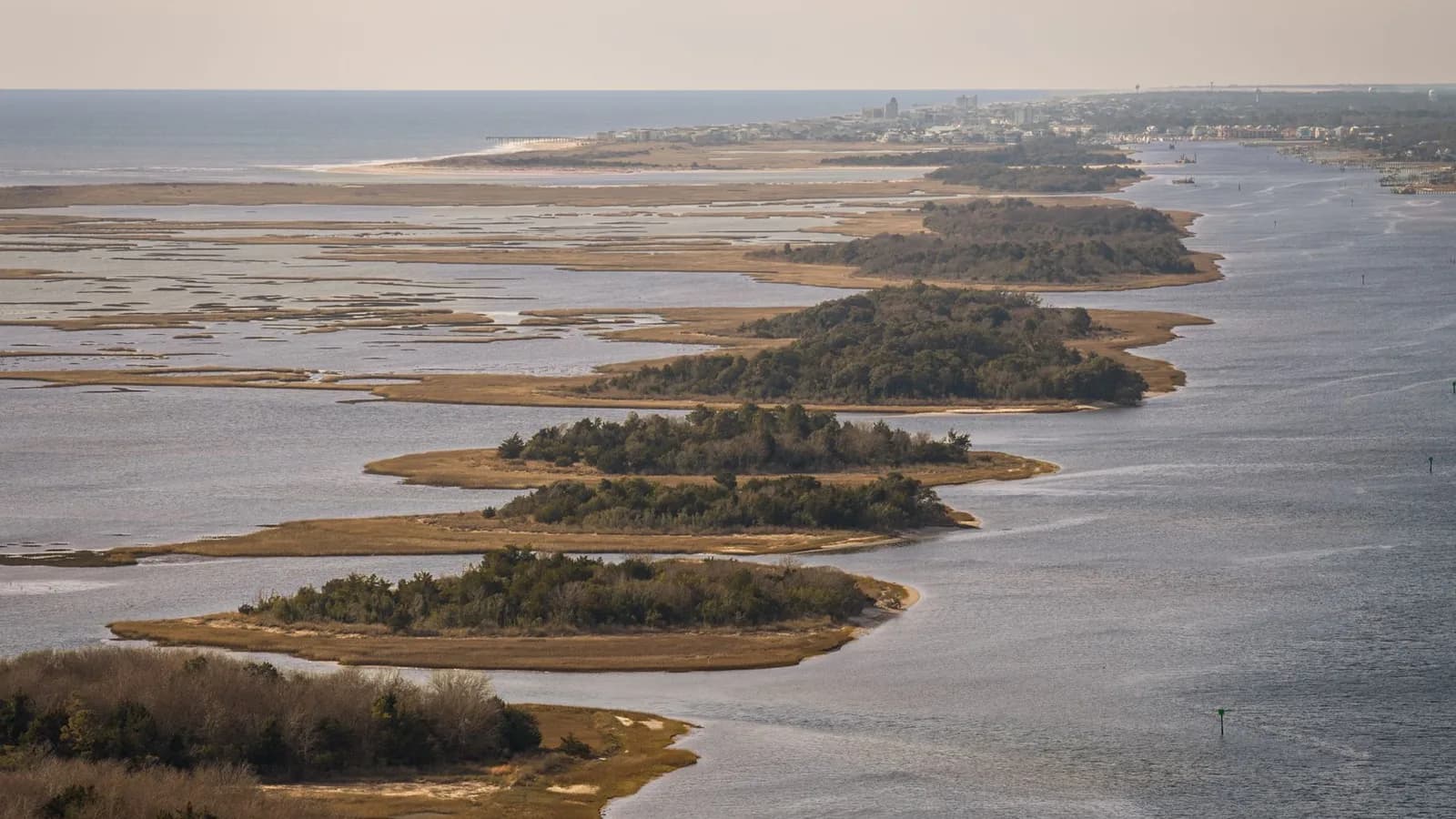
The 1587 colony was established on Roanoke Island, off what is now North Carolina.
In 1587, 115 English colonists under John White established a settlement on Roanoke Island, off the coast of what is now North Carolina. It included White's daughter and his granddaughter Virginia Dare, the first English child born in the Americas.
White sailed for England for supplies. War with Spain intervened; the Armada campaign of 1588 tied up every available ship. He did not return until August 1590.
The settlement was empty. Houses had been dismantled. There were no bodies and no graves.
What he found
Carved on a post at the entrance: CROATOAN. On a nearby tree: CRO.
Croatoan was a real place — the island now called Hatteras — and the home of the Croatan people, with whom the colonists had good relations. Manteo, a Croatan man, had travelled to England and back and was with the colony.
Why nobody followed it up
Weather. White's ships were caught in a storm before he could reach Hatteras, lost anchors, and the crew refused to continue. He was forced back to England and never returned.
That is the actual mystery in the case: not what happened to the colonists but why nobody went the twenty-odd miles to look.
The 1585 colony, and why it matters
The 1587 settlement was the second attempt, and the first one explains a great deal about what happened to it.
In 1585 a military expedition under Ralph Lane established a garrison on the same island. Relations with the local Secotan deteriorated, and Lane's men killed the leader Wingina. The colony was abandoned in 1586.
The 1587 civilian colonists arrived a year later into a situation their predecessors had poisoned, expecting to settle on Chesapeake Bay and being put ashore at Roanoke instead.
What archaeology has found
On Hatteras Island, excavations have recovered sixteenth-century English material in Native contexts — metalwork, a rapier hilt, a slate writing tablet — consistent with English people living among the Croatan rather than trading with them at a distance.
Separately, in 2012 a patch on John White's own map of the region, held at the British Museum, was examined with light from behind. Under the patch was a drawn fort symbol, at a site about eighty kilometres inland at the head of Albemarle Sound. Excavation there, known as Site X, has produced English pottery of the right period.
The two findings are not in conflict. The likeliest reading is that the colony split, some going to Hatteras and some inland, and that both groups were absorbed into Native communities.
Join the discussion
Still open on this one:
- 01
Can descent be established genetically?
Studies have been proposed and the difficulties are severe — four centuries of admixture, and no reference samples from the colonists. It is the one avenue that could give a direct answer.
Be the first to comment
Sources
Open them and check for yourself. Where a record is public, it is linked.
British Museum
The National Archives
The British Library
Related
Psychic Phenomena
The Nine: who — or what — were they?
On New Year’s Eve 1952, in a laboratory in Maine, a voice announced itself as one of nine. Over the next forty years it reached a credentialled scientist, a celebrity psychic, a bestselling book and the creator of Star Trek. This is what is documented, and what is not.
Psychic Phenomena
New Year’s Eve 1952: the first session with the Nine
The founding event of the whole Nine phenomenon happened in a Maine farmhouse on 31 December 1952. Here is what the record supports about that evening, and how much of the familiar account was written down much later.
Psychic Phenomena
D. G. Vinod: the man at the beginning of the Nine
Every version of the Nine story starts with Dr D. G. Vinod in a trance in Maine. He is also the person that story then almost entirely forgets. Why the first channel is the biggest hole in the record.
Psychic Phenomena
Andrija Puharich: the doctor who kept turning up
A qualified physician, an inventor with real patents, an army medical officer — and the constant in forty years of the strangest story in American parapsychology. Puharich is the reason the Nine keep touching institutions.
0 comments