

The Princes in the Tower: the urn nobody is allowed to open
Two boys disappeared from royal custody in 1483. Bones that may be theirs have sat in Westminster Abbey since 1678, and every request to test them has been refused.
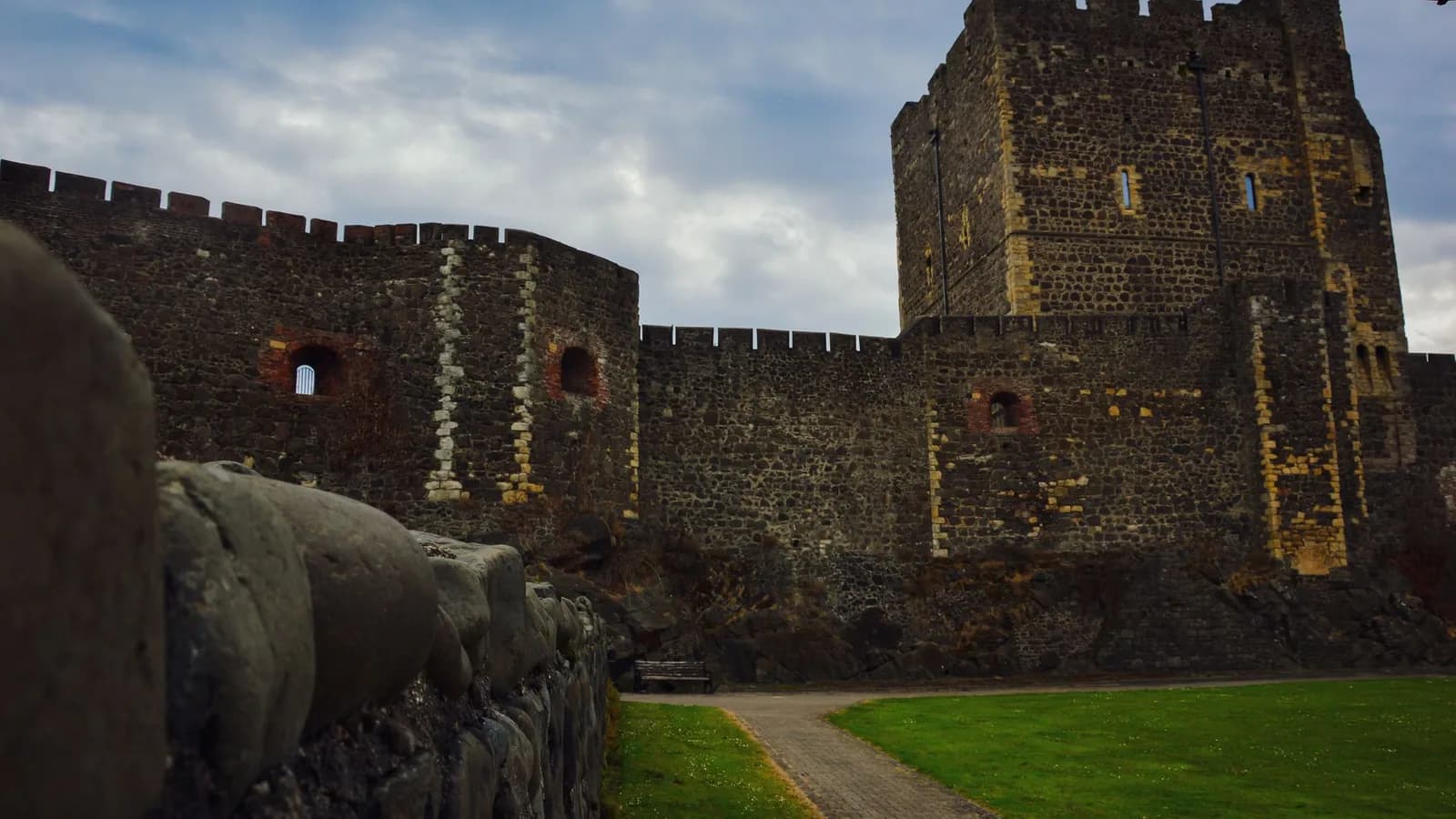
Medieval castle stonework. No photograph here is of the Tower of London; in 1483 the Tower was a royal residence as much as a prison, and Edward V was lodged there from May of that year.
Edward V was twelve years old. His brother Richard, Duke of York, was nine. Their father Edward IV died on 9 April 1483, and by the summer both boys were lodged in the Tower of London.
After the autumn of 1483 there is no record of either of them alive. Nobody has ever established what happened, and the reason nobody has established it is not that the evidence is missing.
What is documented
Edward V was brought to the Tower in May 1483. Richard joined him on 16 June. In late June their parents' marriage was declared invalid and the boys illegitimate; their uncle was crowned Richard III on 6 July.
Both boys were seen at play in the Tower grounds during that summer. Then the sightings stop.
Dominic Mancini, an Italian who was in London and left in July 1483, wrote an account for a patron in France. He records that Edward and his attendants were withdrawn into the inner apartments, that he was seen less and less, and that men in the city wept when they spoke of him. Mancini's manuscript was not rediscovered until 1934, which makes it the closest thing to a neutral contemporary witness the case has.
The Croyland Chronicle and the Great Chronicle of London both record that a rumour of the boys' deaths was circulating.
What was claimed, and when
Thomas More wrote his History of King Richard III around 1513. It names Sir James Tyrrell as the organiser and Miles Forest and John Dighton as the killers, describes smothering with pillows, and gives a burial at the foot of a stair followed by a reburial elsewhere.
More was five years old in 1483. He never finished the work and never published it. Shakespeare took the account from him, and the version most people hold is Shakespeare's.
This does not make More wrong. It makes him a hostile secondary source writing under the dynasty that benefited, and his testimony has to be weighed as such rather than quoted as a record.
Competing claims accumulated: that Henry VII did it after 1485, that the Duke of Buckingham did it, and that the boys survived. Perkin Warbeck claimed to be Richard of Shrewsbury from 1491 and was executed in 1499. The Missing Princes Project, led by Philippa Langley, has argued for survival on the basis of continental documents, and that work is contested by other historians.
The bones
In 1674 workmen demolishing a staircase in the White Tower found a wooden box containing the bones of two children. Charles II ordered them placed in Westminster Abbey, in an urn designed by Christopher Wren and installed in 1678.
On 6 July 1933 the urn was opened, with George V's permission, by the Abbey archivist Lawrence Tanner, the anatomist William Wright and the dentist George Northcroft. They concluded the remains were two children of about twelve or thirteen and about ten.
The examination has serious problems. It could not determine sex — that was not possible from juvenile skeletons in 1933 and largely still is not without DNA. It could not date the bones. And it proceeded from the assumption that the remains were the princes, which is the proposition it was supposed to be testing. Tanner himself was careful never to claim a positive identification.
Why nothing has moved since
Because permission has not been granted. Repeated requests to reopen the urn for radiocarbon dating, isotope analysis and ancient DNA have been declined.
The technical obstacle has gone. Work published in 2018 established a usable maternal reference from the boys' line, which means a mitochondrial comparison is now feasible. Ancient DNA from Richard III's own remains, identified in 2012, showed what is achievable on fifteenth-century material.
So the position is unusual among the cases on this site. There is no missing evidence and no failed technique. There is a sealed container, a decision, and a five-hundred-year-old question that could probably be answered.
Where the evidence points
On the record as it stands: the boys were in Richard III's custody, they disappeared during it, and no one who wanted to produce them ever could. That is a strong case that they died in 1483, and a much weaker one about who ordered it — custody is not an order.
Join the discussion
Still open on this one:
- 01
Have the bones ever been carbon dated?
No. The only examination was in 1933, before radiocarbon dating existed. Every subsequent request has been refused.
- 02
Is Thomas More a witness?
No. He was five in 1483 and wrote thirty years later under the successor dynasty. He is the origin of the detail, not the evidence for it.
Be the first to comment
Sources
Open them and check for yourself. Where a record is public, it is linked.
Dean and Chapter of Westminster
The National Archives, Kew
The Usurpation of Richard III
Dominic Mancini, 1483; rediscovered 1934 · no public copy located
Related
Psychic Phenomena
The Nine: who — or what — were they?
On New Year’s Eve 1952, in a laboratory in Maine, a voice announced itself as one of nine. Over the next forty years it reached a credentialled scientist, a celebrity psychic, a bestselling book and the creator of Star Trek. This is what is documented, and what is not.
Psychic Phenomena
New Year’s Eve 1952: the first session with the Nine
The founding event of the whole Nine phenomenon happened in a Maine farmhouse on 31 December 1952. Here is what the record supports about that evening, and how much of the familiar account was written down much later.
Psychic Phenomena
D. G. Vinod: the man at the beginning of the Nine
Every version of the Nine story starts with Dr D. G. Vinod in a trance in Maine. He is also the person that story then almost entirely forgets. Why the first channel is the biggest hole in the record.
Psychic Phenomena
Andrija Puharich: the doctor who kept turning up
A qualified physician, an inventor with real patents, an army medical officer — and the constant in forty years of the strangest story in American parapsychology. Puharich is the reason the Nine keep touching institutions.
0 comments