

The Templars: what happened, and what was added afterwards
A real military order, destroyed in a real conspiracy by a king who owed it money. Everything about the Grail, the bloodline and the Freemasons was attached four hundred years later.
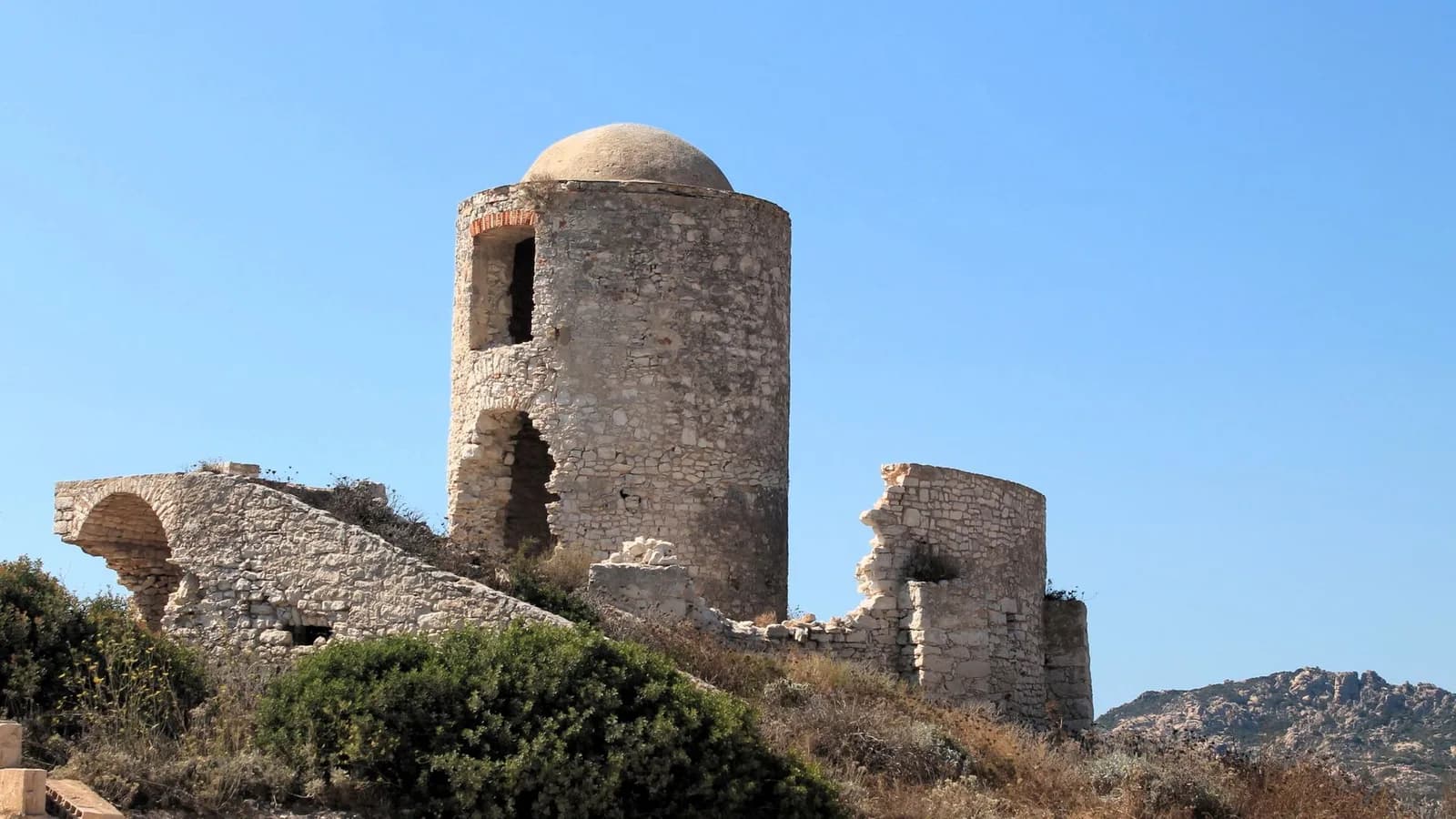
The order held fortifications across the Latin East and property across Europe.
The Poor Fellow-Soldiers of Christ and of the Temple of Solomon were founded around 1119 in Jerusalem, initially to protect pilgrims. Within a few decades they were among the wealthiest and most powerful institutions in Europe.
The papal bull Omne Datum Optimum of 1139 placed them under papal authority alone, exempt from local bishops and from taxation. They developed a network of properties across Europe and the Latin East, and a financial system — deposits made in one place could be drawn in another — that made them bankers to kings.
What happened to them
On Friday 13 October 1307, Philip IV of France had every Templar in his kingdom arrested simultaneously.
They were charged with heresy, blasphemy, idolatry and sodomy. Confessions were obtained under torture, including from the Grand Master, Jacques de Molay. Many were later retracted, and dozens who retracted were burned.
Pope Clement V, under sustained pressure from Philip, suppressed the order at the Council of Vienne in 1312. De Molay was burned in Paris in 1314.
Philip owed the order a great deal of money and had already expelled and expropriated the Jews and the Lombard bankers for similar reasons. The financial motive is not a theory; it is the standard historical explanation.
The trial in England went differently
Philip's campaign was French. What happened elsewhere is the control condition, and it is rarely mentioned.
In England, Edward II initially resisted the arrests and acted only under papal instruction. English proceedings did not use torture at first, and the confessions obtained were correspondingly thin — mostly admissions of minor irregularity rather than heresy or idolatry.
In Aragon, in Cyprus and elsewhere, inquiries acquitted Templars or found nothing substantial. In Portugal the order was reconstituted under a new name and its members carried on.
What was added later
Nearly everything the name now carries, and the dates are checkable.
The link to Freemasonry originates in the eighteenth century. Andrew Michael Ramsay's oration of 1736 connected Masonry to the crusading orders, and Templar-themed degrees were constructed from there. That is over four hundred years after the suppression, and there is no line of descent.
Rosslyn Chapel, central to modern Templar writing, was begun in 1446 — 134 years after the order was dissolved. Its carvings are fifteenth-century and its Templar associations are modern.
The Grail, the Ark, the bloodline of Christ and the treasure fleet are all later still, most of them twentieth century, several traceable to specific books published in the 1980s.
Join the discussion
Still open on this one:
- 01
Where did the order's wealth actually go?
Much was transferred to the Hospitallers, and much was absorbed by the crown. The accounting is incomplete, which is the small factual gap that the treasure legends grew in.
Be the first to comment
Sources
Open them and check for yourself. Where a record is public, it is linked.
The National Archives
The British Library
British Museum
Related
Psychic Phenomena
The Nine: who — or what — were they?
On New Year’s Eve 1952, in a laboratory in Maine, a voice announced itself as one of nine. Over the next forty years it reached a credentialled scientist, a celebrity psychic, a bestselling book and the creator of Star Trek. This is what is documented, and what is not.
Psychic Phenomena
New Year’s Eve 1952: the first session with the Nine
The founding event of the whole Nine phenomenon happened in a Maine farmhouse on 31 December 1952. Here is what the record supports about that evening, and how much of the familiar account was written down much later.
Psychic Phenomena
D. G. Vinod: the man at the beginning of the Nine
Every version of the Nine story starts with Dr D. G. Vinod in a trance in Maine. He is also the person that story then almost entirely forgets. Why the first channel is the biggest hole in the record.
Psychic Phenomena
Andrija Puharich: the doctor who kept turning up
A qualified physician, an inventor with real patents, an army medical officer — and the constant in forty years of the strangest story in American parapsychology. Puharich is the reason the Nine keep touching institutions.
0 comments