

Jack the Ripper: the name came from a letter that was probably faked
Five murders in ten weeks in Whitechapel in 1888, unsolved for 137 years. The most famous fact about the case — the killer's name — comes from a letter Scotland Yard itself came to think was written by a journalist.
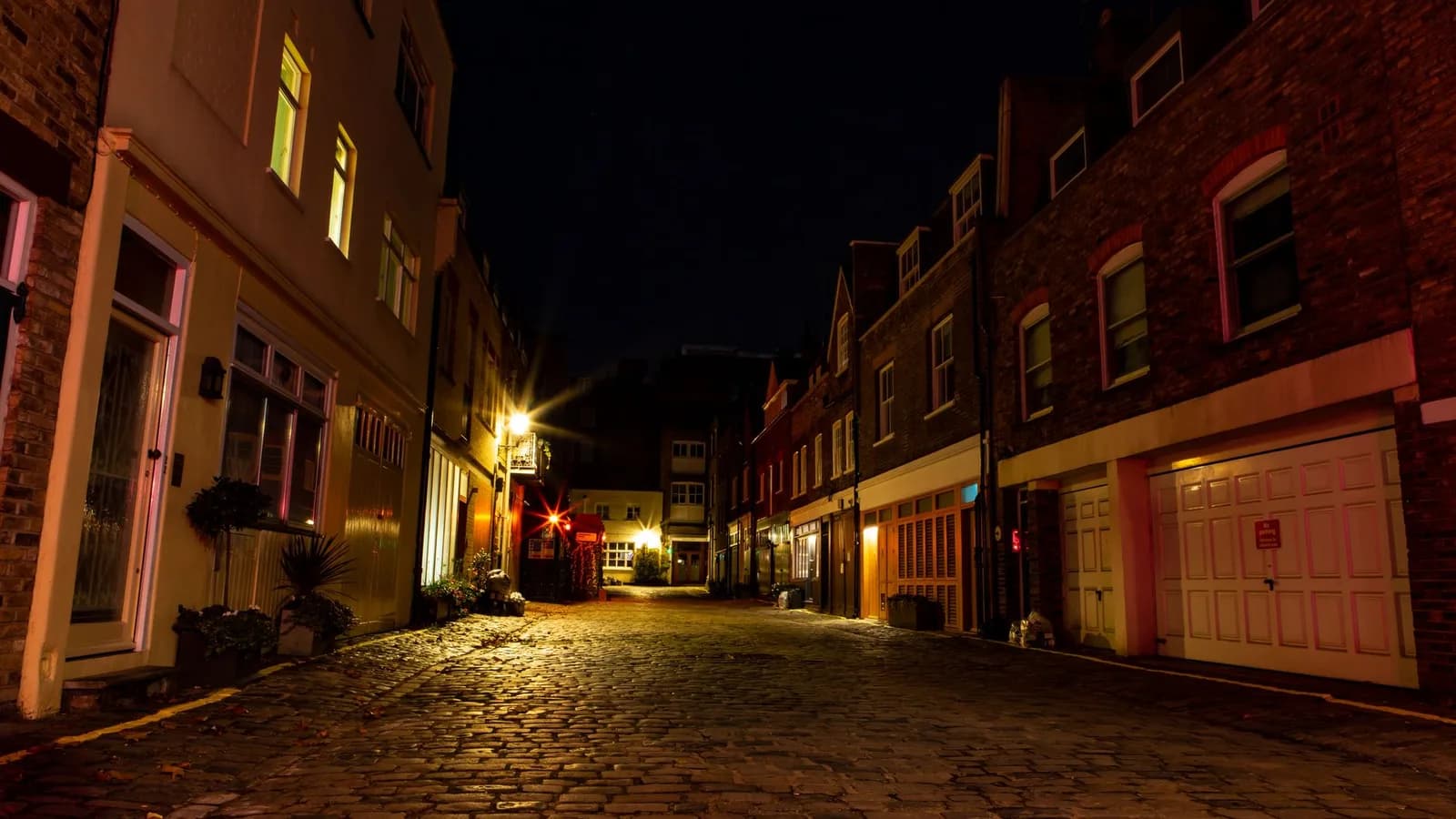
The Whitechapel murders took place in the autumn of 1888 in the East End of London.
Between 31 August and 9 November 1888, five women were murdered in Whitechapel: Mary Ann Nichols, Annie Chapman, Elizabeth Stride, Catherine Eddowes and Mary Jane Kelly. The five are conventional rather than definitive — the Metropolitan Police file covers eleven Whitechapel murders and which belong together is argued about.
The case has never been solved, and at this distance it cannot be.
Where the name came from
A letter received by the Central News Agency in September 1888, signed Jack the Ripper. It was published, and the name entered the language within days.
Scotland Yard came to suspect the letter was written by a journalist. Suspicion attached to Thomas Bulling of the Central News Agency, and senior officers including Chief Inspector Littlechild recorded that view.
The most famous thing about the case is therefore probably a piece of press invention — and it is what turned five murders into a legend, because it gave the killer a persona.
The evidence that exists
Post-mortem reports, inquest testimony and police files, much of it surviving and published.
The Goulston Street graffito — chalk writing near a bloodstained piece of Catherine Eddowes's apron — which Sir Charles Warren ordered erased before it could be photographed, fearing it would provoke anti-Jewish violence. Its wording is recorded differently by different officers, and it may have had nothing to do with the case.
No forensic evidence in the modern sense. No fingerprints — the technique was not in police use. No usable physical trace.
The Macnaghten memorandum
The suspect lists that dominate the literature descend largely from one internal document.
In 1894 Melville Macnaghten, then a senior Metropolitan Police officer, wrote a memorandum naming three men he considered more likely than a suspect being pushed in the press: Montague Druitt, a man rendered as Kosminski, and Michael Ostrog.
Macnaghten joined the force in 1889, after the murders. He was working from files and from colleagues' recollections, and the memorandum contains demonstrable errors of fact about the men it names.
The DNA claims
In 2014 and again in 2019, claims were published that mitochondrial DNA from a shawl said to be associated with Catherine Eddowes identified Aaron Kosminski, a Polish barber who was a contemporary police suspect.
The objections are serious. The shawl has no documented provenance connecting it to the crime scene; it was in private hands for over a century and has been handled extensively. Mitochondrial DNA is shared along maternal lines and cannot identify an individual. And the analysis has been criticised on methodological grounds by geneticists.
It is a claim, not a finding.
Join the discussion
Still open on this one:
- 01
How many of the eleven Whitechapel murders share an offender?
The canonical five is a convention established by contemporary officers and has been challenged in both directions. It is a question about the surviving medical evidence and remains genuinely open.
Be the first to comment
Sources
Open them and check for yourself. Where a record is public, it is linked.
The National Archives
The British Library
British Museum
Related
Psychic Phenomena
The Nine: who — or what — were they?
On New Year’s Eve 1952, in a laboratory in Maine, a voice announced itself as one of nine. Over the next forty years it reached a credentialled scientist, a celebrity psychic, a bestselling book and the creator of Star Trek. This is what is documented, and what is not.
Psychic Phenomena
New Year’s Eve 1952: the first session with the Nine
The founding event of the whole Nine phenomenon happened in a Maine farmhouse on 31 December 1952. Here is what the record supports about that evening, and how much of the familiar account was written down much later.
Psychic Phenomena
D. G. Vinod: the man at the beginning of the Nine
Every version of the Nine story starts with Dr D. G. Vinod in a trance in Maine. He is also the person that story then almost entirely forgets. Why the first channel is the biggest hole in the record.
Psychic Phenomena
Andrija Puharich: the doctor who kept turning up
A qualified physician, an inventor with real patents, an army medical officer — and the constant in forty years of the strangest story in American parapsychology. Puharich is the reason the Nine keep touching institutions.
0 comments