

Dyatlov Pass, 1959: nine dead, and a plausible answer at last
Nine experienced hikers cut their way out of a tent at night and walked into a Urals winter without proper clothing. For sixty years no explanation fitted. A 2021 avalanche model came closer than anything before it.
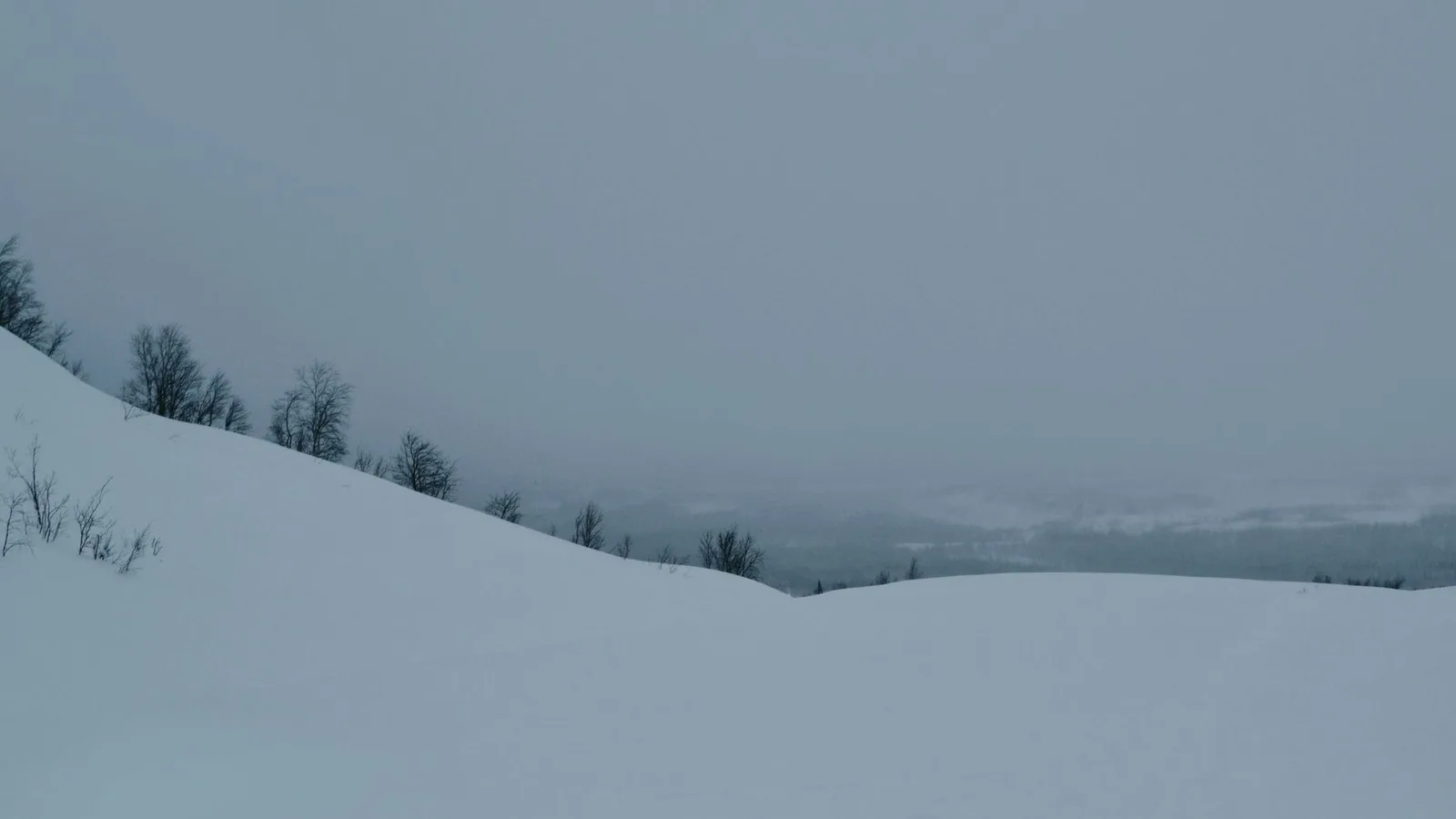
The group camped on an open slope of Kholat Syakhl in the northern Urals on 1 February 1959.
In February 1959 nine experienced ski hikers died on the eastern slope of Kholat Syakhl in the northern Urals. They had cut their way out of their tent from the inside, at night, in temperatures around minus 25, most of them without outer clothing or boots, and walked about 1.5 kilometres downhill towards a treeline.
All nine died. The Soviet investigation concluded they had been killed by a compelling natural force and closed the case.
What made it resistant to explanation
Several details that individually have answers and together did not.
The tent was cut from inside, which means they left in extreme haste and chose to do so.
Four of the bodies had severe internal injuries — fractured ribs and a fractured skull — without corresponding external wounds. That pattern indicates high, evenly distributed pressure rather than a blow.
Some clothing showed elevated radioactivity, later attributed to one member’s work with radiation.
And one body was missing soft tissue of the face, which was attributed to predation and decomposition in running water.
The 2021 model
Researchers in Switzerland published an analysis proposing a slab avalanche of a particular kind, and modelled it.
The elements: the group cut into the slope to pitch the tent, creating a step. A specific wind pattern loaded snow above that cut over the following hours. A slab released — small, perhaps only a few metres across, which is why no obvious debris field remained by the time searchers arrived days later.
A slab of that mass, striking people lying down on a hard surface, produces exactly the crush injuries recorded. The team drew partly on automotive impact research to model it.
The group then evacuated in the dark, injured, and died of hypothermia in the sequence the bodies suggest.
Why we treat it as the leading explanation
Because it is the first account that explains the whole sequence with ordinary physics, and because it makes a testable claim rather than gesturing at one.
The alternatives — weapons tests, infrasound panic, an encounter with something — each explain part of the picture and require something unevidenced for the rest.
Join the discussion
Still open on this one:
- 01
Do the original 1959 investigation files survive in full?
Portions have been released and portions are missing. A complete file would allow the avalanche model to be tested against details that are currently second-hand.
Be the first to comment
Sources
Open them and check for yourself. Where a record is public, it is linked.
Mechanisms of slab avalanche release and impact in the Dyatlov Pass incident
Gaume and Puzrin, Communications Earth & Environment · 28 Jan 2021 · no public copy located
British Library
Related
Psychic Phenomena
The Nine: who — or what — were they?
On New Year’s Eve 1952, in a laboratory in Maine, a voice announced itself as one of nine. Over the next forty years it reached a credentialled scientist, a celebrity psychic, a bestselling book and the creator of Star Trek. This is what is documented, and what is not.
Psychic Phenomena
New Year’s Eve 1952: the first session with the Nine
The founding event of the whole Nine phenomenon happened in a Maine farmhouse on 31 December 1952. Here is what the record supports about that evening, and how much of the familiar account was written down much later.
Psychic Phenomena
D. G. Vinod: the man at the beginning of the Nine
Every version of the Nine story starts with Dr D. G. Vinod in a trance in Maine. He is also the person that story then almost entirely forgets. Why the first channel is the biggest hole in the record.

Psychic Phenomena
Andrija Puharich: the doctor who kept turning up
A qualified physician, an inventor with real patents, an army medical officer — and the constant in forty years of the strangest story in American parapsychology. Puharich is the reason the Nine keep touching institutions.
0 comments