

Bilderberg: a real private conference, and what it is not
Around 130 people from politics, finance and media meet each year behind closed doors with no minutes. That is genuinely objectionable. It is also not a world government, and the difference matters.
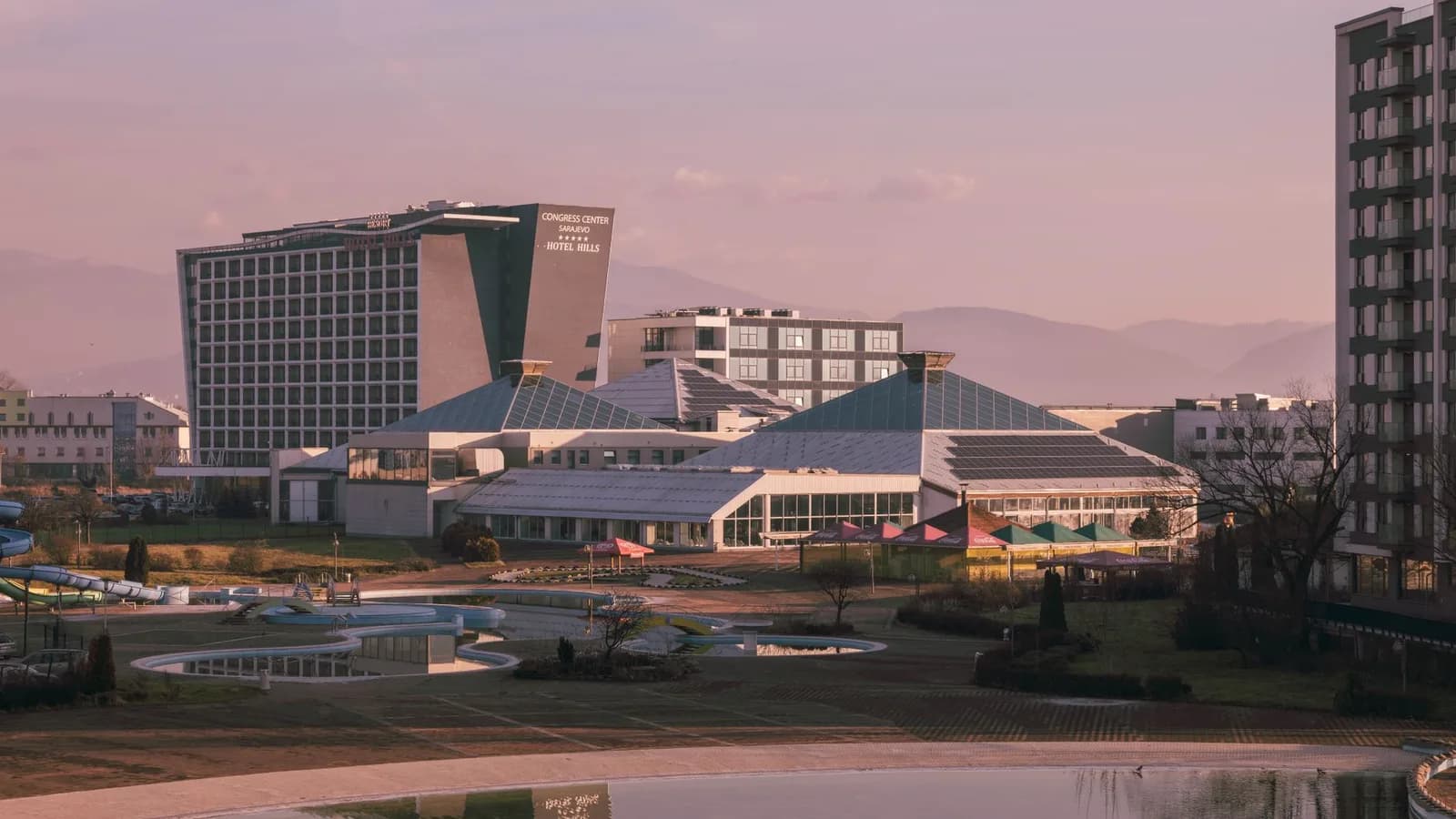
The conference takes its name from the Dutch hotel that hosted the first meeting in 1954.
The first Bilderberg meeting was held in May 1954 at the Hotel de Bilderberg in Oosterbeek, in the Netherlands. It was organised principally by the Polish political adviser Józef Retinger with Prince Bernhard of the Netherlands, in a Cold War context, to strengthen relations between Western Europe and North America.
It has met annually since, with roughly 120 to 150 participants drawn from government, banking, industry, academia and media.
What it actually is
A conference. Participants attend in a personal capacity. There are no minutes, no votes, no communiqué, and no resolutions.
Discussion is held under the Chatham House Rule: participants may use what they hear but may not identify who said it. That is a standard convention at policy conferences and is not unique to Bilderberg.
Since around 2010 the organisation has published its participant list and its agenda topics in advance. It did not do this for its first fifty-odd years, and the change followed sustained pressure.
The strongest argument against it
Serving ministers, central bankers and regulators discuss policy with the executives of the industries they regulate, with no record, no register and no scrutiny.
That is a real and specific objection. It does not require anyone to be conspiring; it requires only that a private venue without a record is a bad place for public officials to discuss public policy.
This objection is made by journalists and parliamentarians across the political spectrum, and it is much harder to dismiss than the larger claims.
What the 2001 committee actually recommended
The European Parliament report is often cited and rarely quoted, and its recommendations were concrete.
It advised member states to promote the use of encryption by citizens and businesses, to review the legal position of interception, and to examine whether national participation in such arrangements was compatible with EU law and with the European Convention on Human Rights.
It is unusual for a parliamentary body to advise the public to encrypt communications against the activities of allied states, and it happened.
The prediction argument
The commonest evidential claim is that future leaders attend before they become prominent — Bill Clinton in 1991, Tony Blair in 1993 — which is presented as evidence of selection.
The problem is that the invitation policy explicitly targets rising figures. An organisation that invites people it judges to be on the way up will have a good record of inviting people on the way up. The correlation is built into the selection, and the same data is equally consistent with good talent-spotting.
Join the discussion
Still open on this one:
- 01
Do participating officials declare attendance?
Practice varies by country and has been raised in several parliaments. Whether a serving minister's attendance is a declarable interest is an unresolved and entirely answerable question.
Be the first to comment
Sources
Open them and check for yourself. Where a record is public, it is linked.
The National Archives
The British Library
Related
Psychic Phenomena
The Nine: who — or what — were they?
On New Year’s Eve 1952, in a laboratory in Maine, a voice announced itself as one of nine. Over the next forty years it reached a credentialled scientist, a celebrity psychic, a bestselling book and the creator of Star Trek. This is what is documented, and what is not.
Psychic Phenomena
New Year’s Eve 1952: the first session with the Nine
The founding event of the whole Nine phenomenon happened in a Maine farmhouse on 31 December 1952. Here is what the record supports about that evening, and how much of the familiar account was written down much later.
Psychic Phenomena
D. G. Vinod: the man at the beginning of the Nine
Every version of the Nine story starts with Dr D. G. Vinod in a trance in Maine. He is also the person that story then almost entirely forgets. Why the first channel is the biggest hole in the record.
Psychic Phenomena
Andrija Puharich: the doctor who kept turning up
A qualified physician, an inventor with real patents, an army medical officer — and the constant in forty years of the strangest story in American parapsychology. Puharich is the reason the Nine keep touching institutions.
0 comments