

The Yowie: Australia’s ape problem
A large hairy hominid reported across eastern Australia since colonial times, and in Aboriginal tradition before that. It faces an objection no other cryptid does: Australia has never had primates.
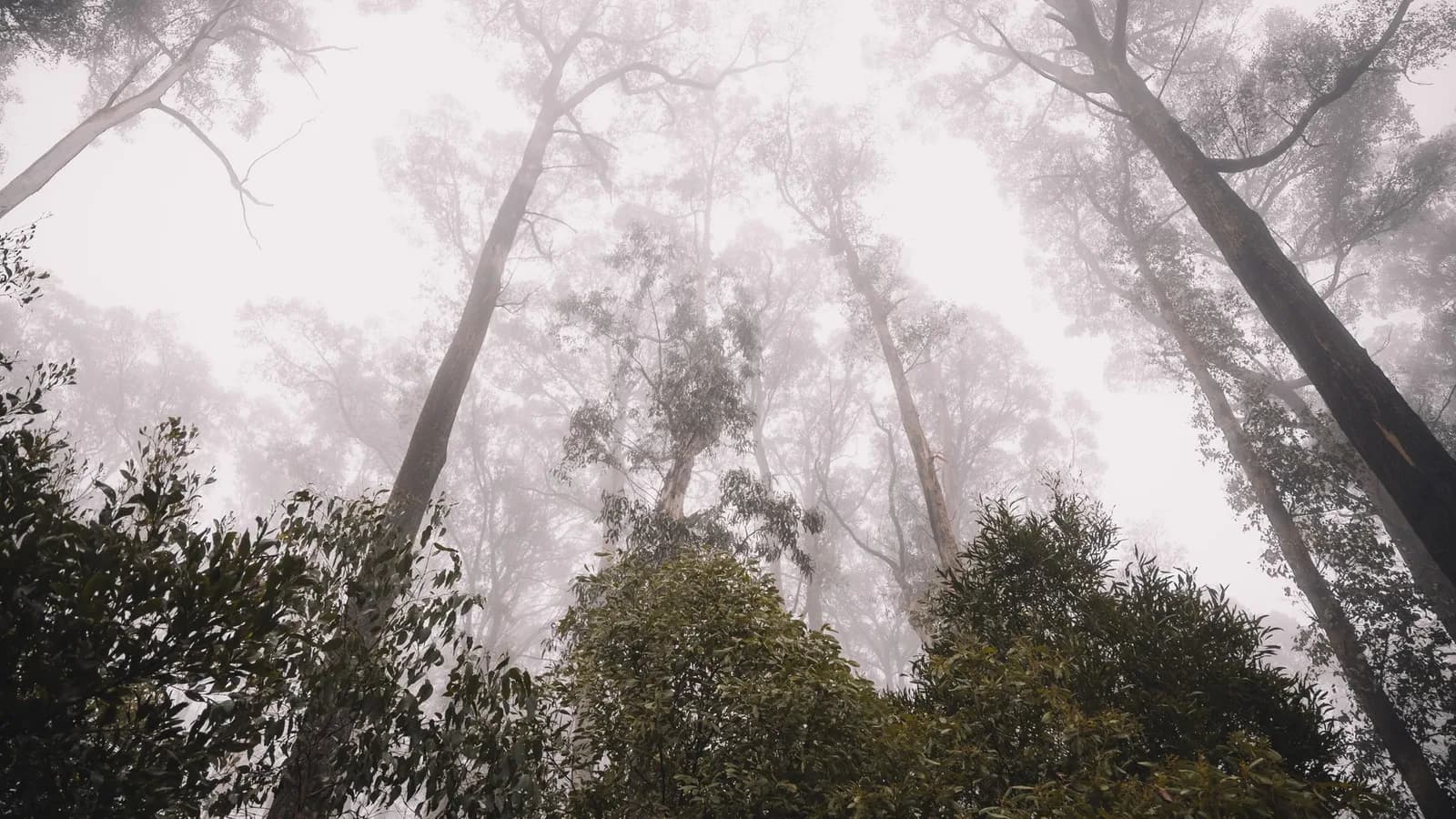
Reports cluster along the Great Dividing Range in New South Wales and Queensland.
The yowie is described as a large, hair-covered, upright hominid, reported chiefly along the eastern seaboard of Australia. Colonial newspapers carried accounts through the nineteenth century, often under the name yahoo, and reports continue.
It is the Australian equivalent of Bigfoot, and it faces a difficulty Bigfoot does not.
The Aboriginal traditions
These come first and they deserve to be handled properly rather than mined for corroboration.
Various Aboriginal nations have traditions of large hairy beings, under many names. These are part of complex cultural and spiritual systems and are not, in their own terms, zoological reports. Treating them as sightings of an undiscovered animal is a misreading of what the traditions are.
That is not a dismissal. It is the difference between a story a culture tells about the land and a wildlife record, and conflating them serves neither.
Why that objection is so heavy
Every other large-hominid cryptid has at least a plausible ancestry. Bigfoot has a North American continent connected to Asia across a land bridge, and a fossil ape — Gigantopithecus — in the right general part of the world. The yeti has the Himalaya and the same Asian primate fauna. Orang pendek has Sumatra, which is full of primates.
Australia has nothing. A yowie would require either a primate lineage that arrived and left no fossils across tens of millions of years, or a marsupial that convergently evolved an upright ape body plan — and no marsupial has ever done anything close.
That is not impossible in the strict sense. It is a far larger claim than any other cryptid requires.
What the reports probably are
Several ordinary sources, in combination.
Feral animals. Australia has large feral pigs, goats, camels, deer and dogs, several of which are dark, large and startling in scrub at dusk.
Cultural transmission. The nineteenth-century "yahoo" reports appear in colonial newspapers alongside a great many tall tales, in a period and a genre where such items were expected.
And the Bigfoot template. Australian reports became markedly more Bigfoot-like after American material became widely available, which is the pattern seen wherever a strong narrative arrives.
Where we land
The yowie is the weakest of the major hominid cryptids, not because the reports are worse but because the biogeography is against it more comprehensively than anywhere else.
What is real and worth respecting is the body of Aboriginal tradition, which is older, richer, and about something other than zoology.
Join the discussion
Still open on this one:
- 01
When did Australian reports start resembling Bigfoot?
A content analysis of colonial-era accounts against post-1960s ones would show how much the American template reshaped the description. The newspapers are digitised and the study is doable.
Be the first to comment
Sources
Open them and check for yourself. Where a record is public, it is linked.
The IUCN Red List of Threatened Species
International Union for Conservation of Nature
Australian Museum collections and research
Australian Museum
Related
Psychic Phenomena
The Nine: who — or what — were they?
On New Year’s Eve 1952, in a laboratory in Maine, a voice announced itself as one of nine. Over the next forty years it reached a credentialled scientist, a celebrity psychic, a bestselling book and the creator of Star Trek. This is what is documented, and what is not.
Psychic Phenomena
New Year’s Eve 1952: the first session with the Nine
The founding event of the whole Nine phenomenon happened in a Maine farmhouse on 31 December 1952. Here is what the record supports about that evening, and how much of the familiar account was written down much later.
Psychic Phenomena
D. G. Vinod: the man at the beginning of the Nine
Every version of the Nine story starts with Dr D. G. Vinod in a trance in Maine. He is also the person that story then almost entirely forgets. Why the first channel is the biggest hole in the record.

Psychic Phenomena
Andrija Puharich: the doctor who kept turning up
A qualified physician, an inventor with real patents, an army medical officer — and the constant in forty years of the strangest story in American parapsychology. Puharich is the reason the Nine keep touching institutions.
0 comments