

The thylacine: a real animal, driven extinct, and still reported
The last known one died in a Hobart zoo in 1936. Sightings have never stopped. This is the one cryptid case where the animal is definitely real and the only question is whether we finished it off.
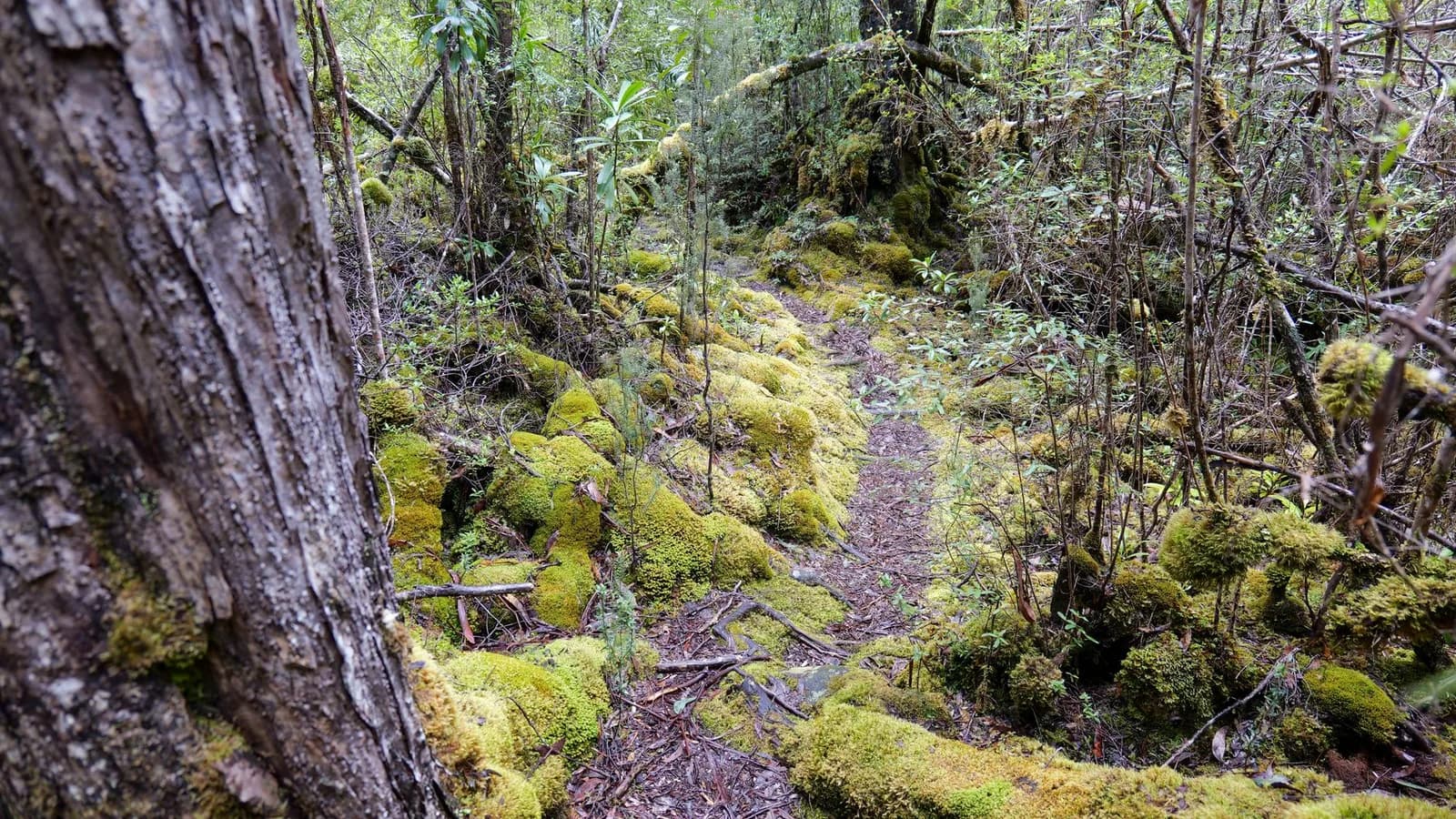
Tasmania retains large areas of remote forest, which is the strongest argument the survival claim has.
The thylacine was a carnivorous marsupial about the size of a large dog, with a stiff tail and dark stripes across its back. It was native to Tasmania and, earlier, to mainland Australia and New Guinea.
The last known individual died at Hobart Zoo on 7 September 1936. It was declared extinct in 1986.
What makes this case different
Everything else in this cluster asks whether an animal exists. This one asks whether an animal that definitely existed stopped existing, and when.
That changes the evidential situation completely. There is no need to establish that thylacines are possible. There are specimens in museums, skins, skeletons, and film footage of live animals. The only question is a date.
The sightings
They have continued without interruption since 1936, running into the thousands. Some are from experienced bushmen, park rangers and biologists — people who know the local fauna.
A 1980s Tasmanian Parks and Wildlife search and several subsequent surveys found nothing. Camera trap programmes have run for years. No confirmed image has ever been produced.
Why the sightings are not enough
Because of what else is out there. A large dog, a fox, a mangy or unusually marked wallaby, or a feral cat at distance in poor light can all produce a thylacine report from an honest witness.
The stripes are the detail most often cited, and they are also the detail most easily supplied by memory once the identification is made.
The de-extinction attempts
Well-funded projects are now working towards recreating the thylacine using preserved genetic material and gene editing of a related marsupial.
Whether that is desirable is a real argument. Whether it would produce a thylacine or an approximation of one is a real technical question. It is being pursued seriously by people with laboratories, which is more than most subjects on this site can say.
Why it belongs here
Because it is the cleanest example of the thing cryptozoology is actually good for: not discovering monsters, but recording what we lost and asking honestly whether it is gone.
The thylacine is the argument for taking eyewitness reports seriously and the argument for not trusting them, in one animal.
Join the discussion
Still open on this one:
- 01
When did the last wild thylacine actually die?
The 1936 date is the last captive animal. The wild population’s end is unrecorded, and a relict group persisting for decades afterwards is the reasonable version of the survival claim.
Be the first to comment
Sources
Open them and check for yourself. Where a record is public, it is linked.
The IUCN Red List of Threatened Species
International Union for Conservation of Nature
Tasmanian Museum and Art Gallery thylacine collection
TMAG
Related
Psychic Phenomena
The Nine: who — or what — were they?
On New Year’s Eve 1952, in a laboratory in Maine, a voice announced itself as one of nine. Over the next forty years it reached a credentialled scientist, a celebrity psychic, a bestselling book and the creator of Star Trek. This is what is documented, and what is not.
Psychic Phenomena
New Year’s Eve 1952: the first session with the Nine
The founding event of the whole Nine phenomenon happened in a Maine farmhouse on 31 December 1952. Here is what the record supports about that evening, and how much of the familiar account was written down much later.
Psychic Phenomena
D. G. Vinod: the man at the beginning of the Nine
Every version of the Nine story starts with Dr D. G. Vinod in a trance in Maine. He is also the person that story then almost entirely forgets. Why the first channel is the biggest hole in the record.

Psychic Phenomena
Andrija Puharich: the doctor who kept turning up
A qualified physician, an inventor with real patents, an army medical officer — and the constant in forty years of the strangest story in American parapsychology. Puharich is the reason the Nine keep touching institutions.
0 comments