

Orang Pendek: the cryptid biologists take seriously
A small upright primate reported in the forests of Sumatra, by local people for centuries and by field biologists since 1989. It is the one case where the professional response has been to go and look.
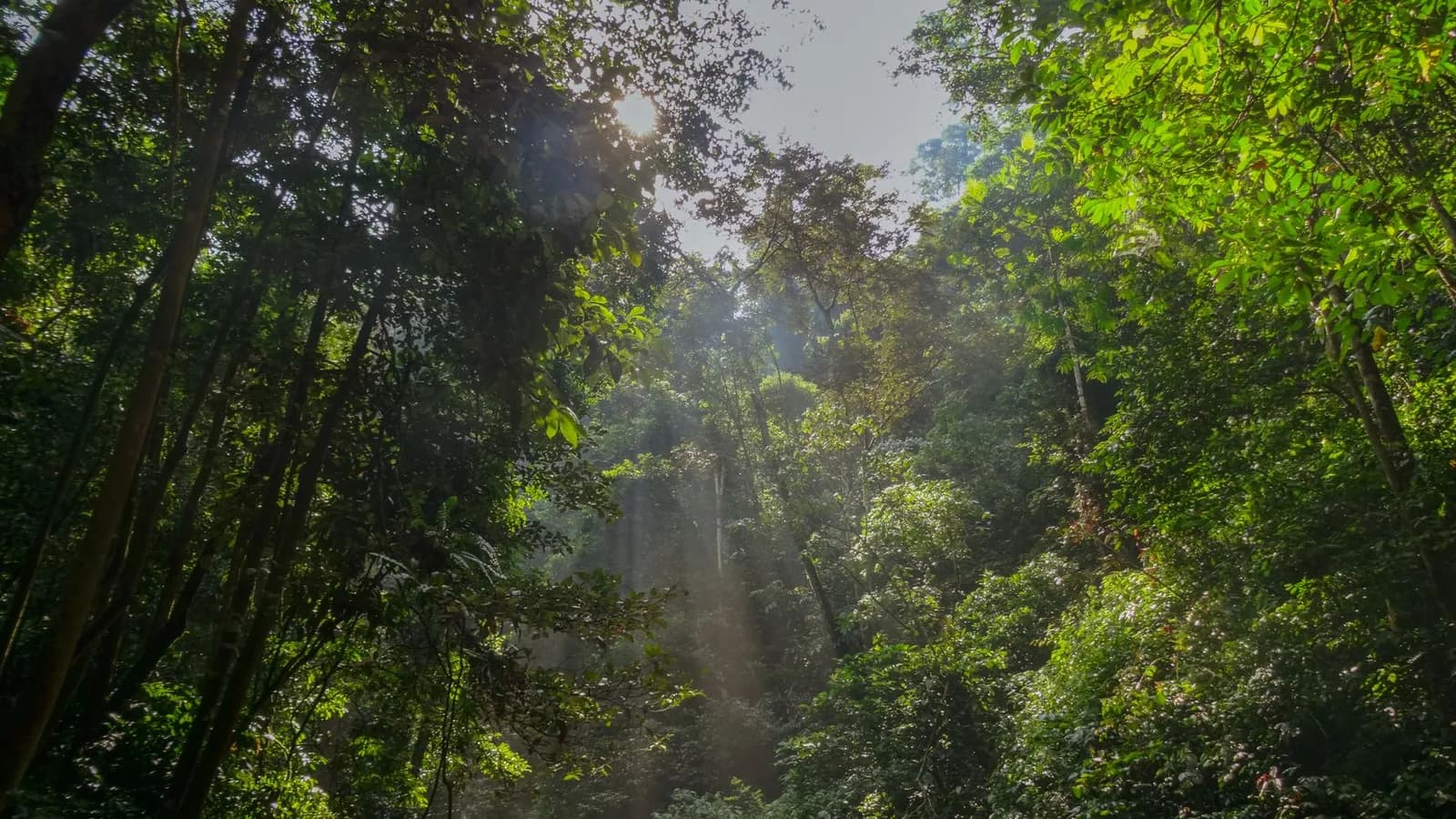
Reports centre on the Kerinci Seblat National Park in western Sumatra, an area of some 13,000 square kilometres.
Orang pendek means "short person" in Indonesian. It is described as a primate about a metre to a metre and a half tall, walking upright, powerfully built, covered in short dark hair, moving on the ground rather than through the canopy.
Of everything in this cluster, it is the claim with the best standing among working biologists — and understanding why says a great deal about what makes a cryptid claim reasonable.
What is documented
Reports from local communities in western Sumatra going back generations, and from Dutch colonial administrators and naturalists from the nineteenth century onward.
From 1989 the conservationist Debbie Martyr and the photographer Jeremy Holden ran a long-term project in Kerinci Seblat National Park, initially for tiger conservation, which included systematic collection of orang pendek reports and attempts to obtain evidence. Martyr reported sightings herself.
Footprint casts have been made. Hair samples have been collected and submitted for analysis.
Why it is nevertheless the strongest case
Four reasons, and each is about the setting rather than the sightings.
The habitat is right. Sumatran rainforest is dense, extensive, difficult, and genuinely under-surveyed. Large mammals there are hard to find even when their existence is not in doubt.
The animal described is plausible. A metre-tall forest primate is not an extraordinary thing for Sumatra to contain. The island already has orangutans, gibbons and several macaque species.
The precedent is strong. Sumatra has produced genuinely new large-mammal discoveries in living memory, and Indonesia produced Homo floresiensis in 2003 — a small-bodied hominin on Flores, unknown until excavation found it, which nobody had predicted.
And the witnesses include field biologists with relevant training, reporting through their own institutions rather than to the press.
The most likely explanations
A known animal, misjudged. A sun bear standing upright is roughly the right height, is dark, and is powerfully built. Local people distinguish them, but a bear at distance in poor light accounts for many reports.
An unrecognised primate, which is possible and unproven.
Or a genuine folk tradition that predates and shapes the sightings, as such traditions reliably do.
Join the discussion
Still open on this one:
- 01
Why have thirty-five years of camera traps produced nothing?
The strongest objection in the case. Tiger monitoring has saturated the area with cameras, and a ground-dwelling primate should appear in that data.
Be the first to comment
Sources
Open them and check for yourself. Where a record is public, it is linked.
The IUCN Red List of Threatened Species
International Union for Conservation of Nature
Natural History Museum collections
Natural History Museum, London
Related
Psychic Phenomena
The Nine: who — or what — were they?
On New Year’s Eve 1952, in a laboratory in Maine, a voice announced itself as one of nine. Over the next forty years it reached a credentialled scientist, a celebrity psychic, a bestselling book and the creator of Star Trek. This is what is documented, and what is not.
Psychic Phenomena
New Year’s Eve 1952: the first session with the Nine
The founding event of the whole Nine phenomenon happened in a Maine farmhouse on 31 December 1952. Here is what the record supports about that evening, and how much of the familiar account was written down much later.
Psychic Phenomena
D. G. Vinod: the man at the beginning of the Nine
Every version of the Nine story starts with Dr D. G. Vinod in a trance in Maine. He is also the person that story then almost entirely forgets. Why the first channel is the biggest hole in the record.

Psychic Phenomena
Andrija Puharich: the doctor who kept turning up
A qualified physician, an inventor with real patents, an army medical officer — and the constant in forty years of the strangest story in American parapsychology. Puharich is the reason the Nine keep touching institutions.
0 comments