

The coelacanth: the one that was actually found
A fish known only from fossils, thought extinct for 66 million years, was pulled from a South African trawl in 1938. It is the case every cryptid claim should be measured against.
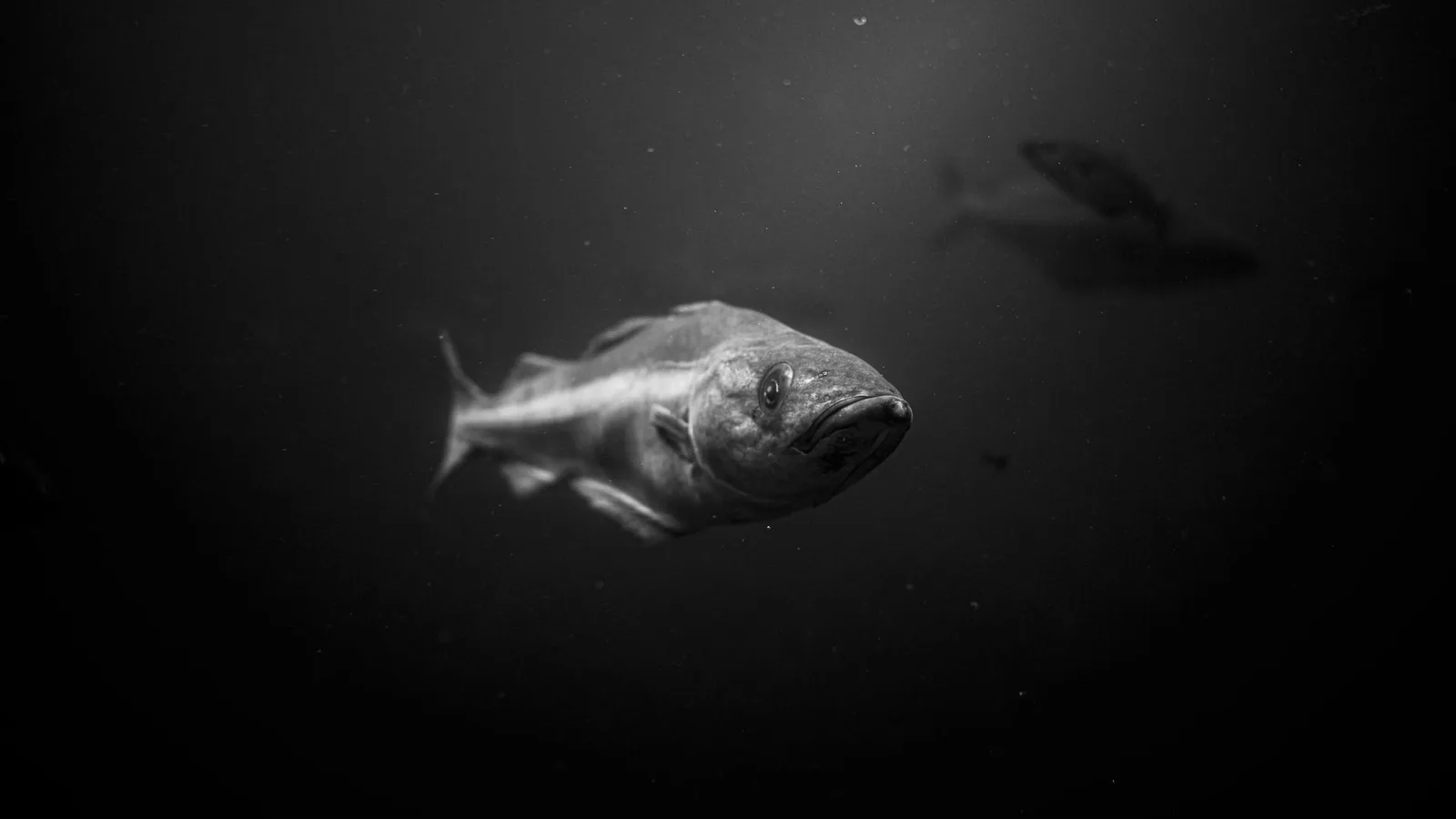
Coelacanths live at depths of around 150 to 250 metres off eastern Africa and in Indonesia.
In December 1938 Marjorie Courtenay-Latimer, curator of a small museum in East London, South Africa, went to look at a trawler’s catch as she did routinely. Among it was a fish about a metre and a half long, steel blue, with limb-like lobed fins unlike anything she recognised.
It was a coelacanth — an order of fish known from the fossil record and believed to have died out around 66 million years ago.
Why this is the reference case
Because it is the scenario cryptozoology exists to argue for, and it happened. A large animal, presumed extinct on good fossil evidence, was alive and nobody had noticed.
It matters, then, to look closely at what settled it — because what settled it is exactly what every unresolved cryptid case lacks.
What happened next
Courtenay-Latimer could not preserve the whole fish and had it mounted, losing the internal organs. She wrote to J.L.B. Smith, a chemistry lecturer and ichthyologist, enclosing a sketch.
Smith recognised it and named it Latimeria chalumnae after her. Then he spent fourteen years looking for a second one, offering rewards through the western Indian Ocean, before one was found in the Comoros in 1952 — where local fishermen had long known the fish and had no particular interest in it.
That detail is worth sitting with. The animal was not hidden. It was known to the people who lived there and unknown to science, which is a different thing entirely.
What it does and does not license
It establishes that the fossil record is incomplete and that large animals can persist unrecognised by science. That is a real and important point and cryptozoology is right to make it.
It does not establish that any particular claimed animal exists. The coelacanth was confirmed the way animals are confirmed: a body, examined by people qualified to examine it, followed by more bodies.
Its actual status
Two species are now known, one off eastern Africa and one in Indonesia, identified in 1997 from a specimen spotted in a market. Both are threatened, with populations in the low thousands or fewer.
They have been filmed alive in their habitat. They are studied. The mystery ended and became ordinary biology, which is what resolution looks like.
Join the discussion
Still open on this one:
- 01
How many other lineages might persist unrecognised?
The coelacanth shows it is possible. The honest answer is that deep marine environments are the plausible place for it, and terrestrial megafauna is the least plausible.
Be the first to comment
Sources
Open them and check for yourself. Where a record is public, it is linked.
The IUCN Red List of Threatened Species
International Union for Conservation of Nature
Natural History Museum collections
Natural History Museum, London
Related

Psychic Phenomena
The Nine: who — or what — were they?
On New Year’s Eve 1952, in a laboratory in Maine, a voice announced itself as one of nine. Over the next forty years it reached a credentialled scientist, a celebrity psychic, a bestselling book and the creator of Star Trek. This is what is documented, and what is not.
Psychic Phenomena
New Year’s Eve 1952: the first session with the Nine
The founding event of the whole Nine phenomenon happened in a Maine farmhouse on 31 December 1952. Here is what the record supports about that evening, and how much of the familiar account was written down much later.

Psychic Phenomena
D. G. Vinod: the man at the beginning of the Nine
Every version of the Nine story starts with Dr D. G. Vinod in a trance in Maine. He is also the person that story then almost entirely forgets. Why the first channel is the biggest hole in the record.

Psychic Phenomena
Andrija Puharich: the doctor who kept turning up
A qualified physician, an inventor with real patents, an army medical officer — and the constant in forty years of the strangest story in American parapsychology. Puharich is the reason the Nine keep touching institutions.
0 comments