

The Beast of Gévaudan: a real killer, and a documented body count
Something killed around a hundred people in south-central France between 1764 and 1767. The deaths are in parish records. What did the killing is the only part in doubt.
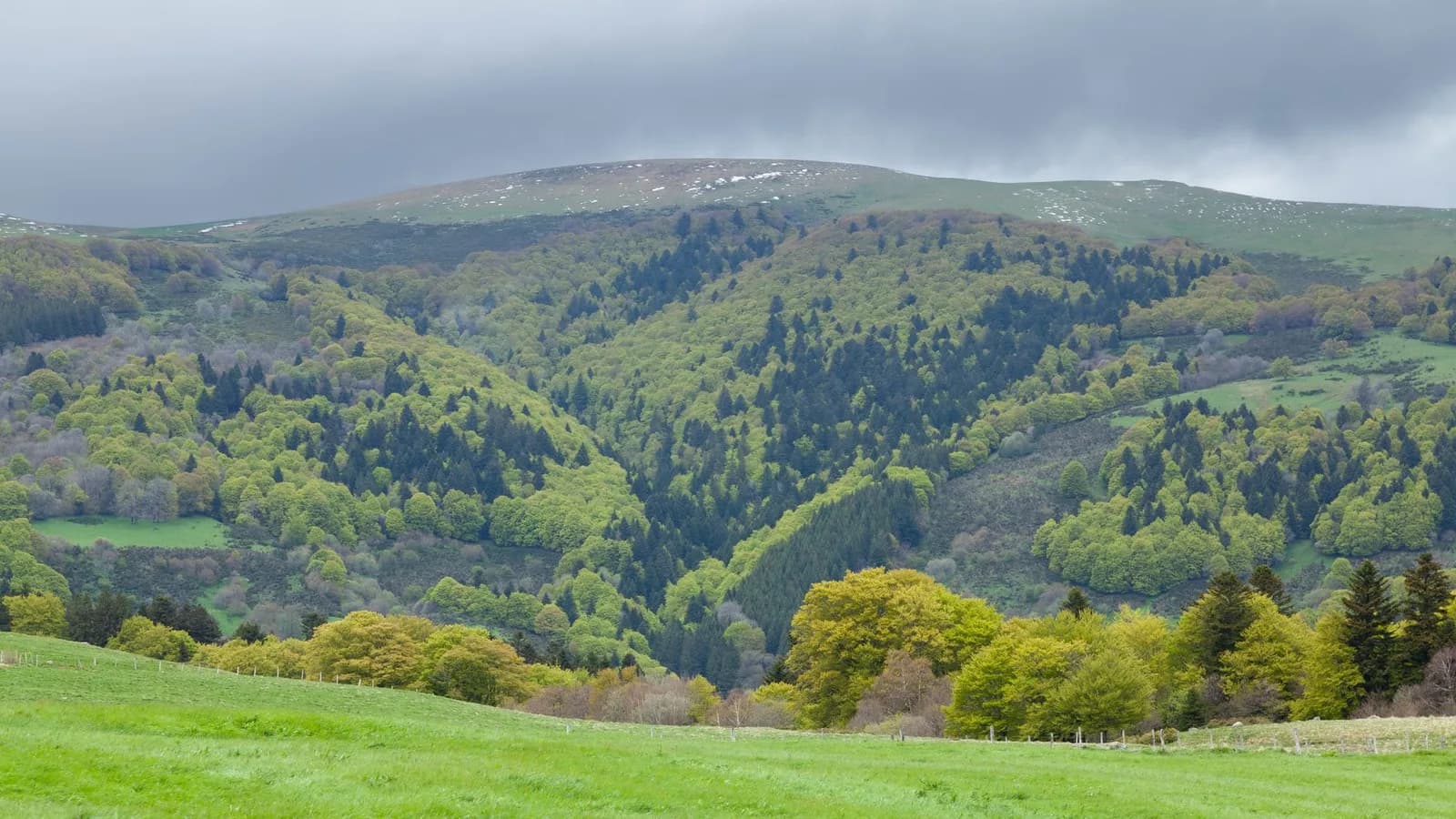
The attacks occurred across the Gévaudan, an upland region of south-central France.
Between 1764 and 1767 something attacked people across the Gévaudan in south-central France. The victims were mostly women and children tending livestock in open country. Estimates of the dead run to around a hundred, with many more injured.
This is the one entry in this cluster where the harm is documented in the parish registers, and the mystery is only about the animal.
What is documented
The deaths. Burial records name victims and dates. Contemporary correspondence, official reports and newspaper accounts survive in quantity, because the affair became a national matter.
The response was substantial: local hunts, then professional wolf-hunters sent by the crown, then a detachment of dragoons. Louis XV took a personal interest and offered a reward.
What was killed
In September 1765 the king’s gun-bearer, François Antoine, shot a very large wolf. It was stuffed and taken to Versailles, and the affair was declared over.
The attacks resumed.
In June 1767 a local hunter, Jean Chastel, shot another animal during a large hunt. The attacks stopped. The carcass was examined, paraded, and — having decomposed in summer heat — was buried without being preserved.
The candidates
Wolves, most probably. Wolf attacks on humans were not rare in eighteenth-century France; what was unusual here was the concentration and duration. The victim profile — children and women alone with livestock — matches wolf predation on the vulnerable.
A wolf-dog hybrid or an unusually large individual would account for reports of size and colouring that seemed wrong for a wolf.
An escaped exotic animal, usually a hyena or a big cat, has been proposed for centuries. Menageries existed, and animals did escape. There is no record of such an escape here.
And a human killer, using or imitating an animal — argued on the basis of some wound patterns and the victim profile. It is a minority view and it is not absurd.
Why we cover it as history rather than cryptozoology
Because around a hundred people died and their names are recorded. The Gévaudan is not a monster story with a body count attached; it is a rural killing sequence in eighteenth-century France that acquired a monster.
The most likely answer is wolves, in unusual conditions, in a region where children herded animals alone. That is not a satisfying ending, and it is the one the evidence supports.
Join the discussion
Still open on this one:
- 01
Does any part of Chastel’s animal survive?
It was buried unpreserved. Claims that remains exist in collections have not held up, and a confirmed specimen would settle a 260-year-old question in a week.
Be the first to comment
Sources
Open them and check for yourself. Where a record is public, it is linked.
Archives départementales de la Lozère
Département de la Lozère
Natural History Museum collections
Natural History Museum, London
Related
Psychic Phenomena
The Nine: who — or what — were they?
On New Year’s Eve 1952, in a laboratory in Maine, a voice announced itself as one of nine. Over the next forty years it reached a credentialled scientist, a celebrity psychic, a bestselling book and the creator of Star Trek. This is what is documented, and what is not.
Psychic Phenomena
New Year’s Eve 1952: the first session with the Nine
The founding event of the whole Nine phenomenon happened in a Maine farmhouse on 31 December 1952. Here is what the record supports about that evening, and how much of the familiar account was written down much later.
Psychic Phenomena
D. G. Vinod: the man at the beginning of the Nine
Every version of the Nine story starts with Dr D. G. Vinod in a trance in Maine. He is also the person that story then almost entirely forgets. Why the first channel is the biggest hole in the record.

Psychic Phenomena
Andrija Puharich: the doctor who kept turning up
A qualified physician, an inventor with real patents, an army medical officer — and the constant in forty years of the strangest story in American parapsychology. Puharich is the reason the Nine keep touching institutions.
0 comments