

Zecharia Sitchin: where the modern Anunnaki story actually comes from
Almost everything popularly believed about the Anunnaki traces to one author writing from the 1970s. His readings of Sumerian are rejected by Assyriology, and the objections are checkable in a dictionary.
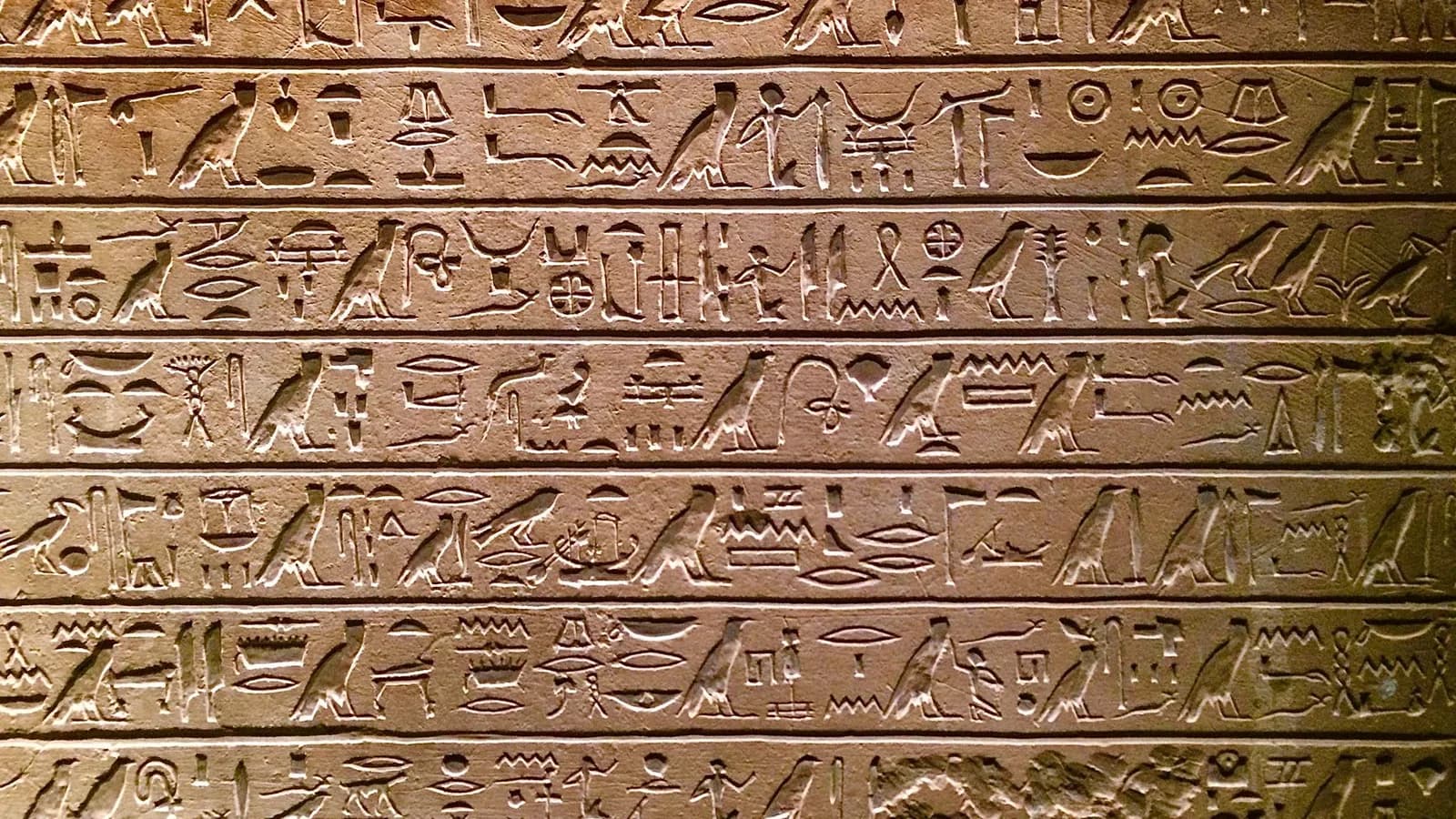
Sumerian and Akkadian have been readable since the nineteenth century. The texts can be checked against a lexicon.
The modern Anunnaki story — that Sumerian texts describe extraterrestrials who came to Earth for gold and engineered humanity to mine it — has a single principal author. Zecharia Sitchin published The 12th Planet in 1976 and eleven further volumes over three decades.
It is worth tracing, because this site covers the Sumerian record and readers arrive having met Sitchin’s version without knowing it is his.
What the Sumerian record actually is
Enormous, and readable. Hundreds of thousands of cuneiform tablets survive, and Sumerian and Akkadian have been deciphered since the nineteenth century. There are grammars, dictionaries and a professional discipline.
The Anunnaki appear in it as a category of deity — the great gods of the pantheon, associated with the sky and with the underworld depending on period and text. They are gods, in a religious literature, doing what gods do in such literature.
The specific objections
Assyriologists have addressed his readings in detail, and the objections are concrete.
Nibiru. Sitchin renders it as a planet with a 3,600-year orbit. In the texts the term is used of a celestial position or crossing point, and is associated with a body identified with Jupiter or Mercury in different contexts. The extended orbit is not in the sources.
Anunnaki as "those who from heaven to earth came". The term is a divine epithet; the etymology Sitchin offers is not the one the grammar supports.
The rocket depictions. The cylinder seal imagery he interprets as spacecraft is read by specialists using an established iconographic vocabulary — one seal frequently reproduced as showing a solar system is, on the standard reading, a star and symbols with known conventional meanings.
Why it is persuasive anyway
Because it is internally consistent, extensively footnoted, and written with confidence about a body of material almost no reader can check.
Cuneiform is a genuine specialism. A reader encountering a detailed argument about Sumerian vocabulary has no way to evaluate it independently, and the apparatus of scholarship is doing work the scholarship does not support.
What this leaves
A real and remarkable literature — the oldest written record of human religion and law — being read through a framework its own specialists say is not in the text.
The Sumerian material genuinely is extraordinary. It does not need to be about spacecraft to be worth reading, and treating it as though it does is a poor way to treat the first thing anybody wrote down.
Join the discussion
Still open on this one:
- 01
Has any Assyriologist supported the readings?
Not to our knowledge, in the peer-reviewed literature. That is worth stating plainly given how widely the interpretation circulates.
Be the first to comment
Sources
Open them and check for yourself. Where a record is public, it is linked.
British Museum
Electronic Text Corpus of Sumerian Literature
University of Oxford
Related

Psychic Phenomena
The Nine: who — or what — were they?
On New Year’s Eve 1952, in a laboratory in Maine, a voice announced itself as one of nine. Over the next forty years it reached a credentialled scientist, a celebrity psychic, a bestselling book and the creator of Star Trek. This is what is documented, and what is not.

Psychic Phenomena
New Year’s Eve 1952: the first session with the Nine
The founding event of the whole Nine phenomenon happened in a Maine farmhouse on 31 December 1952. Here is what the record supports about that evening, and how much of the familiar account was written down much later.

Psychic Phenomena
D. G. Vinod: the man at the beginning of the Nine
Every version of the Nine story starts with Dr D. G. Vinod in a trance in Maine. He is also the person that story then almost entirely forgets. Why the first channel is the biggest hole in the record.

Psychic Phenomena
Andrija Puharich: the doctor who kept turning up
A qualified physician, an inventor with real patents, an army medical officer — and the constant in forty years of the strangest story in American parapsychology. Puharich is the reason the Nine keep touching institutions.
0 comments