

Silbury Hill: dug into three times, and empty
The largest artificial mound in Europe, built around 2400 BC, and nobody knows why. Three major excavations went looking for a burial. There is not one.
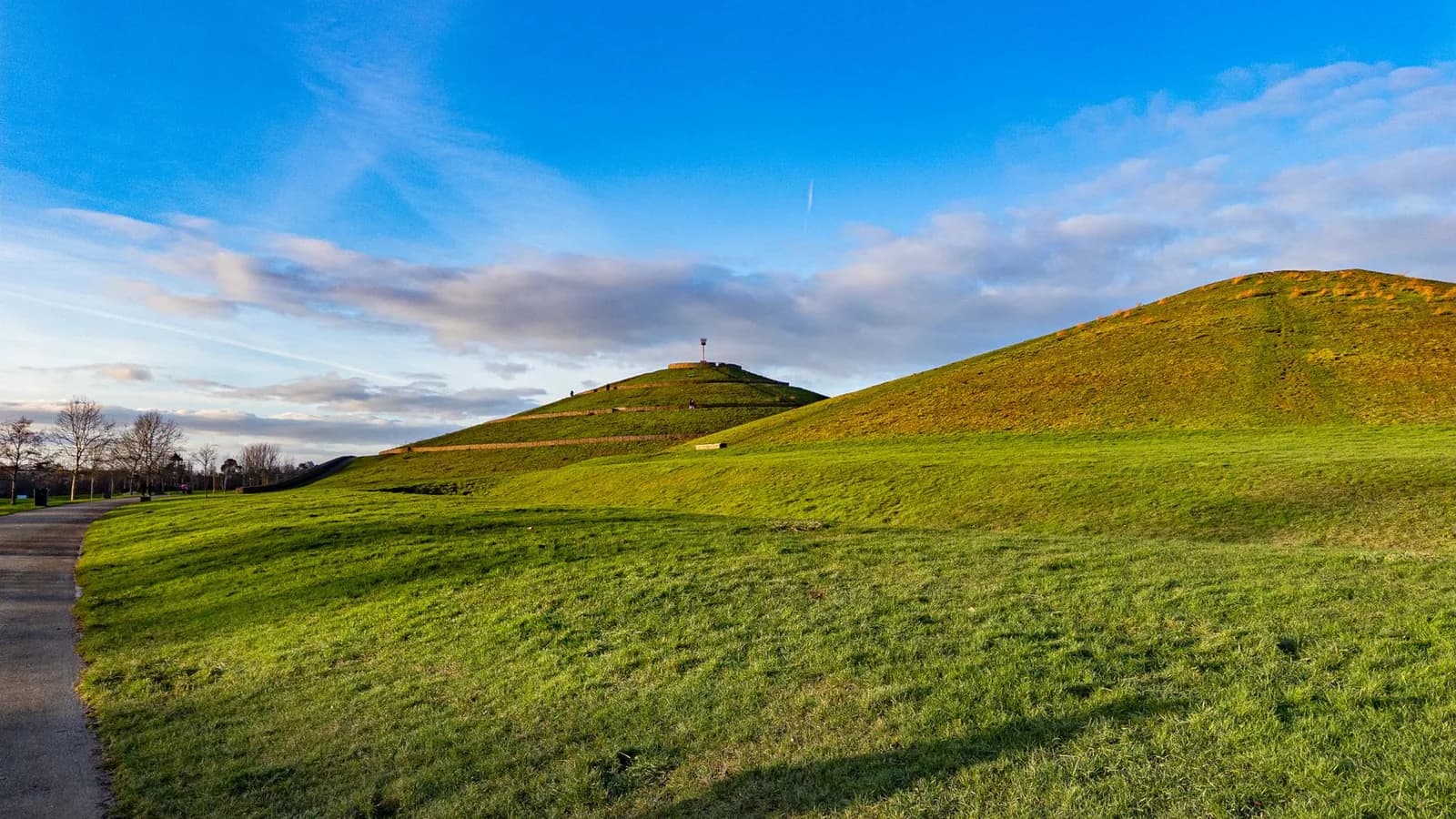
Silbury Hill is the largest artificial prehistoric mound in Europe, at about thirty metres high.
Silbury Hill stands about thirty metres high and covers roughly two hectares at the base. It is the largest artificial prehistoric mound in Europe and was built in the Avebury landscape around 2400 BC.
The volume of material moved is estimated in the hundreds of thousands of cubic metres, all of it chalk and turf, all of it cut and carried by hand.
The three digs
In 1776 the Duke of Northumberland employed Cornish miners to sink a shaft from the summit. They found nothing.
In 1849 a tunnel was driven in from the side. Nothing again.
In 1968 to 1970 Richard Atkinson excavated with BBC cameras present, on the expectation of finding a burial. He did not. The programme had to report an absence.
What the stabilisation found
That it was built in stages, over generations, rather than in one campaign. Successive enlargements are visible in the structure, each apparently complete in itself before being enlarged.
That there is no chamber and no burial. The centre contains gravel, soil, turf and chalk. This is now about as certain as any negative finding in British archaeology.
And that the process of building mattered. The layering suggests deliberate, repeated construction rather than mere accumulation.
What building it actually cost
Estimates of the labour have been made from the volume of material and the rates at which people can dig and carry chalk.
The figures usually given run to millions of worker-hours — on the order of hundreds of people working for years, or a far larger number for a shorter period, and either way a sustained commitment by a society without draught animals, metal tools or the wheel.
The staged construction changes how that should be read. It was not one enormous effort but a series of them, separated by intervals, each apparently finished before the next began.
The Roman village at its foot
Geophysical survey and excavation have identified a substantial Roman settlement immediately around the base of the mound, occupied for centuries. The Romans did not build it and appear to have regarded it as significant. A monument already two and a half thousand years old when they arrived was still drawing people to it, which is a fact about its afterlife rather than its purpose.
The insects
The most precise thing known about the site comes from the turf at its base.
Preserved in it were winged ants. Flying ants swarm in a narrow window in late summer. Their presence dates the start of construction to late July or August of a particular year, four and a half thousand years ago.
That is the sort of detail that makes prehistory feel briefly close: a specific fortnight, in a specific summer, when people began to build.
Join the discussion
Still open on this one:
- 01
Why build something with no interior?
Every other monument of the period in the landscape contains or covers something. Silbury does not, and that absence is the actual mystery.
Be the first to comment
Sources
Open them and check for yourself. Where a record is public, it is linked.
Stonehenge, Avebury and Associated Sites
UNESCO World Heritage Centre
The National Heritage List for England
Historic England
Related
Psychic Phenomena
The Nine: who — or what — were they?
On New Year’s Eve 1952, in a laboratory in Maine, a voice announced itself as one of nine. Over the next forty years it reached a credentialled scientist, a celebrity psychic, a bestselling book and the creator of Star Trek. This is what is documented, and what is not.
Psychic Phenomena
New Year’s Eve 1952: the first session with the Nine
The founding event of the whole Nine phenomenon happened in a Maine farmhouse on 31 December 1952. Here is what the record supports about that evening, and how much of the familiar account was written down much later.
Psychic Phenomena
D. G. Vinod: the man at the beginning of the Nine
Every version of the Nine story starts with Dr D. G. Vinod in a trance in Maine. He is also the person that story then almost entirely forgets. Why the first channel is the biggest hole in the record.

Psychic Phenomena
Andrija Puharich: the doctor who kept turning up
A qualified physician, an inventor with real patents, an army medical officer — and the constant in forty years of the strangest story in American parapsychology. Puharich is the reason the Nine keep touching institutions.
0 comments