

Seahenge: a monument we can date to the year
A circle of oak posts around an upturned tree stump, revealed by shifting sand on a Norfolk beach. Tree rings date the felling to 2049 BC — not a range, a year.
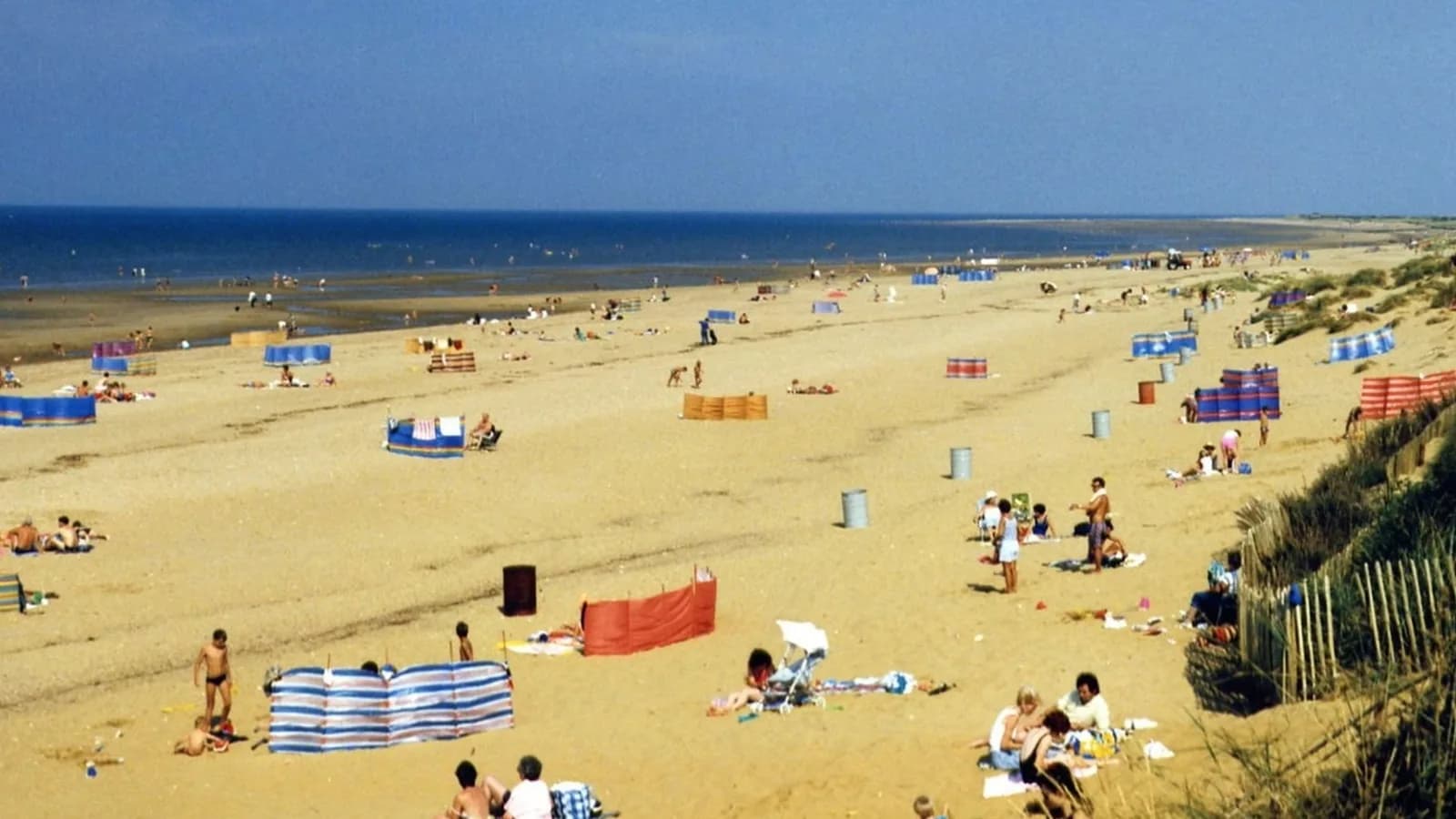
The timber circle emerged from the beach at Holme-next-the-Sea in Norfolk in 1998.
In 1998, shifting sand at Holme-next-the-Sea in Norfolk exposed a ring of timber posts on the beach. At the centre was a large oak stump, upside down, roots in the air.
It became known as Seahenge, which is a misnomer twice over — it is not a henge and it was not built at sea. It was built on a saltmarsh that the sea later covered, and the waterlogging is why the wood survived at all.
What it is
Fifty-five oak posts, split from trunks and set in a circle roughly seven metres across, bark facing outward, split faces in. The circle had no obvious entrance; one post was set with a narrow gap that may have served as one.
The central stump is a single large oak, inverted. Rope made from honeysuckle was found with it, apparently used to haul it into place.
What the timbers showed
Tool marks. The axe marks on the posts were sharp enough to identify individual axes, and analysis distinguished a number of separate bronze axeheads used in the work.
That means the number of tools, and by inference something about the number of people, can be estimated from the wood itself.
How dendrochronology gets a year
The precision at Seahenge is worth understanding, because it is the strongest dating available for anything in this period.
A tree lays down one growth ring a year, and its width varies with conditions. A run of rings therefore carries a pattern shared by every tree growing in the same region and period.
Overlapping sequences from timbers of known and unknown date build a master chronology stretching back thousands of years. A new sample is matched against it, and where the pattern locks, the date is fixed.
Why the sea preserved it
Wood survives only where oxygen cannot reach it. Waterlogged, anaerobic peat halts the fungi and bacteria that otherwise consume timber within decades. That is why almost all surviving prehistoric wood in Britain comes from bogs, lake edges and former marsh — and why the sea that eventually threatened Seahenge is also the reason there was anything left to threaten.
The excavation and the argument
It was excavated in 1999, and the decision was contested. Druids and local residents objected, some physically, arguing the monument should be left where it stood.
The archaeological case was that the sea was actively destroying it, that it would not survive in place, and that removal was the only way to preserve it. The timbers were lifted, conserved over years, and are now displayed at Lynn Museum in King's Lynn.
Both positions were sincerely held. The timbers exist to be argued over because of the decision that was taken.
Join the discussion
Still open on this one:
- 01
Why inverted?
The upside-down stump is the distinctive feature and has no clear parallel. Any explanation of the monument has to account for it, and none does convincingly.
Be the first to comment
Sources
Open them and check for yourself. Where a record is public, it is linked.
The National Heritage List for England
Historic England
The National Archives
Related
Psychic Phenomena
The Nine: who — or what — were they?
On New Year’s Eve 1952, in a laboratory in Maine, a voice announced itself as one of nine. Over the next forty years it reached a credentialled scientist, a celebrity psychic, a bestselling book and the creator of Star Trek. This is what is documented, and what is not.

Psychic Phenomena
New Year’s Eve 1952: the first session with the Nine
The founding event of the whole Nine phenomenon happened in a Maine farmhouse on 31 December 1952. Here is what the record supports about that evening, and how much of the familiar account was written down much later.

Psychic Phenomena
D. G. Vinod: the man at the beginning of the Nine
Every version of the Nine story starts with Dr D. G. Vinod in a trance in Maine. He is also the person that story then almost entirely forgets. Why the first channel is the biggest hole in the record.

Psychic Phenomena
Andrija Puharich: the doctor who kept turning up
A qualified physician, an inventor with real patents, an army medical officer — and the constant in forty years of the strangest story in American parapsychology. Puharich is the reason the Nine keep touching institutions.
0 comments