

Sacsayhuamán: how the Inca actually fitted those stones
Walls above Cusco where hundred-tonne blocks meet so closely a blade will not pass between them. The precision is real. So is the Spanish account of how it was done.
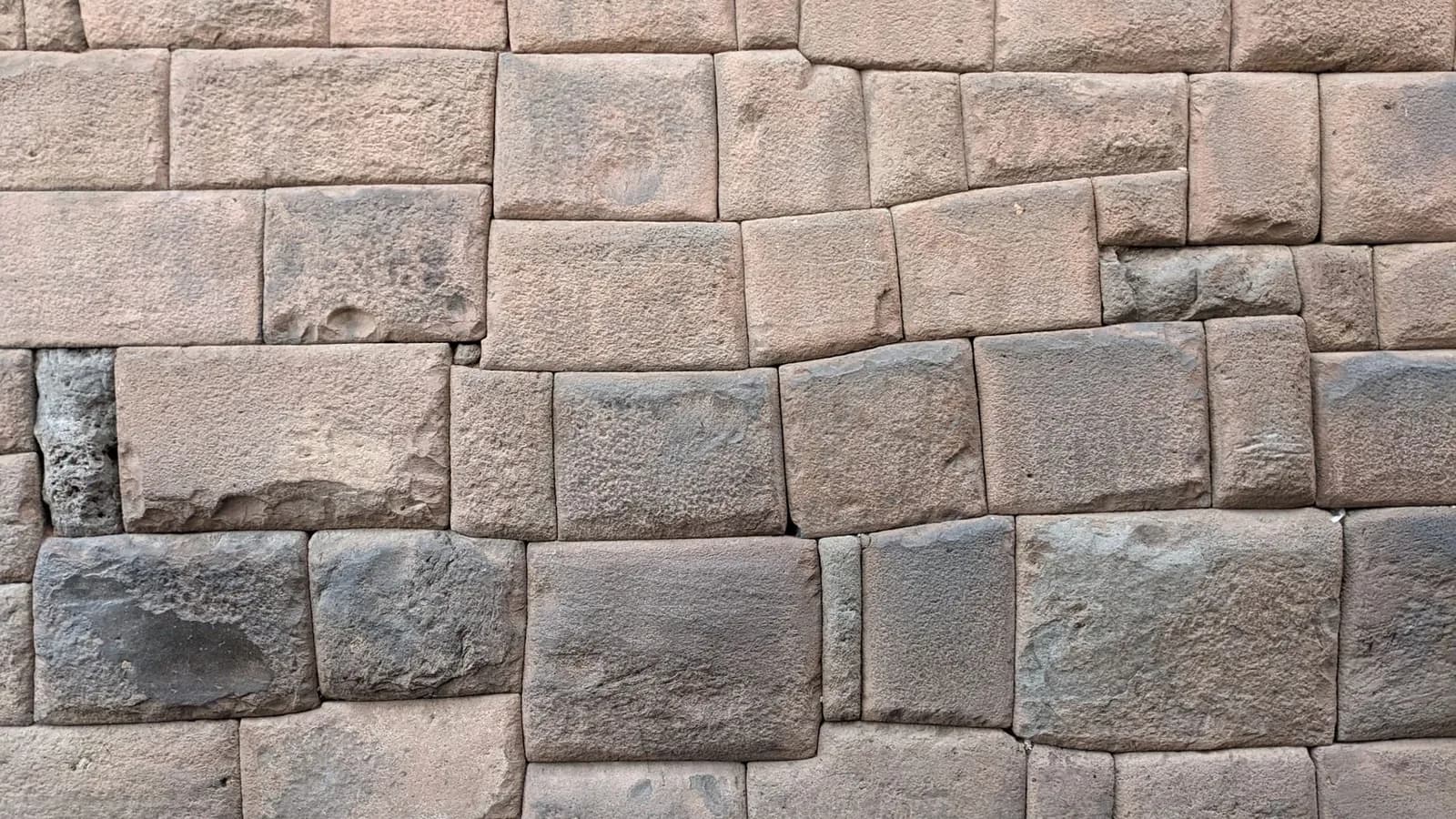
The walls above Cusco use limestone blocks fitted without mortar, some weighing over a hundred tonnes.
Sacsayhuamán stands above Cusco: three terraced walls of limestone, zigzagging for several hundred metres, built from irregular polygonal blocks fitted so tightly that a knife blade will not go between them. The largest weigh well over a hundred tonnes.
It is the standard exhibit for the claim that ancient people could not have done this. It is also one of the better-documented construction projects of the pre-Columbian Americas.
What is documented
The Inca built it, in the fifteenth century, and the Spanish arrived while people who had worked on it were still alive.
Spanish chroniclers — Cieza de León and Garcilaso de la Vega among them — recorded accounts of the construction from Inca sources: the size of the labour force, the use of the mit'a system of rotational obligatory service, ramps, ropes and levers, and the deaths that occurred moving the stones.
Garcilaso, born in Cusco to an Inca mother, described a block that killed thousands of men when it got away from them on a slope. That is a construction accident recorded by someone with access to people who remembered it.
How the joints were made
This is the part that looks impossible and is the best understood.
The blocks are not cut to a plan and then assembled. Each one is shaped to fit the specific stones already in place. A block is lowered, the contact points bruise the stone below, it is lifted, the high spots are dressed away, and it is lowered again. Repeat until it seats.
That is why the joints are irregular polygons rather than rectangles: each face is a record of the stone it met. It is enormously laborious and requires no tool more advanced than a harder hammerstone.
Experimental archaeology has reproduced the technique. It is slow, and slowness was not a constraint for a state that could compel labour.
Why polygonal at all
Earthquakes. Cusco sits in a seismically active region, and interlocking irregular blocks laid without mortar can shift and settle back rather than shear.
Spanish colonial buildings in Cusco have been damaged repeatedly by earthquakes. The Inca walls they were built on top of are still standing. That is not a mystery — it is a design decision that has been tested for five centuries.
What the mit'a system actually was
The labour that built Sacsayhuamán was not slavery and it was not wage work. The Inca state operated a system of rotational obligation called mit'a, under which communities owed the state a period of labour rather than a share of produce.
A community sent workers for a defined term, the state fed and housed them while they served, and the obligation then passed to another community. It is how roads, terraces, storehouses and fortifications were built across an empire that had no money, no wheeled transport and no writing in the usual sense.
That system is the actual answer to how the stones were moved. Not a technique — an institution capable of concentrating tens of thousands of people on one task for as long as it took.
What was destroyed
Most of it. What stands is the foundation courses of a much larger complex, because the Spanish quarried Sacsayhuamán for two centuries to build colonial Cusco.
The blocks that remain are the ones too large to move. That is why the site looks like it was built entirely from giants: the manageable stones were carted away, leaving a selection biased entirely towards the enormous.
Join the discussion
Still open on this one:
- 01
How long did construction take?
Chronicle estimates run to decades and tens of thousands of workers. The figures come from colonial-era accounts and have not been independently corroborated.
Be the first to comment
Sources
Open them and check for yourself. Where a record is public, it is linked.
UNESCO World Heritage Centre
British Museum
Related
Psychic Phenomena
The Nine: who — or what — were they?
On New Year’s Eve 1952, in a laboratory in Maine, a voice announced itself as one of nine. Over the next forty years it reached a credentialled scientist, a celebrity psychic, a bestselling book and the creator of Star Trek. This is what is documented, and what is not.
Psychic Phenomena
New Year’s Eve 1952: the first session with the Nine
The founding event of the whole Nine phenomenon happened in a Maine farmhouse on 31 December 1952. Here is what the record supports about that evening, and how much of the familiar account was written down much later.
Psychic Phenomena
D. G. Vinod: the man at the beginning of the Nine
Every version of the Nine story starts with Dr D. G. Vinod in a trance in Maine. He is also the person that story then almost entirely forgets. Why the first channel is the biggest hole in the record.
Psychic Phenomena
Andrija Puharich: the doctor who kept turning up
A qualified physician, an inventor with real patents, an army medical officer — and the constant in forty years of the strangest story in American parapsychology. Puharich is the reason the Nine keep touching institutions.
0 comments