

The Ness of Brodgar: twenty years of digging, then backfilled
A field between two famous stone circles turned out to hold a monumental Neolithic complex nobody knew was there. Two decades of excavation ended in 2024 with the trenches deliberately filled in.
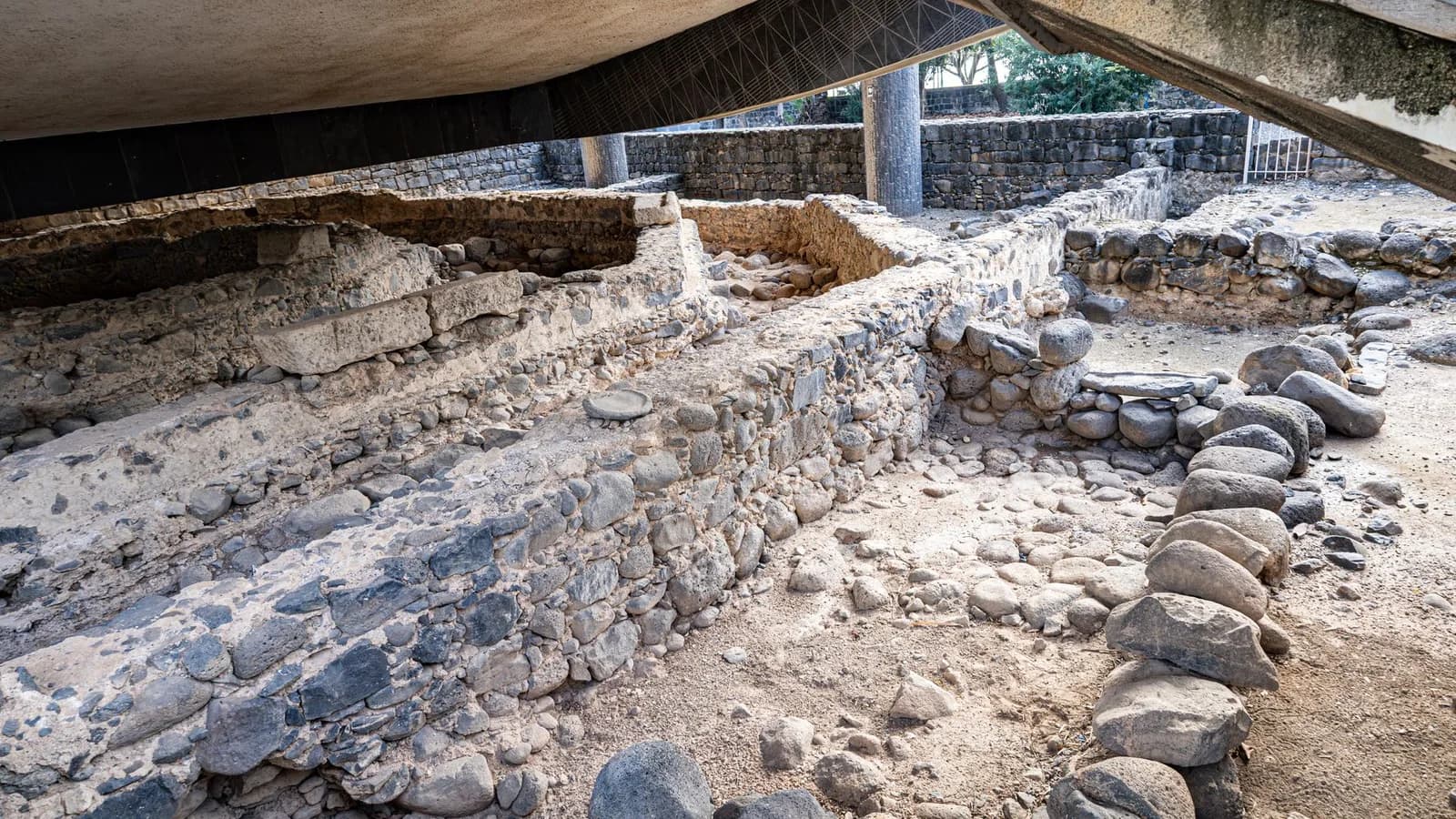
The Ness lies on a narrow isthmus between the Stones of Stenness and the Ring of Brodgar.
The Ness of Brodgar occupies a narrow strip of land between two lochs on Orkney's Mainland, with the Stones of Stenness at one end and the Ring of Brodgar at the other.
It had been walked over for centuries. A geophysical survey and a trial trench in the early 2000s found substantial stone structures immediately below the surface, and full excavation ran from 2004 to 2024.
What was found
A complex of large stone buildings, enclosed by a substantial wall, in use over roughly a thousand years from around 3300 BC.
The buildings are not houses. They are monumental — thick walls, standing stone piers, paved surfaces. The largest, known as Structure Ten, has walls several metres thick.
Decorated stone in quantity: incised geometric designs on wall slabs, in numbers that make Neolithic art in Britain look far less rare than it did.
And pigment. Traces of colour on stone indicate the walls were painted, which is not something anyone expected from British prehistory.
The end of the dig
The main excavation concluded in 2024, and the trenches were backfilled rather than left open.
That is a deliberate conservation decision and worth understanding. An open excavation in an Orkney winter degrades continuously. Reburial protects what has been exposed and leaves the unexcavated majority for methods that do not exist yet.
It is the same reasoning that has kept most of Göbekli Tepe underground. Restraint is a technique.
Structure Ten and the end of it
The largest building on the site was constructed relatively late in the sequence, around 2900 BC, with walls several metres thick and a paved surround.
Its ending is the most striking event recorded at the Ness. Excavation found the remains of several hundred cattle deposited around the structure, apparently slaughtered in a single episode.
The scale implies a gathering of considerable size and a deliberate closing of the building rather than gradual abandonment.
Why backfilling is not giving up
Reburial is now standard practice for large open excavations that cannot be permanently roofed and staffed. Sealed under controlled fill, exposed stone and deposits stabilise; left open through Orkney winters they do not. The site has been recorded in detail — plans, photogrammetry, samples — and the ground itself is preserved for whatever methods exist in fifty years.
What is still to come
The post-excavation work, which will run for years. Twenty seasons produced enormous quantities of material — pottery, bone, stone, samples — and analysis and publication lag excavation by a long way.
Most of what will eventually be known about the Ness has not been written yet.
Join the discussion
Still open on this one:
- 01
What was the pigment made from, and how widespread was painting?
If Neolithic buildings were routinely painted, our entire visual sense of the period is wrong. The Ness is currently the strongest evidence and one site is not a pattern.
Be the first to comment
See also
Everything this piece touches
Sources
Open them and check for yourself. Where a record is public, it is linked.
UNESCO World Heritage Centre
Related
Psychic Phenomena
The Nine: who — or what — were they?
On New Year’s Eve 1952, in a laboratory in Maine, a voice announced itself as one of nine. Over the next forty years it reached a credentialled scientist, a celebrity psychic, a bestselling book and the creator of Star Trek. This is what is documented, and what is not.
Psychic Phenomena
New Year’s Eve 1952: the first session with the Nine
The founding event of the whole Nine phenomenon happened in a Maine farmhouse on 31 December 1952. Here is what the record supports about that evening, and how much of the familiar account was written down much later.
Psychic Phenomena
D. G. Vinod: the man at the beginning of the Nine
Every version of the Nine story starts with Dr D. G. Vinod in a trance in Maine. He is also the person that story then almost entirely forgets. Why the first channel is the biggest hole in the record.
Psychic Phenomena
Andrija Puharich: the doctor who kept turning up
A qualified physician, an inventor with real patents, an army medical officer — and the constant in forty years of the strangest story in American parapsychology. Puharich is the reason the Nine keep touching institutions.
0 comments