

Karahan Tepe: the site that makes Göbekli Tepe less lonely
Everyone knows Göbekli Tepe. Fewer know it is one of at least a dozen sites of the same period in the same region — and Karahan Tepe is the one changing the picture fastest.
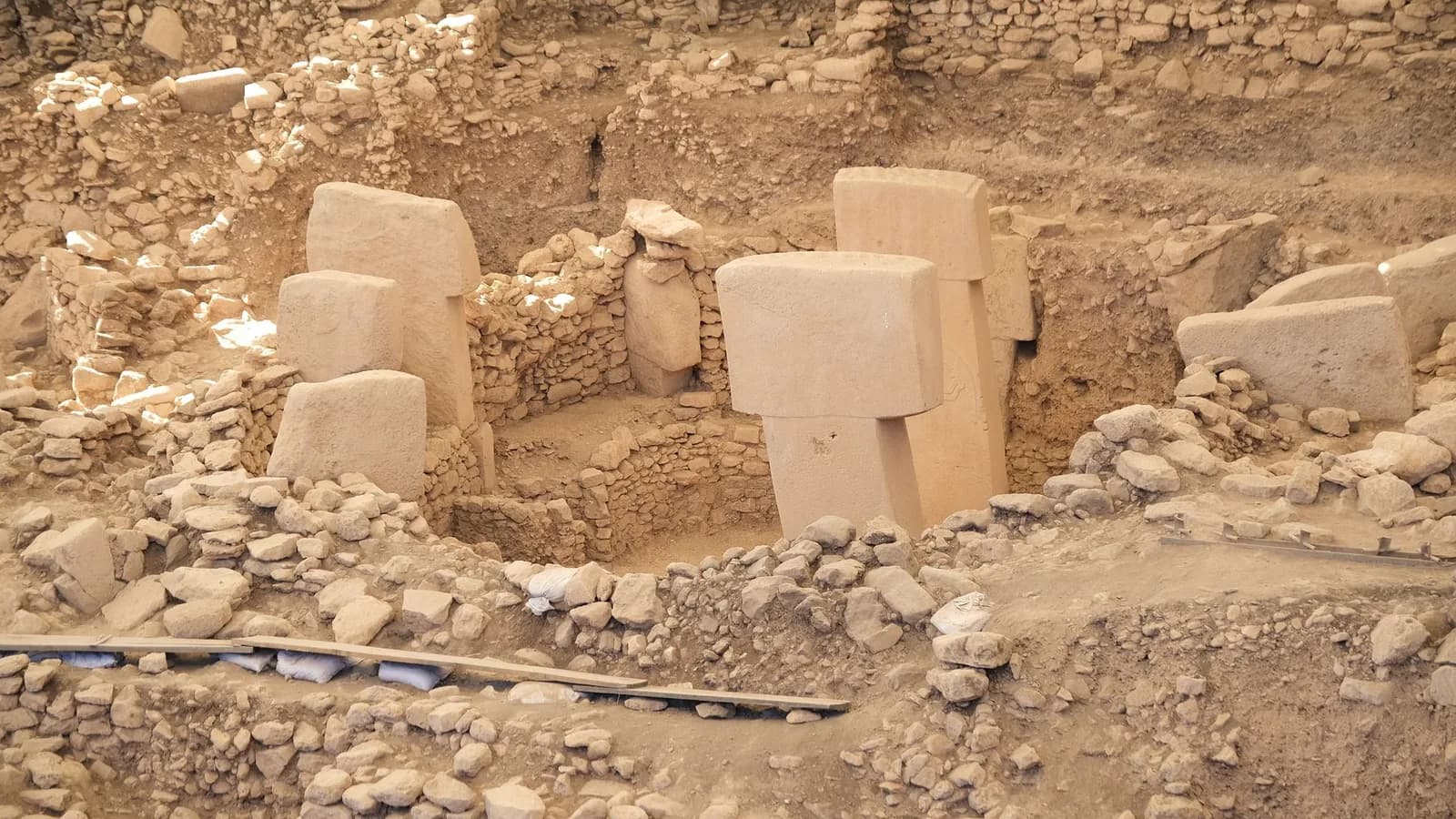
Göbekli Tepe, pictured. Karahan Tepe lies about forty kilometres away and shares its architecture.
Göbekli Tepe is famous because it was first. Monumental stone enclosures with carved T-shaped pillars, built by hunter-gatherers around 9500 BC, thousands of years before agriculture, pottery or the wheel.
The part that gets lost is that it is not unique. Survey and excavation across the Şanlıurfa region of south-eastern Turkey have identified a whole group of related sites, and Karahan Tepe is the most striking of them.
What has been found
Karahan Tepe sits about forty kilometres east of Göbekli Tepe. Excavation began in earnest in 2019 as part of a Turkish programme covering the wider group of sites.
It has the same architectural vocabulary — T-shaped pillars, enclosures, animal carving — and some things Göbekli Tepe does not.
The most remarkable is a chamber cut into the bedrock containing eleven phallic pillars rising from the floor, with a carved human head projecting from the wall, its neck extended, appearing to watch them. It is unlike anything else known from the period.
Why the group matters more than any one site
Because it changes what the phenomenon is.
A single extraordinary site is an anomaly, and anomalies invite extraordinary explanations. A dozen related sites across a region, sharing an architectural language and built over centuries, is a culture — and cultures are studied rather than explained away.
It also demolishes the strongest version of the lost-civilisation reading. Göbekli Tepe alone can be presented as inexplicable. Göbekli Tepe as one node in a regional tradition, with variation between sites and development over time, looks exactly like people working out how to do something.
What it did to the standard story
The old sequence ran: agriculture produces surplus, surplus produces settlement, settlement produces monuments and religion.
These sites reverse it. The monuments come first, built by people who were still hunting and gathering. One reading is that the labour of building and provisioning them is what drove the domestication of local cereals — that religion produced agriculture rather than the other way round.
That is a genuinely significant revision to the story of the Neolithic, and it came from excavation rather than speculation.
What "Taş Tepeler" means for the dating
The Turkish programme covering these sites is called Taş Tepeler — stone hills. It treats them as one archaeological problem rather than a series of discoveries, and that has produced the most important result in the whole area.
The sites are not contemporaneous. They span centuries, and the architecture changes across them: pillar forms, enclosure shapes and carving styles differ between sites and between phases at the same site.
A tradition that develops over time is the signature of people working something out. A single site frozen at one moment can be argued to have arrived from elsewhere. A sequence cannot.
What is still buried
Most of it. Only a small fraction of Göbekli Tepe has been excavated, deliberately — the rest is left for future methods.
Karahan Tepe and the other sites in the group are earlier in their excavation still. This is one of the few areas on this site where the honest answer to "what will we learn next" is: a great deal, soon, from people currently digging.
Join the discussion
Still open on this one:
- 01
How many sites are in the group?
Survey continues and the count has risen steadily. The full extent of the tradition is not yet established.
- 02
Why were the enclosures deliberately buried?
The backfilling is established and the reason is not. It is the central unanswered question of the whole regional tradition.
Be the first to comment
See also
Everything this piece touches
Sources
Open them and check for yourself. Where a record is public, it is linked.
UNESCO World Heritage Centre
British Museum
Related
Psychic Phenomena
The Nine: who — or what — were they?
On New Year’s Eve 1952, in a laboratory in Maine, a voice announced itself as one of nine. Over the next forty years it reached a credentialled scientist, a celebrity psychic, a bestselling book and the creator of Star Trek. This is what is documented, and what is not.
Psychic Phenomena
New Year’s Eve 1952: the first session with the Nine
The founding event of the whole Nine phenomenon happened in a Maine farmhouse on 31 December 1952. Here is what the record supports about that evening, and how much of the familiar account was written down much later.
Psychic Phenomena
D. G. Vinod: the man at the beginning of the Nine
Every version of the Nine story starts with Dr D. G. Vinod in a trance in Maine. He is also the person that story then almost entirely forgets. Why the first channel is the biggest hole in the record.

Psychic Phenomena
Andrija Puharich: the doctor who kept turning up
A qualified physician, an inventor with real patents, an army medical officer — and the constant in forty years of the strangest story in American parapsychology. Puharich is the reason the Nine keep touching institutions.
0 comments