

Gunung Padang: the paper that was retracted
A megalithic site in West Java claimed as a 27,000-year-old pyramid. The claim was published in a peer-reviewed journal in 2023 and retracted in 2024. What actually happened is worth following.
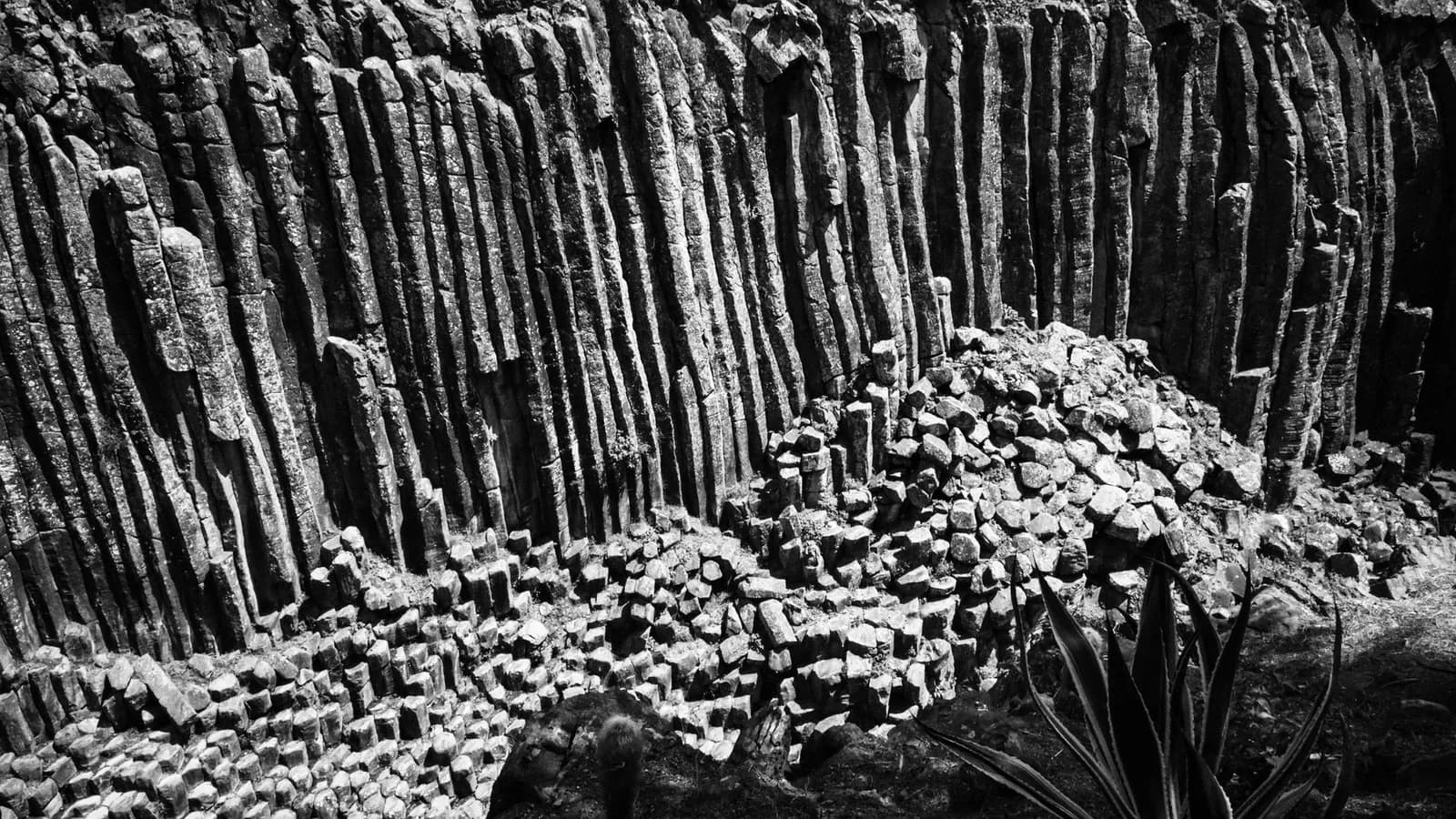
The site in West Java is built from columnar basalt, which forms naturally in hexagonal columns.
Gunung Padang is a terraced hill in West Java covered with columnar basalt blocks arranged into walls and platforms. As an archaeological site it is real, it is significant, and it is generally dated to the first millennium BC.
In 2023 a team led by Danny Hilman Natawidjaja published a paper arguing the hill concealed a constructed pyramid whose deepest layers dated to more than 25,000 years ago — which would make it the oldest structure ever built, by a very wide margin.
In March 2024 the journal retracted it. The sequence is a useful thing to understand, because it is what the scientific process actually looks like when it works.
What the paper claimed
Using ground-penetrating radar, seismic tomography and core drilling, the team argued the hill was not a natural formation faced with stone but an artificial structure built in phases, with the deepest phase radiocarbon dated to between roughly 25,000 and 14,000 years ago.
That would place monumental construction deep in the last ice age, before agriculture, before Göbekli Tepe by twenty thousand years.
Why it was retracted
On a specific methodological objection, and it is a clean one.
The radiocarbon dates were real. The samples were soil from cores taken at depth. What the paper had not established was that the dated material was associated with human activity.
Ancient soil is ancient. If a natural hill of ancient volcanic rock and soil is later faced with stone by people, drilling into it produces old dates from material nobody touched. The dates tell you the age of the ground, not the age of the building.
What the site actually is
On the mainstream reading, a natural hill of columnar basalt — which forms in hexagonal columns as lava cools, and which looks manufactured because geometry is what cooling basalt does — terraced and elaborated by people in the first millennium BC.
That is still a substantial megalithic site and among the largest in Southeast Asia. It does not need to be twenty-seven thousand years old to matter.
What columnar basalt does
The material at the centre of the argument deserves explaining, because it is why the site looks built at every scale.
When a thick lava flow cools, it contracts. Contraction in a cooling sheet produces cracks that propagate downward, and the geometry that minimises energy is a hexagonal array. The result is a mass of long, straight-sided columns that look quarried and stacked.
The Giant's Causeway in Antrim, Fingal's Cave on Staffa and the Devil's Postpile in California are all the same phenomenon, and all three were explained as artificial by earlier observers for exactly the same reason.
Why it matters beyond Java
Because it is the strongest recent test of the lost-civilisation hypothesis, run properly, in public, with instruments — and the result went against it.
It is also a demonstration that the mainstream will publish an extraordinary claim. The paper appeared in a peer-reviewed journal. It was then examined and found wanting, which is the system operating exactly as it should rather than suppressing anything.
Join the discussion
Still open on this one:
- 01
Has any worked artefact been recovered from the deep layers?
It is the only thing that would revive the early dating, and it is testable by excavation rather than by argument.
Be the first to comment
See also
Everything this piece touches
Sources
Open them and check for yourself. Where a record is public, it is linked.
British Museum
National Archaeological Museum, Athens
Hellenic Ministry of Culture
Related
Psychic Phenomena
The Nine: who — or what — were they?
On New Year’s Eve 1952, in a laboratory in Maine, a voice announced itself as one of nine. Over the next forty years it reached a credentialled scientist, a celebrity psychic, a bestselling book and the creator of Star Trek. This is what is documented, and what is not.

Psychic Phenomena
New Year’s Eve 1952: the first session with the Nine
The founding event of the whole Nine phenomenon happened in a Maine farmhouse on 31 December 1952. Here is what the record supports about that evening, and how much of the familiar account was written down much later.

Psychic Phenomena
D. G. Vinod: the man at the beginning of the Nine
Every version of the Nine story starts with Dr D. G. Vinod in a trance in Maine. He is also the person that story then almost entirely forgets. Why the first channel is the biggest hole in the record.

Psychic Phenomena
Andrija Puharich: the doctor who kept turning up
A qualified physician, an inventor with real patents, an army medical officer — and the constant in forty years of the strangest story in American parapsychology. Puharich is the reason the Nine keep touching institutions.
0 comments