

The Bermuda Triangle: what the records actually show
The most famous mystery in the ocean was assembled by magazine writers in the 1960s and taken apart by a librarian in the 1970s. What he did was simple, and almost nobody had done it: he read the original reports.

Photo by Ray Bilcliff on Pexels
The Bermuda Triangle is the best-known mystery in this section and the one that dissolves most completely on contact with its own sources. That process is worth walking through, because the method used to dissolve it works on almost everything else in this field.
Where the idea comes from
The name was coined by the writer Vincent Gaddis in an article for the pulp magazine Argosy in February 1964, gathering a set of losses at sea into a single region and a single explanation. It was popularised through the 1960s and reached its peak with a bestselling book in 1974.
The keystone case is Flight 19: five US Navy Avenger torpedo bombers lost on a training flight from Fort Lauderdale on 5 December 1945, along with one of the aircraft sent to search for them.
What Lawrence Kusche did
Kusche was a reference librarian at Arizona State University who kept being asked for material on the Triangle. Rather than compile another summary, he went to the primary sources: contemporary newspaper reports, Lloyd’s records, coastguard files, court of inquiry findings and weather archives. He published the results in 1975.
What he found, case by case, was not one explanation but a catalogue of ordinary errors. Ships described as vanishing in calm seas had been lost in documented severe storms. Losses placed inside the Triangle had occurred hundreds or thousands of miles outside it. Some vessels reported missing had been found, with the recovery unreported by the writers repeating the story. At least one had never existed.
The statistical question
The rest is answered by the insurers and the coastguard. The region includes some of the busiest shipping and aviation corridors in the world, is subject to hurricanes and sudden severe weather, has the Gulf Stream running through it, and contains large areas of deep water where wreckage sinks beyond recovery.
Adjusted for traffic, the loss rate is not unusual. Lloyd’s of London has said as much, and the US Coast Guard’s position is the same. That is not a sceptical argument; it is the underwriting position of people who lose money by getting it wrong.
What actually happened to Flight 19
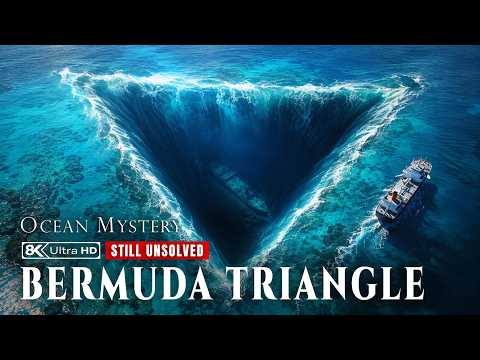
The board of inquiry concluded the flight leader became disorientated about his position, and that the flight flew in the wrong direction until it ran out of fuel and ditched in heavy seas at night. The search aircraft that vanished was a type with a known fuel-vapour problem and an explosion was reported at sea by a passing ship at about the right time and place.
It is a grim, ordinary account of navigational error and bad weather that killed twenty-seven men. It is also much better documented than any version involving the ocean itself.
Join the discussion
Still open on this one:
- 01
Are there any Triangle cases Kusche did not resolve?
A short list survives where records are genuinely thin. Those are the only ones worth anyone’s time, and they are almost never the ones retold.
Be the first to comment
Sources
Open them and check for yourself. Where a record is public, it is linked.
The Bermuda Triangle Mystery: Solved
Lawrence David Kusche, Harper & Row · 1 Jan 1975 · no public copy located
The Deadly Bermuda Triangle
Vincent Gaddis, Argosy magazine · 1 Feb 1964 · no public copy located
Does the Bermuda Triangle really exist?
NOAA National Ocean Service
Related
Consciousness
Terminal lucidity: when a destroyed brain briefly works again
People with advanced dementia sometimes become clear, coherent and recognisably themselves shortly before death. It is documented in the medical literature, it happens, and nobody can currently explain it.
Consciousness
Ian Stevenson: forty years collecting children who remember other lives
A university psychiatrist spent his career documenting cases of young children who described a previous life, and checking whether the person they described had existed. He assembled over two thousand. The methodology is the argument.
Near Death Experiences
Pam Reynolds: the most-cited near-death case, and what it turns on
In 1991 a woman undergoing brain surgery under extraordinary conditions reported observing the operation. The surgical circumstances were unusually well documented. Whether she was unconscious at the time she perceived what she described is the whole argument.
Near Death Experiences
Near-death experiences: what the clinical research has established
Millions of people report a consistent set of experiences during cardiac arrest. That consistency is a real finding. What it means is where the argument starts, and hospital studies have been running for thirty years.
0 comments