

The Berwyn Mountains, 1974: an earthquake, a meteor and a legend
Often called the Welsh Roswell. On the night of 23 January 1974 something shook the Berwyn range and lights were seen on the hillside. The seismological and astronomical records for that night are unusually complete.
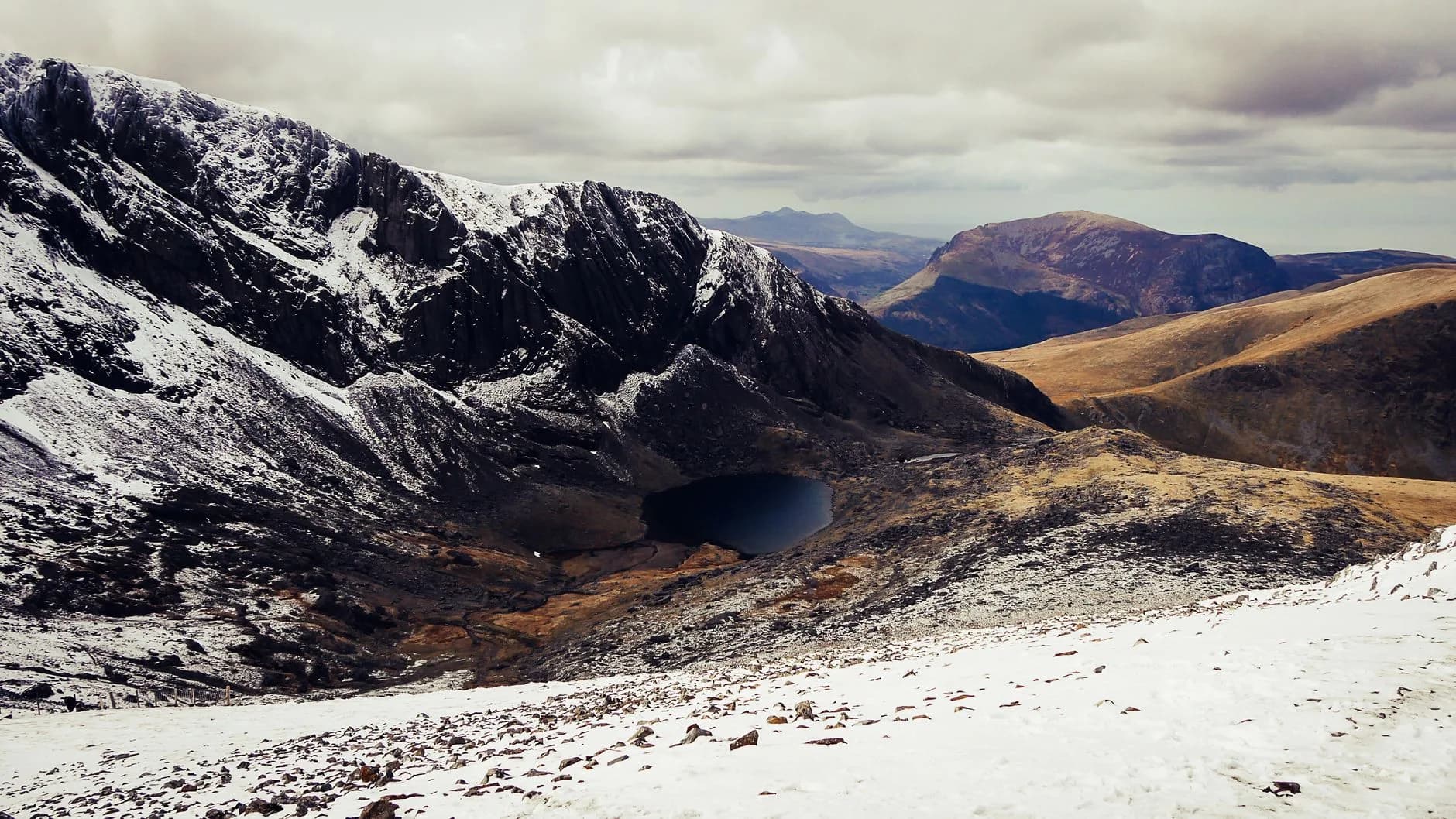
Photo by Adrian Dorobantu on Pexels
On the night of 23 January 1974, residents around Llandrillo in north Wales felt a tremor, heard a loud noise, and saw lights on the Berwyn mountainside. Police and local people went up in the dark expecting to find an aircraft down. Nothing was found. Over the following decades the incident became known as the Welsh Roswell, complete with claims of a recovered craft and bodies removed by the military.
It is also one of the few cases in this field where independent instruments were recording at the time.
What is documented
An earth tremor was recorded that evening in the region, of a magnitude sufficient to be felt and heard across a wide area. Earthquakes of that size produce exactly the effects reported: a bang, a shake, and — through a phenomenon well attested in the seismological literature — light effects seen near the ground.
Astronomical observers also reported bright meteor activity over Britain that evening. Two separate, independently recorded phenomena occurred on the same night in the same region.
What was claimed
That a craft came down, that the military cordoned the mountain, and that material and occupants were removed to a defence establishment. The claims accumulated from the late 1970s onward and were substantially expanded in the 1990s.
What the searchers actually found
The lights on the mountainside that were pursued that night have a documented candidate. Poachers were active in the area using lamps, a common practice in Welsh hill country. Local accounts collected afterwards support this, and it accounts for lights that moved on the hillside and were gone when anyone arrived.
What remains unexplained
Very little in the events. What remains open is a narrower documentary question: whether any military movement occurred in the area in the following days, which is the load-bearing claim of the crash-retrieval version and which nobody has ever substantiated with a record.
Our reading is that Berwyn is a well-explained event that became a famous mystery because the explanation involved three separate ordinary causes, and nobody was in a position to state all three at once.
Join the discussion
Still open on this one:
- 01
Is there any documentary trace of military activity in the area that week?
It is the whole of the crash-retrieval claim and, half a century on, no document supporting it has been produced.
Be the first to comment
Sources
Open them and check for yourself. Where a record is public, it is linked.
British Geological Survey
The National Archives
Related
Consciousness
Terminal lucidity: when a destroyed brain briefly works again
People with advanced dementia sometimes become clear, coherent and recognisably themselves shortly before death. It is documented in the medical literature, it happens, and nobody can currently explain it.
Consciousness
Ian Stevenson: forty years collecting children who remember other lives
A university psychiatrist spent his career documenting cases of young children who described a previous life, and checking whether the person they described had existed. He assembled over two thousand. The methodology is the argument.
Near Death Experiences
Pam Reynolds: the most-cited near-death case, and what it turns on
In 1991 a woman undergoing brain surgery under extraordinary conditions reported observing the operation. The surgical circumstances were unusually well documented. Whether she was unconscious at the time she perceived what she described is the whole argument.
Near Death Experiences
Near-death experiences: what the clinical research has established
Millions of people report a consistent set of experiences during cardiac arrest. That consistency is a real finding. What it means is where the argument starts, and hospital studies have been running for thirty years.
0 comments