

SRI: the laboratory the government paid to test remote viewing
From 1972, a respected California research institute ran classified experiments funded by US intelligence agencies. The programme lasted over twenty years, and the argument about it has never been about whether it happened.
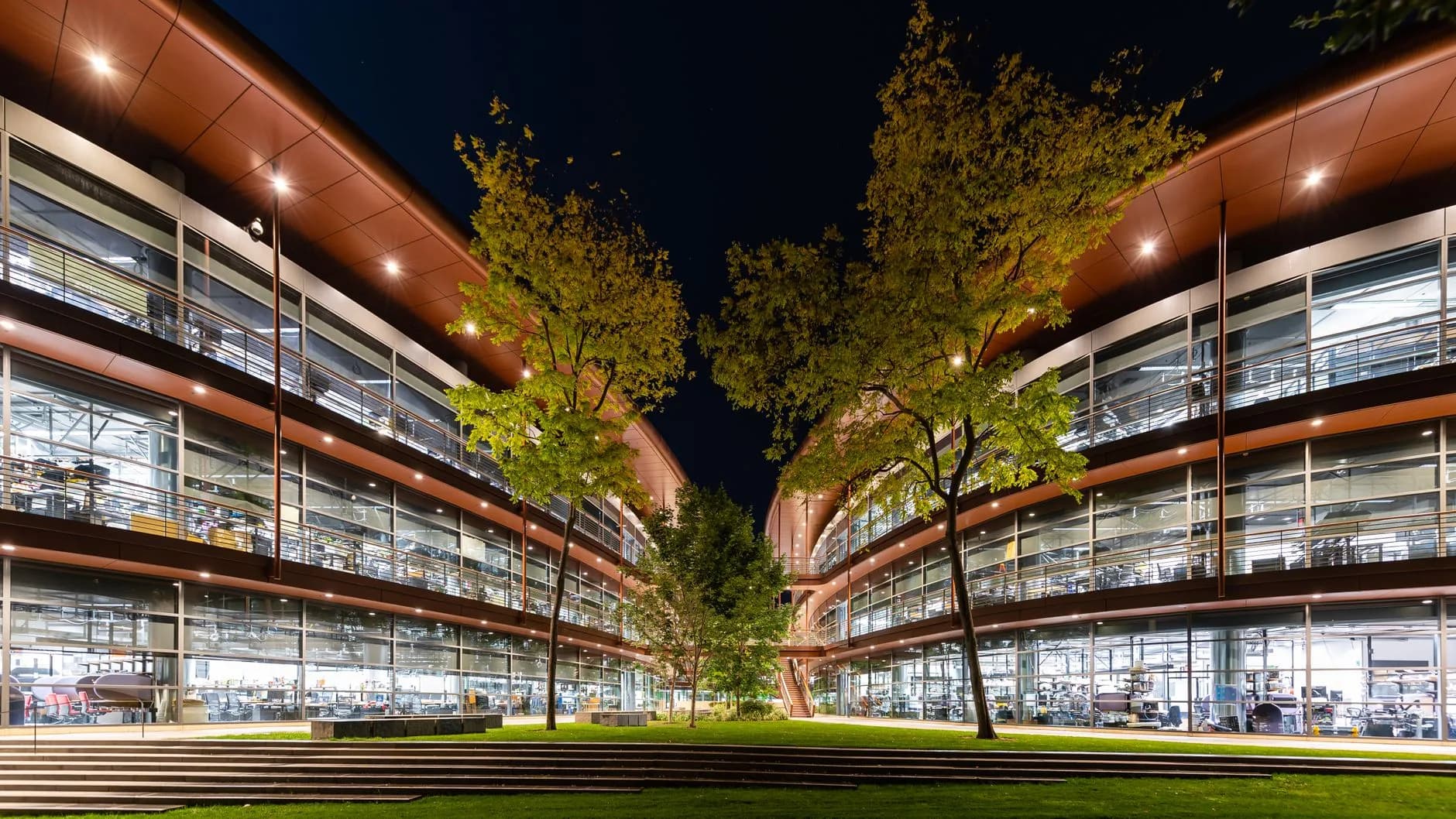
Photo by Zetong Li on Pexels
In 1972, two physicists at Stanford Research Institute in Menlo Park — Russell Targ and Harold Puthoff — began experiments to test whether people could describe distant locations they had no ordinary way of knowing. Within a short time the work was being funded by US intelligence agencies, and it continued in various forms for over two decades.
None of this is disputed. The programme, its funding and its output were declassified in 1995.
What is documented
SRI was and is a substantial contract research organisation. Targ and Puthoff were credentialled physicists — Puthoff had published in laser physics. The funding came from the CIA and later the Defense Intelligence Agency. In 1974 Nature published their paper on information transmission under sensory shielding.
The work later moved to Science Applications International Corporation, continuing into the 1990s under different management before the whole programme was terminated in 1995.
The protocol
In the classic form, an outbound experimenter travels to a randomly selected location. The viewer, in a shielded room, describes and sketches impressions. Afterwards an independent judge is given the transcripts and the list of locations and attempts to match them.
The design is sound in principle. Everything depends on the judging being genuinely blind and on the transcripts containing no cues about order or context.
The critique that stuck
The psychologists David Marks and Richard Kammann examined SRI transcripts and reported that they contained cues — references to previous sessions, and other contextual traces — which would allow a judge to reconstruct the sequence and match transcripts to targets without any psychic component at all.
That critique has never been fully answered, and it is the reason the SRI results are not treated as established. It does not require anyone to have cheated; sloppy transcript preparation is enough.
What remains unexplained
A subset of session transcripts that are difficult to account for by cueing, chance or vagueness — the ones remote viewing advocates cite and critics rarely address directly.
The trouble is that a subset selected after the fact for being impressive is not evidence of anything, and it is not clear that anyone has ever assessed the full body of sessions rather than the highlights. That is the work that has never been done.
Join the discussion
Still open on this one:
- 01
Has anyone scored the complete session archive rather than the highlights?
The material is public. A blind assessment of all sessions, not the selected ones, is the obvious study and we can find no sign it has been done.
Be the first to comment
See also
Everything this piece touches
Sources
Open them and check for yourself. Where a record is public, it is linked.
Information transmission under conditions of sensory shielding
Russell Targ and Harold Puthoff, Nature vol. 251 · 18 Oct 1974 · no public copy located
CREST — the CIA Records Search Tool
Central Intelligence Agency
An Evaluation of Remote Viewing: Research and Applications
American Institutes for Research · 29 Sept 1995 · no public copy located
Related
Consciousness
Terminal lucidity: when a destroyed brain briefly works again
People with advanced dementia sometimes become clear, coherent and recognisably themselves shortly before death. It is documented in the medical literature, it happens, and nobody can currently explain it.
Consciousness
Ian Stevenson: forty years collecting children who remember other lives
A university psychiatrist spent his career documenting cases of young children who described a previous life, and checking whether the person they described had existed. He assembled over two thousand. The methodology is the argument.
Near Death Experiences
Pam Reynolds: the most-cited near-death case, and what it turns on
In 1991 a woman undergoing brain surgery under extraordinary conditions reported observing the operation. The surgical circumstances were unusually well documented. Whether she was unconscious at the time she perceived what she described is the whole argument.
Near Death Experiences
Near-death experiences: what the clinical research has established
Millions of people report a consistent set of experiences during cardiac arrest. That consistency is a real finding. What it means is where the argument starts, and hospital studies have been running for thirty years.
0 comments